Integration of digital technologies into the educational process
2. The difference between online, blended and hybrid teaching
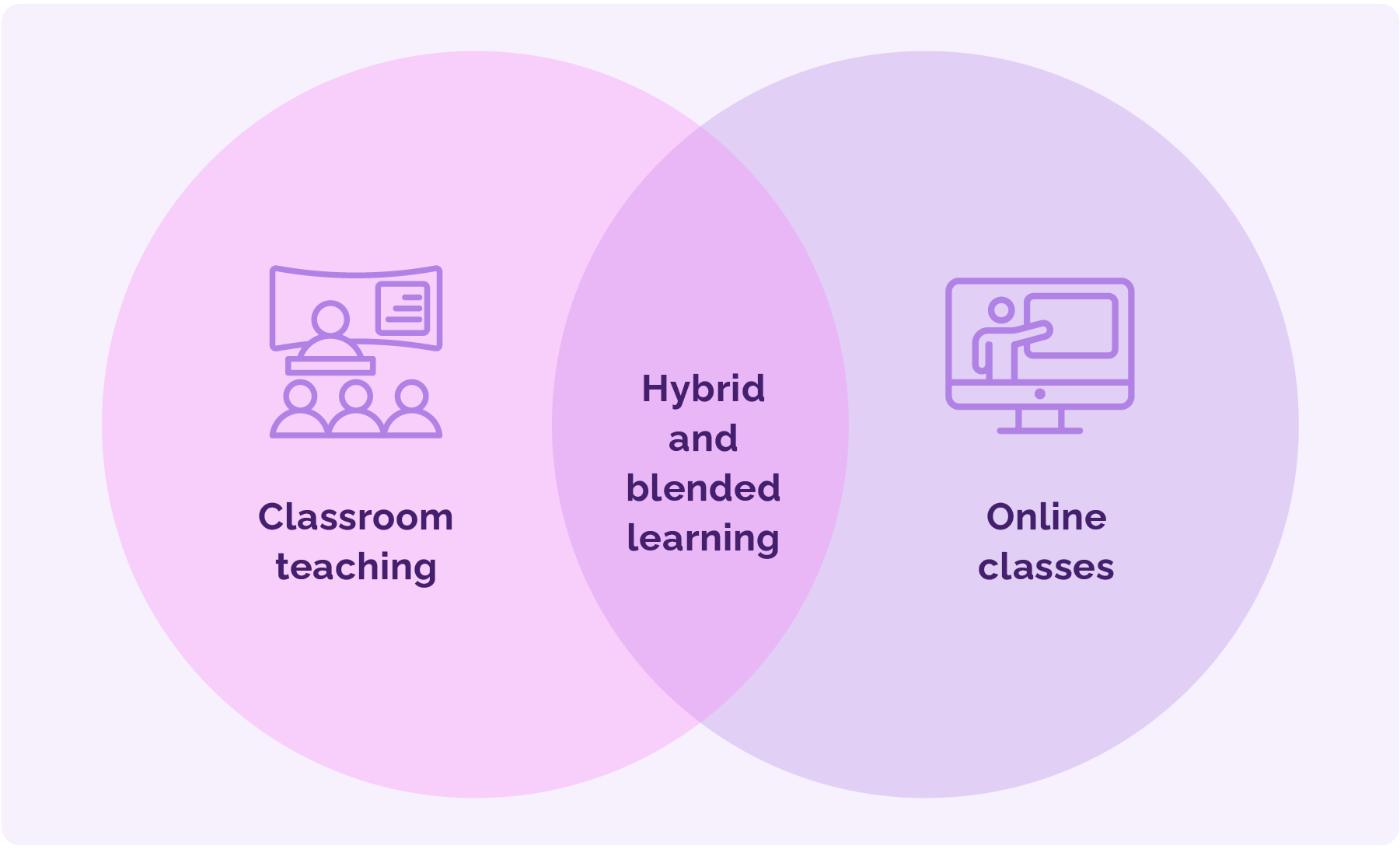
Online learning refers to an educational model that takes place entirely over the internet. In this approach, all teaching materials, activities, communication, and assessment are made available to students via digital platforms. Teaching can be synchronous when all participants join at the same time via video call, or asynchronous, when students access content at a time that suits them best. Effective online learning requires carefully designed digital resources, clear instructions, and support for students in distance learning.
Blended learning combines online activities and in-person learning, with the two components taking place separately and complementing each other. Part of the learning takes place via an online platform, where students access content, participate in forums, or complete assignments, while another part of the learning takes place live in the classroom through lectures, discussions, or exercises. It is crucial that both components are planned as part of a single learning design. For example, students can complete a survey online, view introductory content, and participate in a forum assignment, and then analyse the results together and continue working in groups in a learning meeting.
Hybrid teaching refers to teaching in which some students are present in the classroom, while others are engaged online at the same time. The teacher teaches both groups simultaneously, supported by technology that enables the transmission of images and sound and the use of digital materials. This approach allows for greater flexibility but requires careful planning and technical support to ensure that all students have an equal opportunity to participate.
Before the COVID-19 pandemic, the terms blended and hybrid learning were often used interchangeably without a clear distinction. Today, a more precise distinction is increasingly accepted, with blended learning referring to a combination of separate online and face-to-face activities, while hybrid learning refers to the simultaneous delivery of instruction in both physical and digital environments.
Distinguishing between these three models is important for quality teaching planning. Each model carries specific pedagogical and organisational requirements, and their success depends on good preparation, clarity in communication, and alignment with student needs.
Background Colour
Font Face
Font Size
Text Colour
Font Kerning
Image Visibility
Letter Spacing
Line Height
Link Highlight