Introduction to instructional design methods
6. 4C/ID model
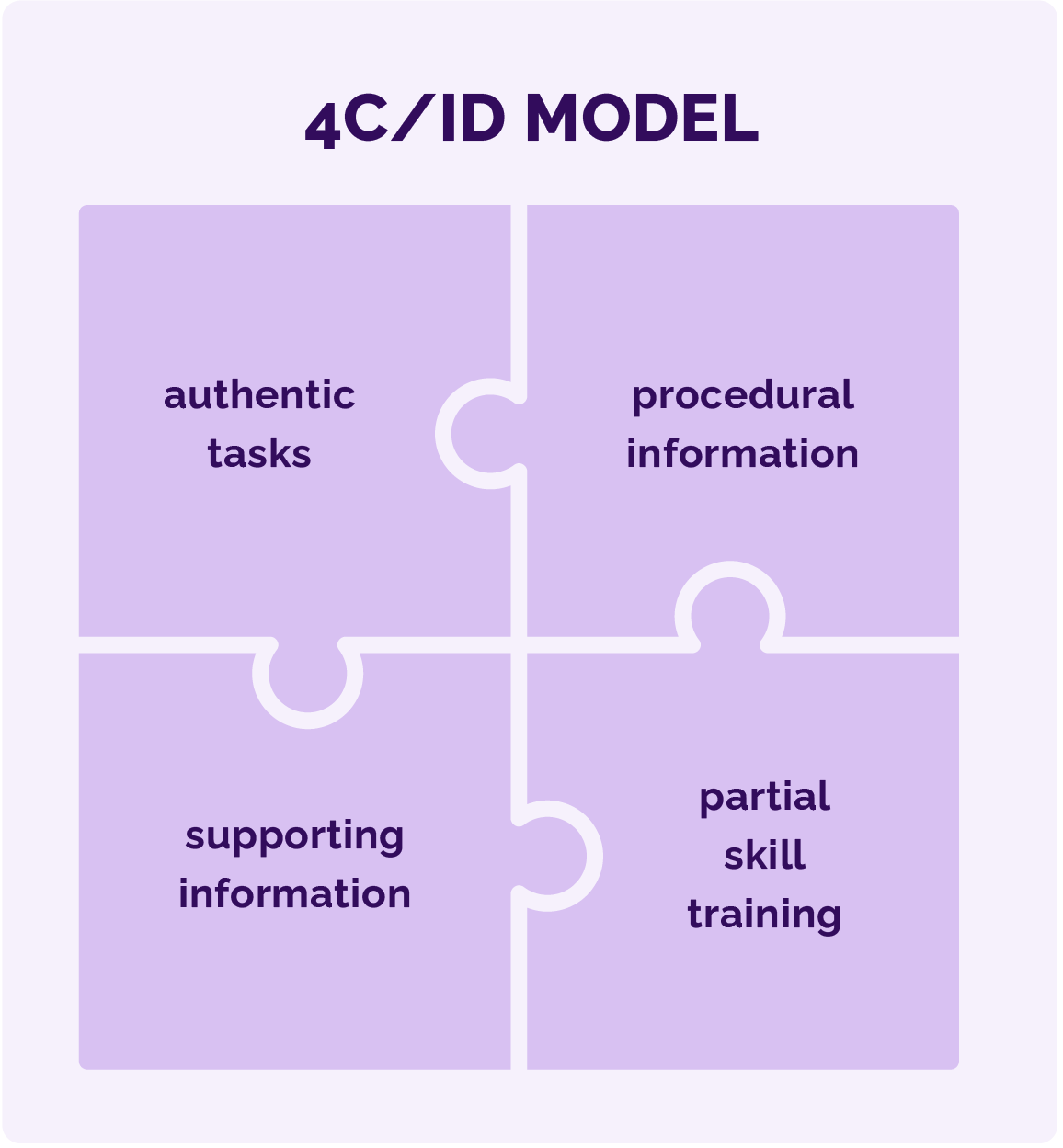
The 4C/ID model focuses on developing complex competencies through four basic components: authentic tasks, procedural information, supporting information, and partial skill practice. It is based on the idea that complex competencies are best developed by solving tasks that reflect real-world challenges, with gradually decreasing support as the student progresses.
The advantage of this model lies in its ability to connect theory and practice and in encouraging long-term retention of knowledge. The application of authentic tasks makes learning relevant and motivating for students, and the model is particularly effective in professional and technical disciplines.
The disadvantage of the 4C/ID model is the complexity of preparation and implementation. It requires a detailed analysis of learning objectives and careful design of tasks, which can be time- and resource-intensive. Also, teachers need a high level of expertise to effectively implement this approach, and in some educational settings, it may be difficult to provide the necessary conditions and resources.
Additional sources:
Background Colour
Font Face
Font Size
Text Colour
Font Kerning
Image Visibility
Letter Spacing
Line Height
Link Highlight