Digital Transformation in Higher Education - Fundamentals and Perspectives
5. Digital transformation in higher education
The characteristics of digital transformation were presented earlier in point 1. However, in addition to its characteristics, it is important to understand that while digital transformation brings numerous advantages, it also imposes certain requirements.
Specifically, in the context of higher education, digital transformation provides the following advantages:
- Personalization of learning – Digital transformation involves the use of data to create individualized learning pathways [8].
- Hybrid teaching models – Digital transformation offers a combination of physical and virtual learning, providing flexibility for students with different needs [9].
- Automation of assessment – Digital tools enable faster and more objective evaluation of knowledge (e.g., AI-assisted essays, digital quizzes) [10].
- Increased accessibility – Through digital transformation, education becomes more widely available, including people in remote regions [11].
On the other hand, the requirements are also significant. Digital transformation requires:
- Continuous staff professional development – through digital literacy programs and pedagogy and methodology training [12].
- Investment in infrastructure – modernization of computers, networks, server systems, and software [13].
- Strategic planning – development of institutional plans that encompass all levels and stakeholders [14].
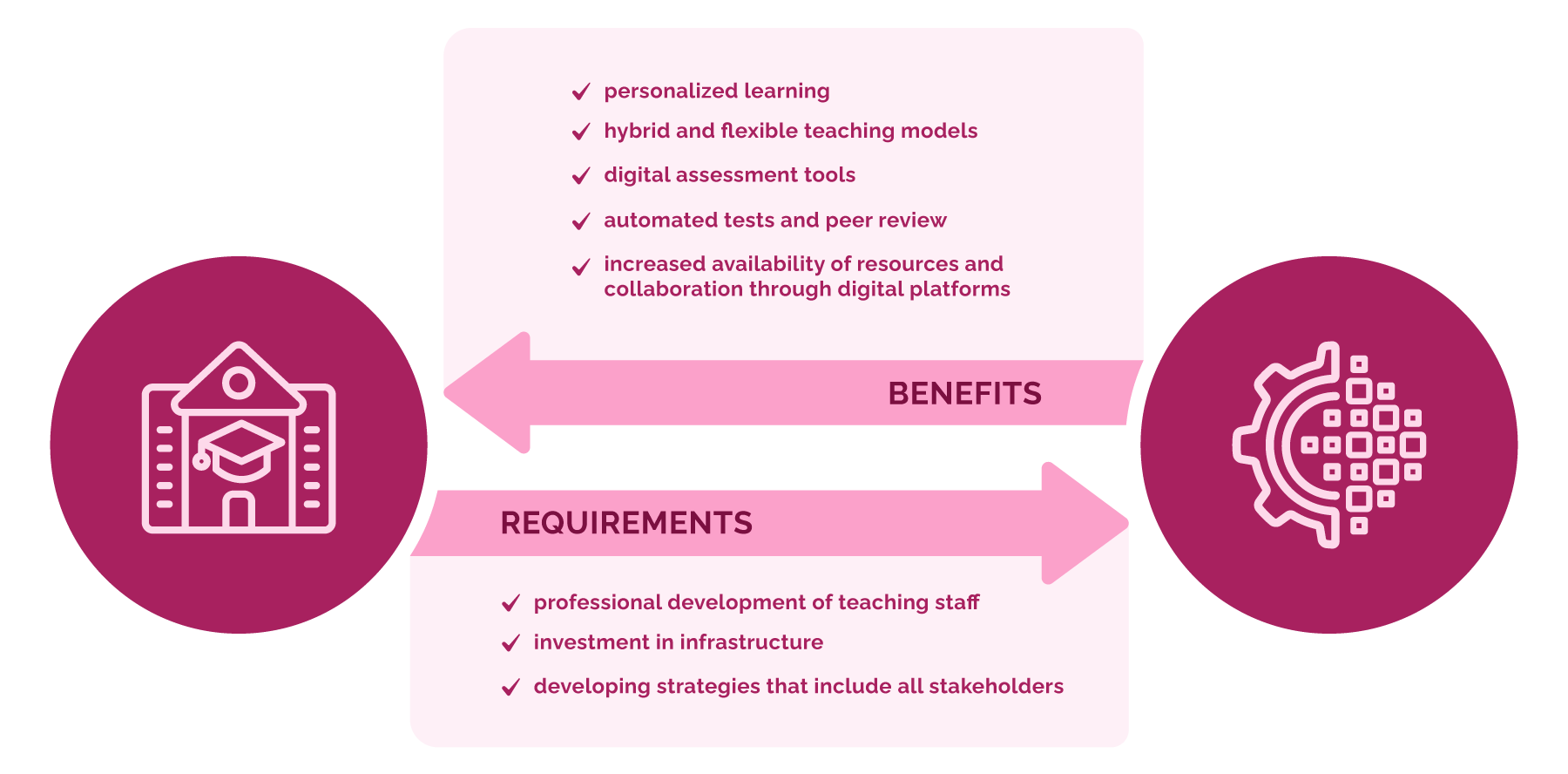
Figure: Digital transformation requirements for higher education institutions and the benefits it brings to the institution
Background Colour
Font Face
Font Size
Text Colour
Font Kerning
Image Visibility
Letter Spacing
Line Height
Link Highlight
Paragraph Width
Text Alignment