Methodology for Developing a Strategy for Implementing Digital Technologies
4. Methods and techniques for situation analysis, strategy formulation and implementation
4.3. PESTLE analysis
The PESTLE analysis provides a systematic overview of the political, economic, social, technological, legal, and environmental factors that shape the external environment of an organization. It complements the internal situational analysis by offering a comprehensive picture of the factors that influence the established strategy.
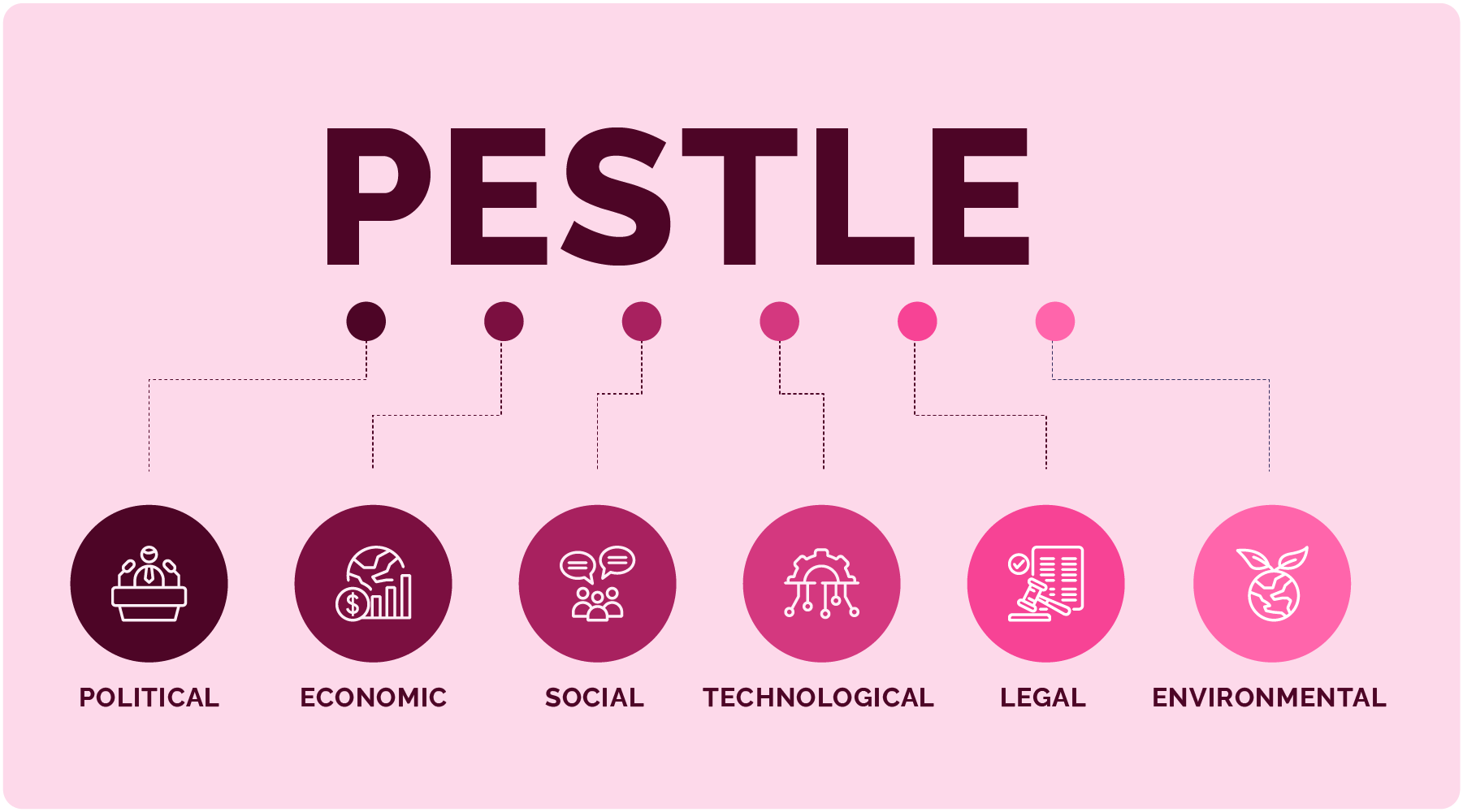
Steps:
- Political factors.
- Economic factors.
- Social factors.
- Technological factors.
- Legal factors.
- Environmental factors.
- Report preparation [2].
Illustrative example of the application of the PESTLE analysis:
The strategic planning team at the university in this example analyzed the external environment while developing the digital transformation strategy.
- Political factors: New national legislation encourages investment in STEM education.
- Economic factors: The faculty budget for ICT projects increased by 15 %.
- Social factors: Students increasingly prefer hybrid models of teaching.
- Technological factors: The institution plans to integrate AI tools for adaptive learning.
- Legal factors: Compliance with GDPR and national data protection guidelines.
- Environmental factors: The introduction of energy-efficient data centers reduces the carbon footprint.
Based on the analysis, the recommendation was to establish an advisory board for GDPR, increase investment in AI research, and regularly monitor social trends using survey tools.
Background Colour
Font Face
Font Size
Text Colour
Font Kerning
Image Visibility
Letter Spacing
Line Height
Link Highlight
Paragraph Width
Text Alignment