Peer Assessment
2. Application of Peer Assessment in Education
Peer assessment is widely used in various forms across almost all academic disciplines in higher education. Although these forms are often labelled with the same name, it is important to understand that peer assessment is an umbrella term encompassing different types of assessment that share a common feature: it is a social activity in which both the assessor and the author of the assessed work hold similar academic status (Panadero and Alqassab, 2019).
Helden et al. (2023) distinguish three types of peer assessment, each serving a different function in the learning outcome.
Regardless of the type of peer assessment, we can say that students assume the role of the teacher in the assessment process. There are numerous benefits for students participating in giving and receiving peer feedback.
During this process, students:
- practice assessing quality
- align their own judgements
- develop the ability to conduct self-assessment (Reinholz, 2016)
Furthermore, Divjak and Matretić (2017) classified the advantages and disadvantages of peer assessment, summarised in the table below.
Table 1. Advantages and disadvantages of peer assessment (based on Divjak & Maretić, 2017)
|
Logistical |
Saves teachers’ time in assessment |
Teachers need more time to discuss the criteria and the purpose of the assessment with students |
|
Pedagogical |
Assessing peers’ work enables additional learning about the topic |
Students tend to give higher grades to peers, especially when authors are not anonymous |
|
Metacognitive |
The assessment process becomes demystified, and students can better assess their work and achievements |
Some students lack the metacognitive skills necessary for assessment and require gradual and meaningful involvement by the teacher |
|
Affective |
Students share ownership of the assessment process |
Learning analytics often shows patterns in which students assess peers superficially without following the criteria, believing it is not their responsibility |
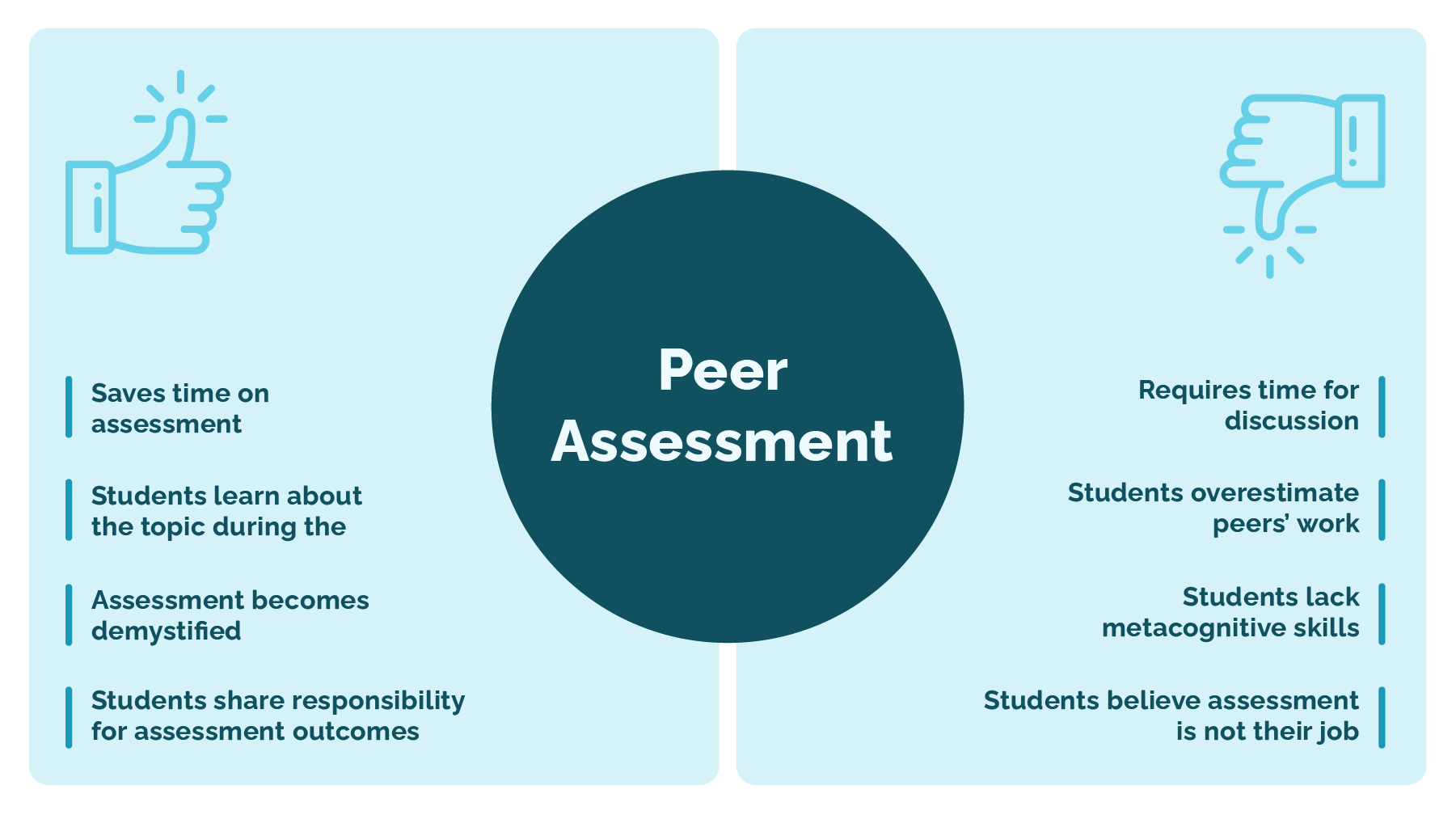
Figure 1: Positive and negative aspects of peer assessment
Background Colour
Font Face
Font Size
Text Colour
Font Kerning
Image Visibility
Letter Spacing
Line Height
Link Highlight
Paragraph Width
Text Alignment