Curriculum design for ensuring well-being and mental health
3. Well-being and mental health are the responsibility of every segment of the academic community
Within the framework of the University Mental Health Charter (University Mental Health Charter Framework, 2024), it is decidedly stated that well-being and mental health should be the responsibility of every segment of the academic community.
The framework consists of four basic domains: 1. Learn, 2. Support, 3. Work, and 4. Live which form the backbone of the approach to make well-being and mental health an integral part of every aspect of the university experience. The Learn domain is important as it indicates that the way students are taught and assessed directly affects their mental health. The focus is on creating an inclusive curriculum and providing support during the completion of obligations, in order to reduce academic stress and encourage resilience through the education process itself. The Support domain refers to the establishment and availability of easily accessible, safe, and effective services for students, teachers, and staff who are facing difficulties related to well-being and mental health. This includes not only university counseling centers but also clear protocols for crisis management and collaboration with external health institutions (such as hospitals and health centers). The Work domain emphasizes the importance of the mental health of academic and administrative staff. A healthy work environment, in which employee well-being is valued and job satisfaction is achieved while offering them professional development, is a prerequisite for creating a functional academic community. The Live domain covers the physical and social environment, from the quality of student accommodation to a sense of belonging to the community. It promotes the creation of spaces (physical and digital) that encourage healthy habits, physical activity, and social integration, thereby reducing the sense of isolation among students (Hughes, G. & Spanner, L., 2024).
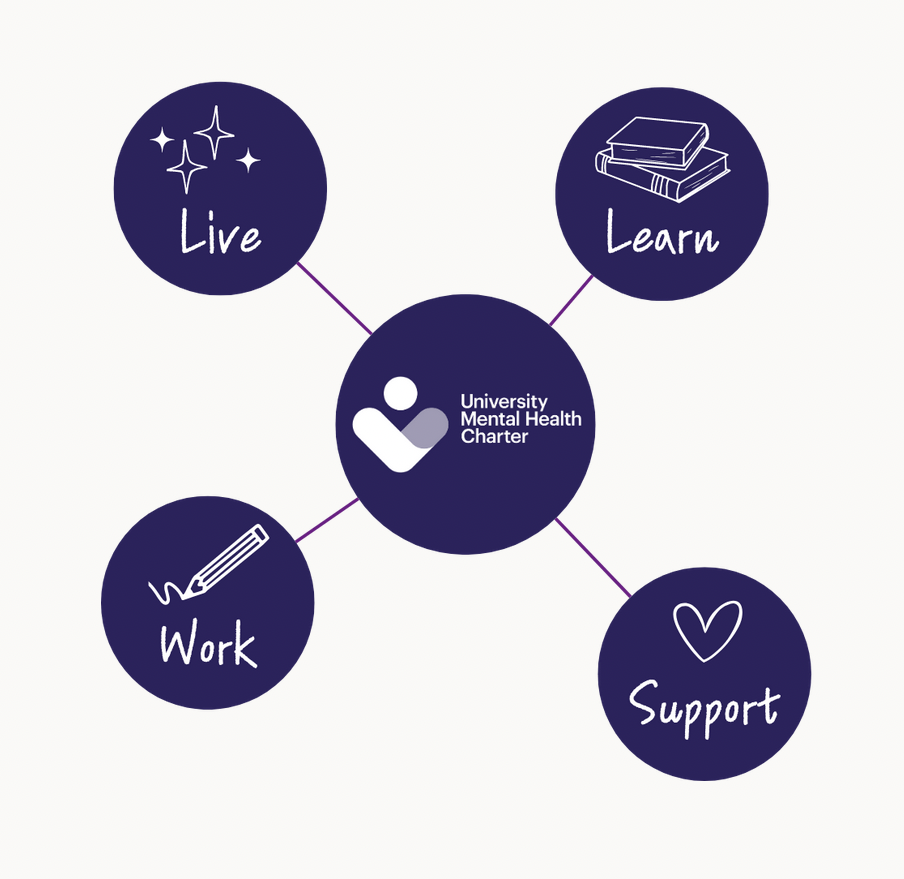
Figure 3. The four basic domains of the University Mental Health Charter Framework (Hughes, G. & Spanner, L., 2024).
The development of the framework is based on evidence and research, and its main purpose is to transform universities into places that proactively nurture well-being and contribute to the preservation of the mental health of all stakeholders. In accordance with the charter, it is important to focus on preventative action, culture, and environment for ensuring well-being and mental health.
In this context, the university takes responsibility for guiding students throughout their entire academic journey, starting from the transition that begins even before the application for study and continues through the first year and all key stages of progress until the labor market, preparing them for a professional career as well as the challenges of private life. The goal is to ensure measures that encourage not only academic integration but also strong social connection and a sense of self-efficacy in every individual.
A key role in this process is played by curriculum design and pedagogical practice. The curriculum is viewed holistically and inclusively, using methods that enable students to acquire knowledge at an appropriate pace, applying constructive alignment, an even workload, and flexibility of deadlines. By applying innovative methods of learning and teaching, such as project-based work, work-based learning, or the flipped classroom, students are encouraged to engage in deep learning and develop academic self-confidence.
Teaching staff need to be given clear guidelines on their role in supporting mental health, but of course, while respecting professional boundaries. Parallel to academic development, the university should also provide support services that must be professional, available, and responsive, with an emphasis on ensuring enough capacity for all the needs that students, as well as teachers and university staff, have.
Risk management, including the prevention of crisis situations and suicide, must be carried out through clear protocols and continuous staff education, with maximum respect for privacy and data confidentiality.
Student well-being is inseparable from the well-being of teachers and staff, which is why the Charter emphasizes the importance of creating a psychologically safe work environment. The university must empower employees to recognize signs of impaired mental health in themselves and others and allow them access to education on well-being, digital well-being, and mental health.
At the same time, the physical and social environment of the campus, from student dormitories to building projects, common spaces for socializing, content that encourages this, as well as access to nature, must be designed to reduce social isolation and promote a sense of belonging. Finding one's way around the campus and the measures that contribute to this can greatly help boost self-confidence, especially in the first years of study. For example, designing spaces that are accessible, safe, and functionally adapted to the work performed in them, as well as navigation that facilitates orientation on campus and reduces stress when moving around.
Inclusivity and understanding of different life backgrounds are key to removing barriers faced by marginalized groups. Universities must systematically work to prevent social isolation and loneliness, ensuring that every student feels like part of the community.
The final success of such an approach depends on strong leadership and strategic planning that sets well-being and mental health as the core mission of the institution. Visible leadership is needed that shows commitment to well-being through all policies and procedures of the university, and not just through isolated projects.
All policies and procedures should be created in direct partnership with students and staff, respecting their voice in all stages of decision-making and enabling their participation, which raises awareness of the importance of well-being. Students as well as staff should not just be service users, but partners. Support strategies and services must be developed in collaboration with students and staff, ensuring that their real voices and experiences are included in the decision-making process.
Continuous implementation of activities to achieve the goals of ensuring well-being, the implementation of innovations, and the evaluation of measures taken ensure that the university remains a dynamic and adaptable community that constantly learns and improves its practices for the purpose of preserving the well-being and mental health of all its stakeholders.
The Charter emphasizes three components that Universities need to ensure in order to strategically enable the preservation of well-being and mental health of their students and staff:
- build a strong sense of belonging,
- ensure system support,
- create an environment that respects individual differences.
Background Colour
Font Face
Font Size
Text Colour
Font Kerning
Image Visibility
Letter Spacing
Line Height
Link Highlight
Paragraph Width
Text Alignment