E-learning as a new educational paradigm
| Site: | Loomen za stručna usavršavanja |
| Course: | Pedagogy in a Digital Environment |
| Book: | E-learning as a new educational paradigm |
| Printed by: | Gost (anonimni korisnik) |
| Date: | Saturday, 24 October 2026, 10:43 PM |
1. Introduction
E-learning represents a new educational paradigm that is changing the way we learn, teach, and access knowledge. Unlike traditional education, which is based on physical presence and linear information transfer, e-learning enables a spatially and temporally flexible, interactive, and adaptive educational experience. It is based on the use of digital technologies for content distribution, collaboration, and communication, with the increasing use of multimedia, mobile learning, and personalized approaches. E-learning as a paradigm emphasizes the active role of the student, encourages lifelong learning, and supports the development of digital competencies needed in the 21st century. In this context, e-learning is no longer just an alternative form of teaching, but an integral part of modern education.
E-learning can be defined very broadly as the use of technology to shape the educational process. Although unfortunately very broad, this definition describes the full breadth of the entire educational process in an electronic environment. For narrower definitions, we can only use the different types of distance learning that arise and are defined according to the users they are intended for and the type of implementation of the teaching process. Roughly speaking, e-learning can be divided into distance learning and hybrid learning.
Although e-learning originally emerged as a continuation of distance learning, as the idea spread in a traditional environment, two forms of e-learning emerged: pure distance learning and hybrid learning, in which technology supports traditional teaching. The concept of distance learning appeared very early in the form of correspondence schools, most often for people who did not have an educational institution nearby and needed to study from home.
Of course, the term has remained almost the same, but its meaning has completely changed, especially with the popularity and availability of computers and the Internet. With the development of different generations of computers and the possibilities they offer, new forms of distance learning and computer-assisted learning have emerged, and the terminology has also changed. In most cases, to date, there has been a synergy of different forms or types of learning, so the meanings behind different terms have changed, and the vocabulary of terms itself has expanded. As technology is constantly improving, new forms always appear, which are assigned new terminology.
2. Students at the center of the educational process
The development and diversity of e-learning forms affect not only the way the teaching process is implemented, but also its fundamental pedagogy. The student is increasingly placed at the center of modern e-learning models, whose activity, independence, and responsibility for their own progress are recognized as key prerequisites for successful learning in a digital environment. That is why understanding the concept of "student at the center of the educational process" is becoming a necessary step in thinking about and designing modern teaching. The concept of placing the student at the center of the educational process is one of the fundamental principles of modern education. Unlike the traditional model, in which the teacher was the primary source of knowledge, today the emphasis is placed on the active role of the student. This means that the student is no longer a passive recipient of information, but an active participant and creator of his or her own learning process.
In practice, this approach implies that the educational process is designed to start from the needs, interests, and prior knowledge of students. Teaching content and teaching methods are adapted to different learning styles, and students are allowed to participate in the design of tasks, projects, and research activities. By using methods such as problem-based learning, teamwork, project and research learning, students develop critical thinking, creativity, and the ability to solve complex challenges.
Technology, and especially learning management systems (LMS), further empower students. With LMS, students have constant access to materials, can track their own progress, communicate with teachers and peers, and receive continuous feedback. This empowers them to take responsibility for their own learning and encourages self-regulation.
The role of the teacher in this model is changing, and he is no longer just a lecturer, but a mentor, facilitator, and supporter for students. The teacher directs the process, provides feedback, and provides resources, but leaves the students to play an active role in research and discovery of knowledge.
At the institutional level, the concept of "student at the center" means creating a stimulating and inclusive environment that provides opportunities for students to develop their academic, professional, and personal competencies. This includes flexible curricula, adaptation of teaching methods, as well as providing support in the form of counseling centers, mentoring programs, and digital tools.
Such an approach not only contributes to more successful learning, but also to the development of independent, responsible, and engaged individuals ready for lifelong learning and active participation in society.
3. Hybrid learning
The development of e-learning has led to the emergence of various models that seek to combine the best elements of traditional and digital education. Among them, blended learning occupies a central place because it combines the advantages of direct "face-to-face" teaching with the flexibility and interactivity of an online environment.
Hybrid learning is a combination of a traditional educational environment with the support of e-learning. It is currently the most widespread form of learning because it enables student-centered learning. All the advantages of distance learning, such as access to education any time and anywhere, are used in this model, so the sharp boundaries between these two ways of learning are lost. This form actually represents the application of a new educational paradigm in which investigative and collaborative learning is encouraged, and the teacher becomes a leader during the learning process.
The basic components and ways of working in the hybrid form of learning can be seen in Table 4.
|
Informal face-to-face teaching · collegial connections · work teams · creating roles |
|
|
Virtual collaboration (synchronous) · live e-learning classes · e-mentoring |
Virtual collaboration (asynchronous) · online bulletin boards · mailing lists · online communities |
|
|
Learning through personal progress · web-based educational modules · hyperlinks to online resources · simulations · scenarios · video and audio CDs/DVDs · online self-assessment · workbooks |
Performance support · help system · printing assistance · knowledge bases · documentation · support aids |
The hybrid environment also enables self-paced learning through web-based educational modules, hyperlinks to online resources, simulations, scenarios, audio and video materials, online self-assessments, and various forms of work materials. An important element is a support system that includes assistance in using technology and a knowledge base, as well as documentation and additional tools that facilitate teaching and learning.
In the hybrid type of learning, it is assumed that students remain tied to colleges and universities, but use all the opportunities provided by technology to meet their needs and facilitate and improve the process of learning and lifelong education.
According to Bates (2004), e-learning, and thus hybrid learning, encourages inquiry-based learning and teaching and offers a number of advantages over traditional classroom teaching. Students have access to high-quality teaching and learning at any time and from any place. Information that could previously only be provided by a teacher is now available on demand via the Internet. If multimedia teaching materials are of high quality and well-designed for e-learning, they can be more effective than traditional classroom teaching because students acquire knowledge more quickly with the help of illustrations, animations, and various forms of content structuring, especially when they have a greater level of interaction and control over their own learning.
New technologies can be designed to develop higher-order skills such as problem-solving, decision-making, and critical thinking. Interaction with teachers and peers can be organized and coordinated through online communication, increasing accessibility, flexibility, and collaboration. Such models enable team teaching, interdisciplinary collaboration, and the creation of multicultural and international student groups.
Hybrid learning is therefore not just a technical combination of two approaches, but a reflection of a contemporary educational paradigm that combines technology and pedagogy to create an active, flexible, and student-centered educational process.
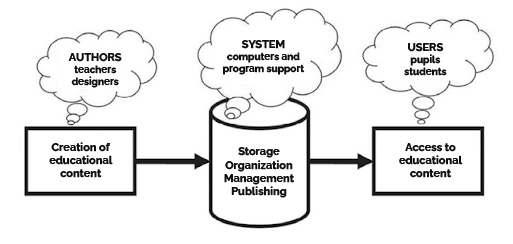
4. Digitization of teaching materials
As the form and method of distance learning have changed over time, so have the teaching materials and forms of communication between students and teachers. From the first correspondence courses, in which printed materials were sent by mail, through radio and television lectures to today's digital platforms, distance education has undergone a fundamental transformation. Today, the boundary between distance learning and traditional teaching has almost completely disappeared, as a large number of higher education study programs use hybrid and flexible forms of teaching that combine elements of both approaches, enriching teaching with the use of technology.
In such an environment, relying solely on traditional textbooks and handbooks is no longer enough. Although they still have their value in providing structured and verified information, their static nature and slow updating process make it difficult to keep up with the pace of contemporary scientific and social development. Teaching materials today need to be dynamic, accessible, and adaptable to suit different learning styles and digital habits of students.
The development of scientific and educational communication has further encouraged the emergence of institutional repositories and open archives that enable rapid exchange and sharing of knowledge. In the academic context, these are places where teachers and researchers can store their work, materials, and teaching resources, thereby increasing the visibility and accessibility of knowledge. Similarly, in the field of education, repositories of educational materials have developed that allow easy updating of content, reduce printing costs, and promote open access to knowledge.
With the digitization of educational materials, digital teaching content was created, followed by open educational resources (OER, which you can read more about in this activity). These can include digital books, lessons, interactive modules, videos, tests, or entire e-courses available for online download. Their specialty is that they are free to use, share, and adapt, usually under Creative Commons or similar licenses. Such resources enable teachers to adapt materials to their own needs, and students to learn from current, accessible, and contextually relevant content.
5. OER content
Open Educational Resources (OER) represent digital resources for learning, teaching, and research that are freely available, adaptable, and redistributed under licenses that enable open use. The use and production of OER content is increasingly recognized as a key strategy for improving the quality of education, increasing accessibility, and encouraging collaboration among teachers.
1. What is OER content?
Open Educational Resources (OER) encompass a variety of materials that can be freely used in education, research, and self-directed learning. These include digital textbooks, interactive simulations, presentations, tests, various interactive activities, as well as multimedia content such as videos, audio recordings, and texts. Some OER projects also offer complete e-courses that can serve as a foundation for learning or as a complement to existing programs.
OERs are most often published under Creative Commons licences that clearly define the terms of use, processing, and sharing. This enables teachers and students to be not only passive users, but also active creators: they can freely adapt the contents to their own context, upgrade them with examples, translations, or new activities, and share them again with others.
More information about CC licenses is available at this link.
2. Benefits and challenges of incorporating OER into teaching
The inclusion of open educational resources (OER) in teaching brings a number of significant benefits for students and teachers. First of all, OER increases the accessibility of educational materials by removing financial and geographical barriers, as students from different parts of the world can use the same textbooks, courses, or multimedia content without additional costs. The flexibility of use allows teachers to select, adapt, and combine materials according to their own needs and course objectives, while students can learn at the pace that suits them best.
In addition, OERs encourage open pedagogy, an approach in which students and teachers actively participate in the creation and adaptation of content. This develops a sense of community and responsibility for learning. The use of OERs also encourages collaboration and the exchange of good practices among teachers, as materials are freely shared, improved, and built upon. Finally, open resources reduce the cost of education, which allows students and institutions to have more equitable and sustainable access to knowledge.
The challenges of using OER include the variable quality of the material (which should always be checked before including it in your own e-course or teaching), the need for regular content updates, technical sustainability, and sometimes insufficient visibility of available resources (if they are downloaded from external sources). Teachers also need to invest additional time and support in adapting OER to their own context (significantly less than if they were to create them from scratch, but this still needs to be taken into account).
3. Creating OER content – pedagogical, technical, and legal aspects
The creation of open educational resources (OER) requires careful planning and alignment of pedagogical, technical, and legal aspects.
From a pedagogical point of view, it is important that the contents are clearly linked to the learning outcomes, structured in a logical and reviewed way, and adapted to different learning styles. Teachers should use methods that encourage interactivity and engagement, for example, with the help of tests, multimedia content, or self-checking tasks.
The technical aspect involves choosing formats and tools that allow for easy creation, sharing, and reuse of materials. Popular tools for creating OER include H5P for interactive content, Canva for creating graphics and presentations, Audacity for recording and editing audio, OBS Studio for recording and streaming lectures, and Moodle LMS for publishing and organizing content into e-courses. Accessibility is key, so content should be compatible with screen readers, mobile-friendly, and technically stable.
The legal aspect refers to the respect of copyright and the selection of an appropriate license. The most frequently used licences are the Creative Commons licenses, which clearly define the terms of sharing, processing, and commercial use. Authors should be careful about the use of images, texts, and multimedia from external sources and check whether they have permission to include them.
In addition, attention should be paid to the quality of the material, ensuring that the content is up-to-date, accurate, methodologically well-designed, and aligned with educational standards. In this way, OER becomes not only free but also a quality resource that truly contributes to education.
4. Platforms and tools for OER
There are numerous platforms that offer access to OER content. Examples include OpenStax (digital textbooks), OER Commons (open repository of educational materials), MERLOT (multidisciplinary resource base), and MIT OpenCourseWare (full e-course content) or Khan Academy (interactive courses and video materials). Such resources significantly contribute to the democratization of education and encourage a culture of knowledge sharing.
5. The role of teachers and institutions
The successful inclusion of open educational resources (OER) requires a combination of efforts by individual teachers and institutional support that should facilitate their work. Teachers have a key role because they become designers of digital educational materials: they create new content, adapt existing OER materials to their educational context and the specifics of e-colleges, and continuously evaluate their quality and pedagogical value. Thus, they move from the traditional role of lecturers to active creators of knowledge. Such an approach requires developed digital and authoring competencies that include knowledge of tools for creating digital content, understanding of the principles of open pedagogy, and awareness of copyright and licenses.
Institutions have a responsibility to create an environment that encourages teachers to use and develop OER. This includes systematically evaluating and recognizing work on open educational resources, offering professional development and training programs, as well as technical and advisory support. It is also important that institutions promote open education as part of their strategy and quality culture. Only through joint action by teachers and institutions can the sustainability and wider use of OER in higher education be ensured.
OER content is not only educational material - it is a tool for the democratization of knowledge, support for inclusive and quality education, and an opportunity to strengthen cooperation, innovation, and transparency in the education system. By actively participating in the production and use of OER, teachers take an active role in shaping open, relevant, and sustainable education for the future. You can read more about OER in this PDF leaflet.
The previous link is available in Croatian only. Participants may use free AI-powered translation tools to access the provided materials.
6. Micro-accreditations
Micro-accreditations are a newer but highly dynamic concept that complements formal education systems. Micro-accreditation is essentially a certificate of acquisition of a specific competence, knowledge, or skill within a smaller educational module that can last from a few hours to a few weeks. Unlike traditional diplomas or certificates, micro-accreditations are targeted, flexible, quick to acquire, and linked to specific labor market needs.
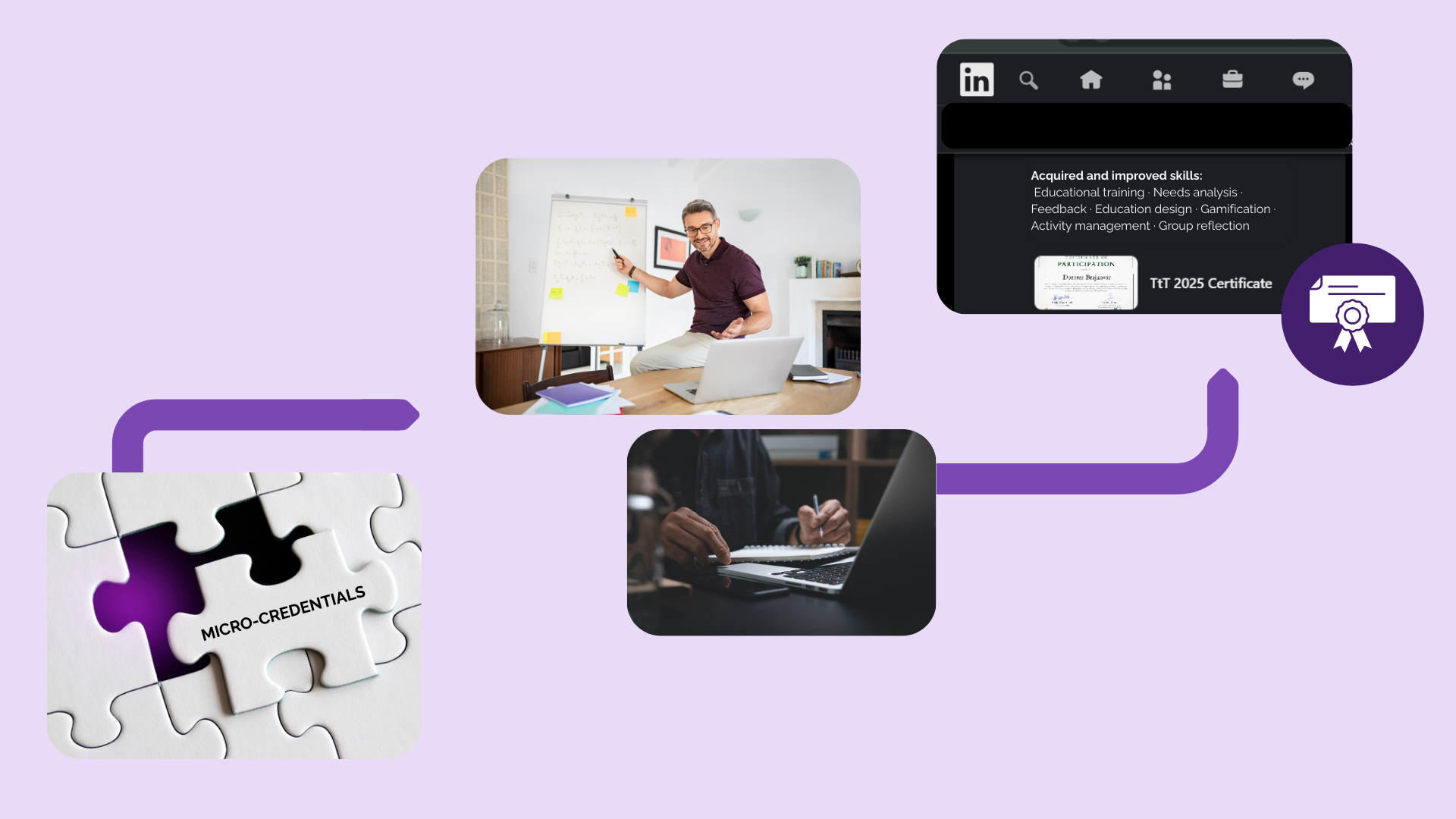
Considering the growing importance of lifelong learning and the need for flexible forms of education, micro-accreditations represent an important tool for personal and professional development, especially when connected to well-designed e-learning systems. In the context of university education, they can be implemented as supplements to regular courses, additional qualifications, recognized professional competencies, or separate educational modules for external students. You can find additional information about micro-qualifications in higher education at the link.
The previous link is available in Croatian only. Participants may use free AI-powered translation tools to access the provided materials.
7. Learning analytics
In the last two decades, the digital transformation of education has brought about a series of profound changes in the way the teaching process is organized, implemented, and evaluated. The development of e-learning, which was initially developed as a complement to distance education and is now increasingly used as an integrated part of higher education, has opened up space for the systematic collection and analysis of large amounts of data on student behavior and achievement. It is precisely this data availability that has created the foundations for the development of learning analytics, a new interdisciplinary approach that views education not only through a pedagogical and didactic prism, but also through the possibilities offered by computer science and the processing of large data sets.
Learning analytics is defined as the process of collecting, measuring, analyzing, and interpreting data about students and their educational contexts with the aim of understanding and optimizing the learning process and making informed pedagogical decisions. Although it shares its roots with the evaluation of the educational process, learning analytics focuses on the processing of real, most often digitally collected traces of user behavior, such as activities in the e-learning system, time spent with certain content, quiz results, interactions on forums, or navigation methods in teaching material.
In the context of higher education, the application of learning analytics can encompass multiple levels. At the student level, it enables the provision of personalized feedback and guidance to students based on their learning needs, habits, and achievements. At the teacher level, it provides valuable insights into the effectiveness of teaching materials and methods, uncovers patterns in learning that may indicate the risk of dropout or low achievement, and helps design more effective curricula. At the institutional level, analytics can serve strategic management, program evaluation, and data-driven educational policymaking.
Theoretically speaking, learning analytics relies on several disciplines: pedagogy serves to understand pedagogical concepts and goals, computing and information sciences develop tools for data processing and visualization, while psychology contributes to the interpretation of behavior and motivation. Such interdisciplinarity requires careful interpretation of the results because quantitative data cannot fully cover all dimensions of learning.
It is important to emphasize that the effective application of learning analytics is not limited to the technical implementation of tools, but requires pedagogically thoughtful design of metrics and indicators, clear ethical regulation of data collection and use, and active involvement of teachers in the interpretation of results. Also, the integration of analytics into the higher education context presupposes digital literacy of teaching staff, institutional support, and continuous education of all stakeholders in the education system.
Examples
In higher education institutions using Moodle LMS, learning analytics can be applied in various ways to improve the quality of teaching and provide timely support to students. Using Moodle Learning Analytics, it is possible to conduct various analyses and predictions based on models that automatically process data on student activities and performance. These models use predictive analytics algorithms and can help teachers in early recognition of patterns that indicate risk, progress, or engagement, for example:
Prediction of students at risk of dropping out
This model analyzes student behavior patterns in a course, including the number of sign-ups, activities completed, forum participation, and quiz scores. Based on the data collected, the system predicts which students are showing signs of low engagement or are at risk of dropping out. The instructor is notified and can take timely interventions, such as offering additional tutoring or personalized assignments.
Prediction of the probability of successful completion of the upcoming activities due
Moodle can predict the likelihood that a student will complete assigned activities on time. The system analyzes past assignment submission patterns, time spent on the platform, and participation in previous activities. Based on this data, it automatically warns students if there is a risk of tardiness, thus encouraging the development of self-regulation and responsibility in learning.
These models are available in the built-in Moodle Analytics API and can be activated at the e-course or system-wide level. Their purpose is to help teachers and students make data-driven decisions and develop proactive learning support strategies.
8. Bibliography
Banek Zorica, M. (2007). Sustavi za upravljanje obrazovnim materijalom u elektroničkom okruženju: doktorska disertacija. Zagreb: Faculty of Humanities and Social Sciences, University of Zagreb.
Bates, T. (2004). The promise and the myths of e-learning in post-secondary education. The Network Society. https://doi.org/10.4337/9781845421663.00025.
Background Colour
Font Face
Font Size
Text Colour
Font Kerning
Image Visibility
Letter Spacing
Line Height
Link Highlight
Paragraph Width
Text Alignment