Introduction to instructional design methods
| Site: | Loomen za stručna usavršavanja |
| Course: | Planning and Implementation of Online and Hybrid Teaching |
| Book: | Introduction to instructional design methods |
| Printed by: | Gost (anonimni korisnik) |
| Date: | Saturday, 24 October 2026, 1:18 AM |
Description
In this activity, some instructional design methods are briefly explained.
1. Introduction
Instructional design is a systematic approach to planning, developing, and evaluating instructional content with the goal of achieving effective learning. In higher education, where the teaching process increasingly takes place in online and hybrid environments, a well-planned instructional design is becoming a key element of successful teaching. Choosing the appropriate instructional design model depends on the complexity of the content, available resources, time constraints, and specific learning objectives.
This activity analyses five significant models:
- ADDIE
- SAM
- Gagné's model
- ABC method and
- 4C/ID model.
2. ADDIE model
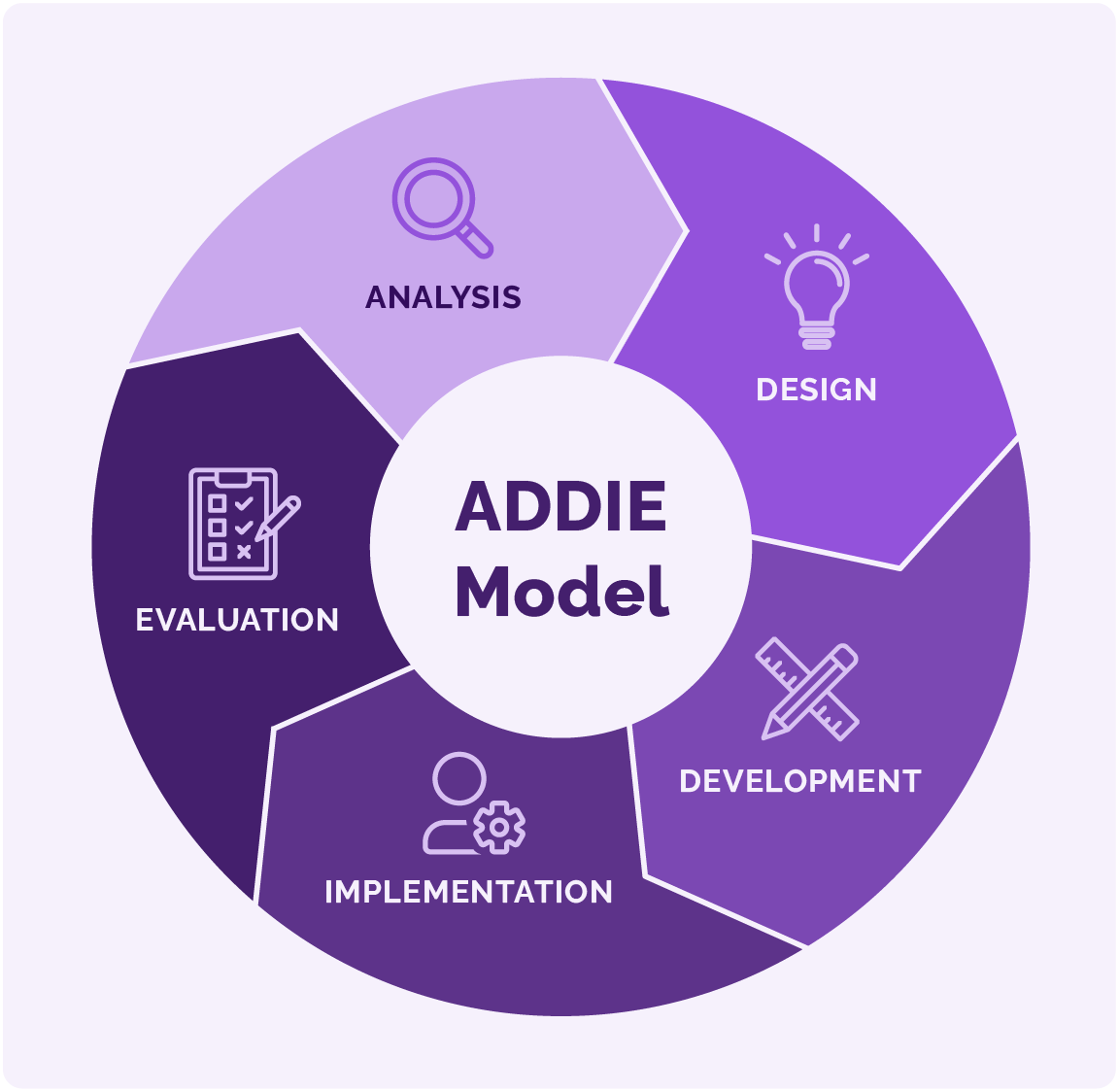
The ADDIE model consists of five phases: analysis, design, development, implementation, and evaluation. In the analysis phase, teachers and instructional designers identify the needs of learners, define educational objectives, and analyse the context in which learning will take place. The design phase involves detailed planning of teaching activities, content structure, and selection of appropriate teaching methods. The development phase involves the creation of specific teaching materials and resources, including texts, presentations, videos, or interactive elements. Implementation involves delivering the teaching and providing technical and methodological support. Evaluation is conducted continuously during the delivery and after the end of the teaching to assess success and identify opportunities for improvement.
The strength of the ADDIE model lies in its clear and systematic structure, which provides teachers and designers with reliable guidance at all stages of lesson development. This approach allows for thorough planning, which reduces the risk of omissions or inconsistencies. In addition, ADDIE has proven to be extremely adaptable to a variety of subject areas and levels of education, including higher education, corporate training, and military programs.
The disadvantage of the ADDIE model is its relative slowness and rigidity, which can be problematic in situations that require rapid response and adaptation. Because it is based on a linear sequence of steps, changes in later stages are often complex and require additional resources. Also, preparation in the early stages requires significant time and effort, which can be challenging in institutions with limited staff or financial resources.
Additional sources:
3. Model SAM (en. Successive Approximation Model)
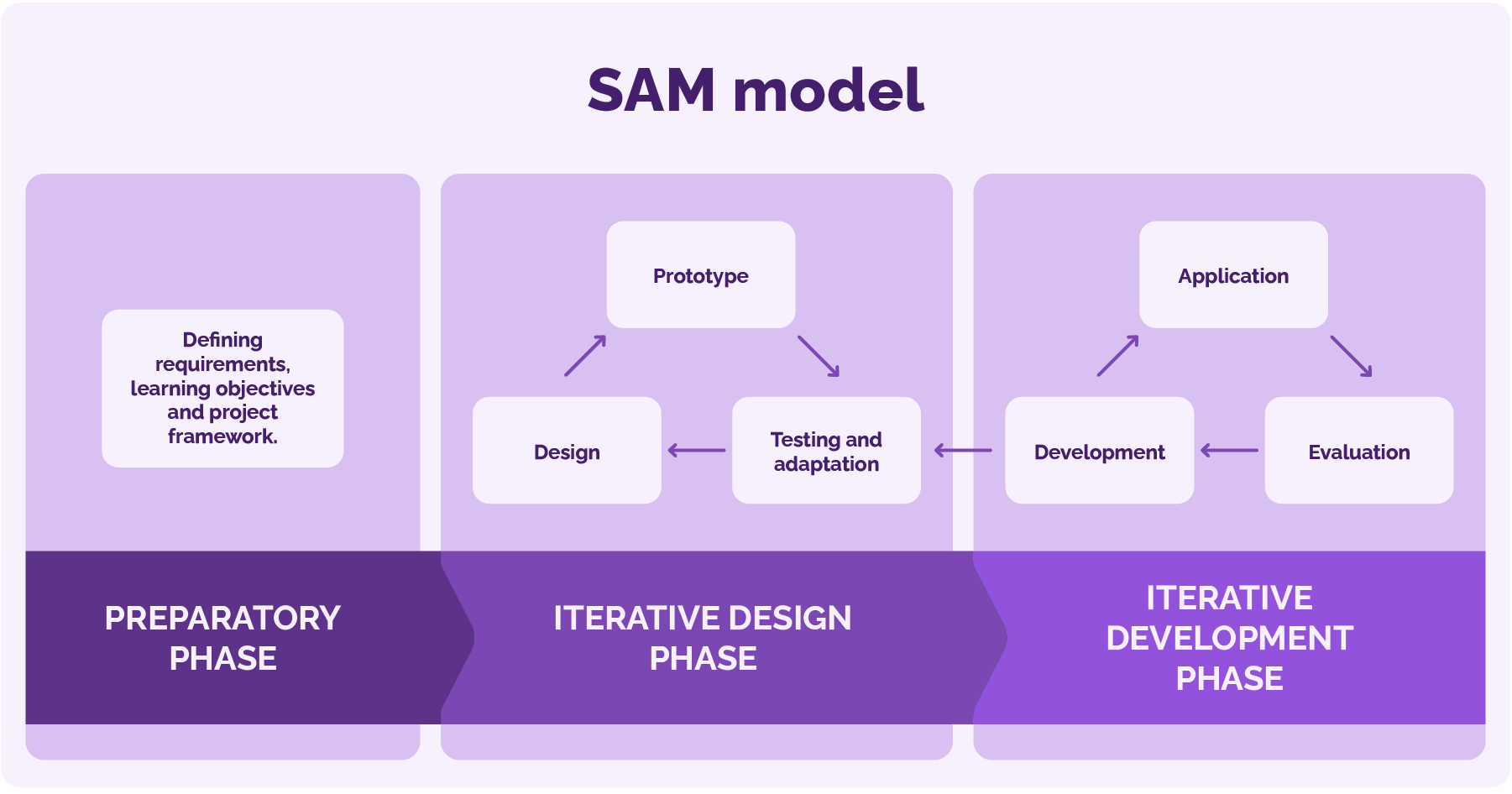
The SAM model introduces an agile approach to instructional design through a series of short, iterative development cycles. The process begins with a preparatory phase, in which learning objectives, basic requirements, and a project framework are defined. This is followed by the so-called "Savvy Start" — a workshop where team members collaboratively create early prototypes of teaching materials through a brainstorming-like activity. These prototypes are then tested and adapted through multiple iterations until a satisfactory version is achieved. The iterative nature of the model allows for continuous feedback collection and rapid adaptation of content to changing requirements or new insights.
The advantage of SAM is its flexibility and ability to react quickly to changes. Early prototypes allow ideas to be tested before significant investment is made in final development, thereby reducing the risk of creating inadequate content. The model also encourages collaboration and creativity among team members, which can lead to innovative teaching solutions.
The disadvantage of SAM stems from the fact that the less structured nature of the process can lead to disorganisation if the team is not experienced in agile methods. Multiple iterations can increase costs and extend development time if there is no clear project management plan. Also, the lack of formal documentation compared to linear models can make it difficult to monitor the process and evaluate long-term results.
Additional sources:
4. Gagné's model
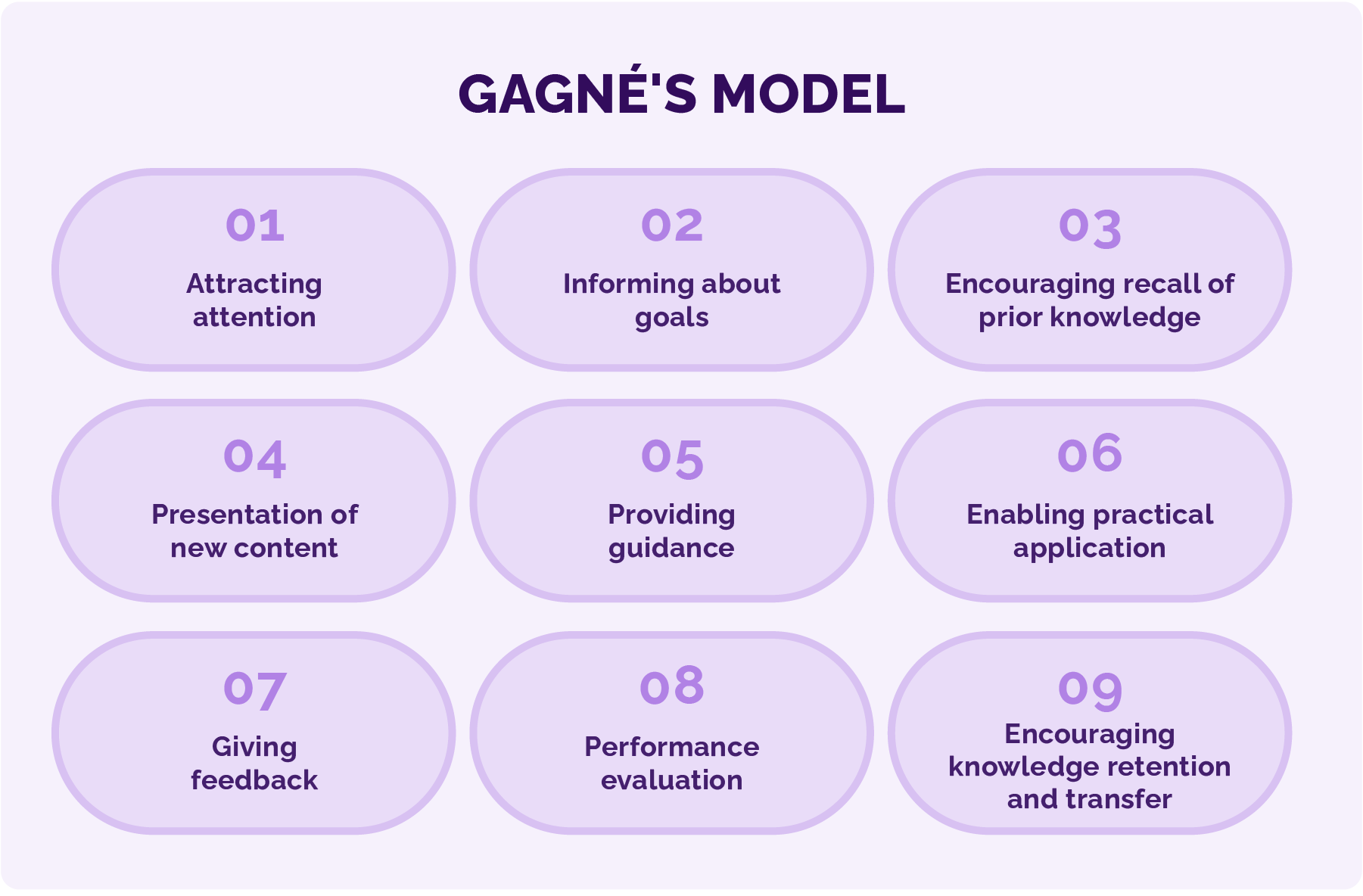
Gagné's model structures the teaching process through nine instructional events: attracting attention, informing about objectives, encouraging recall of prior knowledge, presenting new content, providing guidance, facilitating practical application, giving feedback, assessing performance, and encouraging retention and transfer of knowledge. This model is based on cognitive learning theories and is designed to systematically guide the student through the process of acquiring and applying new knowledge and skills.
The advantage of Gagné’s model lies in its clarity and logical structure, which provides teachers with a detailed guide for lesson planning. The model allows for the systematic connection of new knowledge with students’ prior experiences, thereby increasing the relevance and understanding of the material. It is applicable in a variety of educational contexts, including online and hybrid formats, and is particularly useful when it is necessary to clearly define and track the achievement of learning outcomes.
The disadvantage of this model is its potential rigidity, especially in teaching situations that require greater freedom and creativity. Detailed planning of each phase can be time-consuming, and the strict structure can limit spontaneous adjustments during teaching. In the context of informal learning or research-based projects, the model can seem too guided and restrictive.
Additional sources:
5. ABC method of instructional design
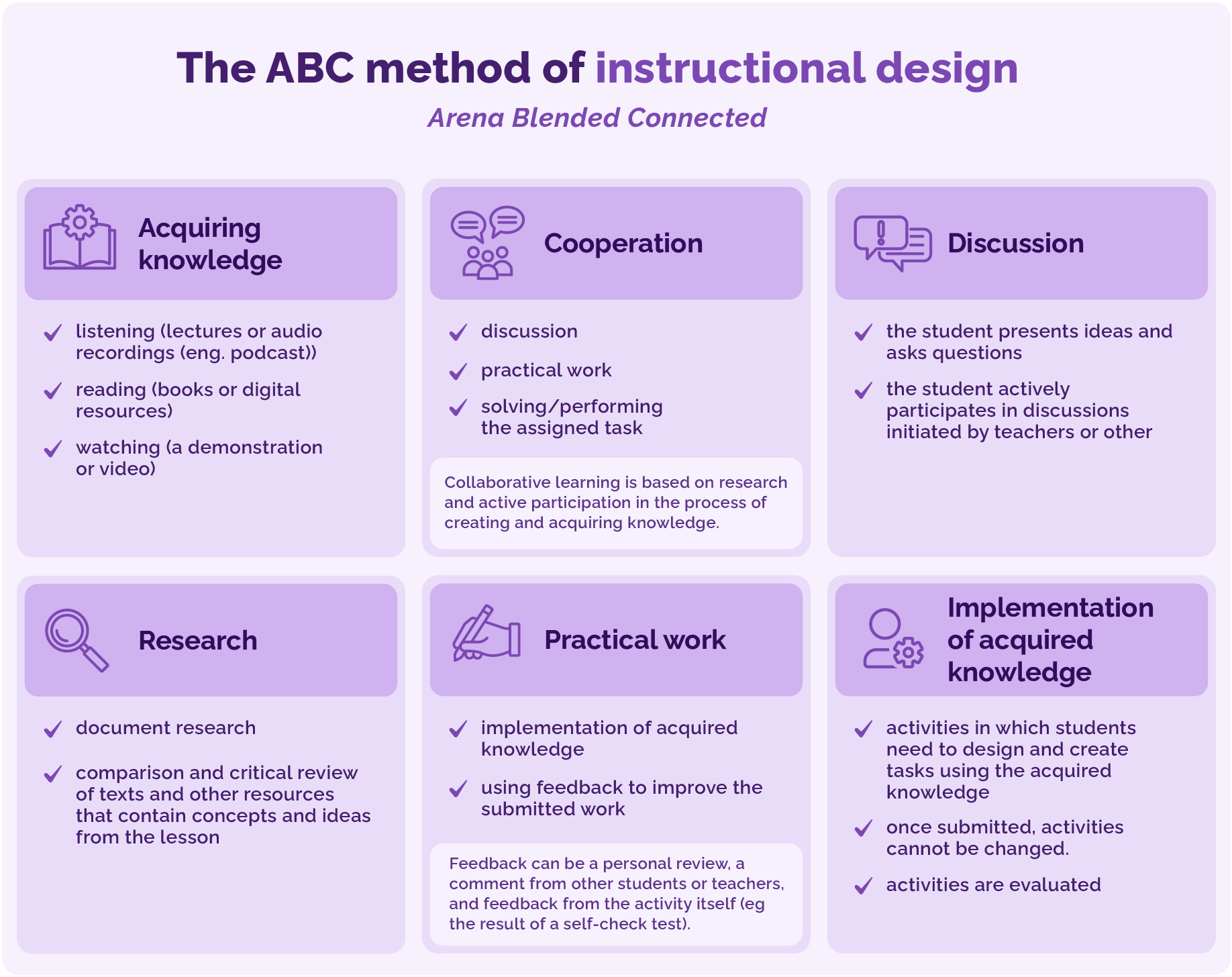
The ABC method, developed at University College London, is a rapid, collaborative approach to curriculum design and individual course design. It is based on visual cards that represent different types of learning activities, such as acquisition, discussion, collaboration, exploration, application, and production. During a workshop that usually lasts about 90 minutes, teachers jointly design the course structure, aligning the activities with the intended learning outcomes.
The advantage of the ABC method is its speed and the ability to bring together interdisciplinary teams to develop a comprehensive curriculum in a short time. The visual approach makes it easier to see the relationships between different types of activities and allows teachers to balance passive and active learning methods. This method encourages collaboration, creativity, and an open exchange of ideas among participants.
The disadvantage of the ABC method is that its effectiveness largely depends on the active participation of all team members (applicable in the case where several teachers teach a subject together). In the digital form of the workshop, it requires quality tools and well-designed online facilitation; otherwise, the dynamics and creative potential of the process may be lost. Also, the method provides a general framework but does not go into the detailed elaboration of teaching materials, so additional planning and development are required after the workshop.
Additional sources:
6. 4C/ID model
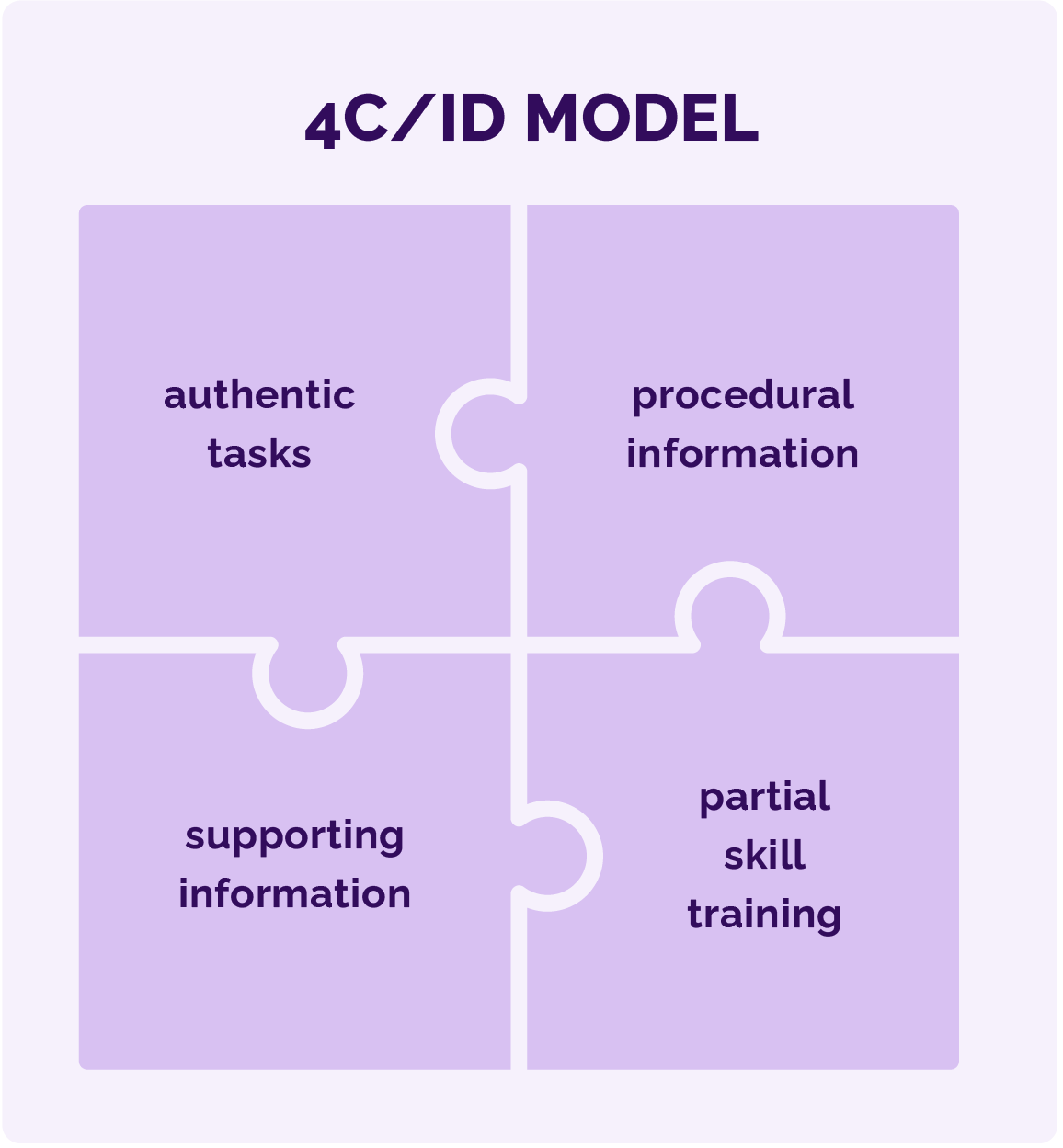
The 4C/ID model focuses on developing complex competencies through four basic components: authentic tasks, procedural information, supporting information, and partial skill practice. It is based on the idea that complex competencies are best developed by solving tasks that reflect real-world challenges, with gradually decreasing support as the student progresses.
The advantage of this model lies in its ability to connect theory and practice and in encouraging long-term retention of knowledge. The application of authentic tasks makes learning relevant and motivating for students, and the model is particularly effective in professional and technical disciplines.
The disadvantage of the 4C/ID model is the complexity of preparation and implementation. It requires a detailed analysis of learning objectives and careful design of tasks, which can be time- and resource-intensive. Also, teachers need a high level of expertise to effectively implement this approach, and in some educational settings, it may be difficult to provide the necessary conditions and resources.
Additional sources:
7. Model comparison and recommendations
ADDIE provides a solid structure and systematic planning, making it an excellent choice for projects with clear goals, sufficient time, and stable resources. SAM, on the other hand, allows for greater agility and faster responses to change, making it ideal for dynamic projects and innovative teaching initiatives. Gagné’s model is best when a structured approach is needed to guide students through clearly defined learning phases, especially in formal and highly regulated educational contexts. The ABC method offers a fast and efficient way to develop curricula, especially when it is necessary to involve multiple teachers in the design process and reach consensus on the structure of the course. The 4C/ID model is useful in developing complex, professionally relevant skills, but requires significantly more resources and professional preparation than other models.
If speed and collaboration are required, the ABC method and SAM are logical choices. When the goal is to achieve maximum precision and quality control, ADDIE remains the most reliable framework. For highly structured lessons and teaching modules with an emphasis on cognitive processes, the Gagné model provides the best support. In cases where the programme must prepare students for complex professional tasks, the 4C/ID provides the best link between theoretical and practical knowledge. The choice of model should therefore be based on a clear assessment of the educational context, available resources, and desired learning outcomes. In practice, combining elements of different models often gives the best results, as it allows flexibility without sacrificing quality.
Background Colour
Font Face
Font Size
Text Colour
Font Kerning
Image Visibility
Letter Spacing
Line Height
Link Highlight
Paragraph Width
Text Alignment