Reading: Ethical guidelines for the use of data in education and implementation of learning analytics
| Site: | Loomen za stručna usavršavanja |
| Course: | Learning Analytics |
| Book: | Reading: Ethical guidelines for the use of data in education and implementation of learning analytics |
| Printed by: | Gost (anonimni korisnik) |
| Date: | Thursday, 17 September 2026, 6:02 PM |
Description
1. Guidelines
Based on: Kirinić, V.; Svetec, B. (2022). Guidelines for ethical use of data in education. Developed as part of the Erasmus+ project Relevant Assessment and Pedagogies for Inclusive Digital Education (RAPIDE).

Figure 1: Relevant Assessment and Pedagogies for Inclusive Digital Education project logo
The principles presented in these guidelines address key issues related to the use of data in education, particularly in learning analytics. They take into account key challenges, recent research, and relevant strategic documents. They are especially focused on the relationship between data, data users, and data owners. For the purposes of these guidelines, seven key principles have been identified. For each principle, a definition is provided, along with desirable behaviors associated with it. In addition to the principles, the guidelines also provide an overview of institutional responsibilities in the context of ensuring the ethical use of learning analytics.
While this topic focuses on the ethical collection and use of student data, the course Open Education and Open Science further explores how openness can be aligned with ethics and individual rights.
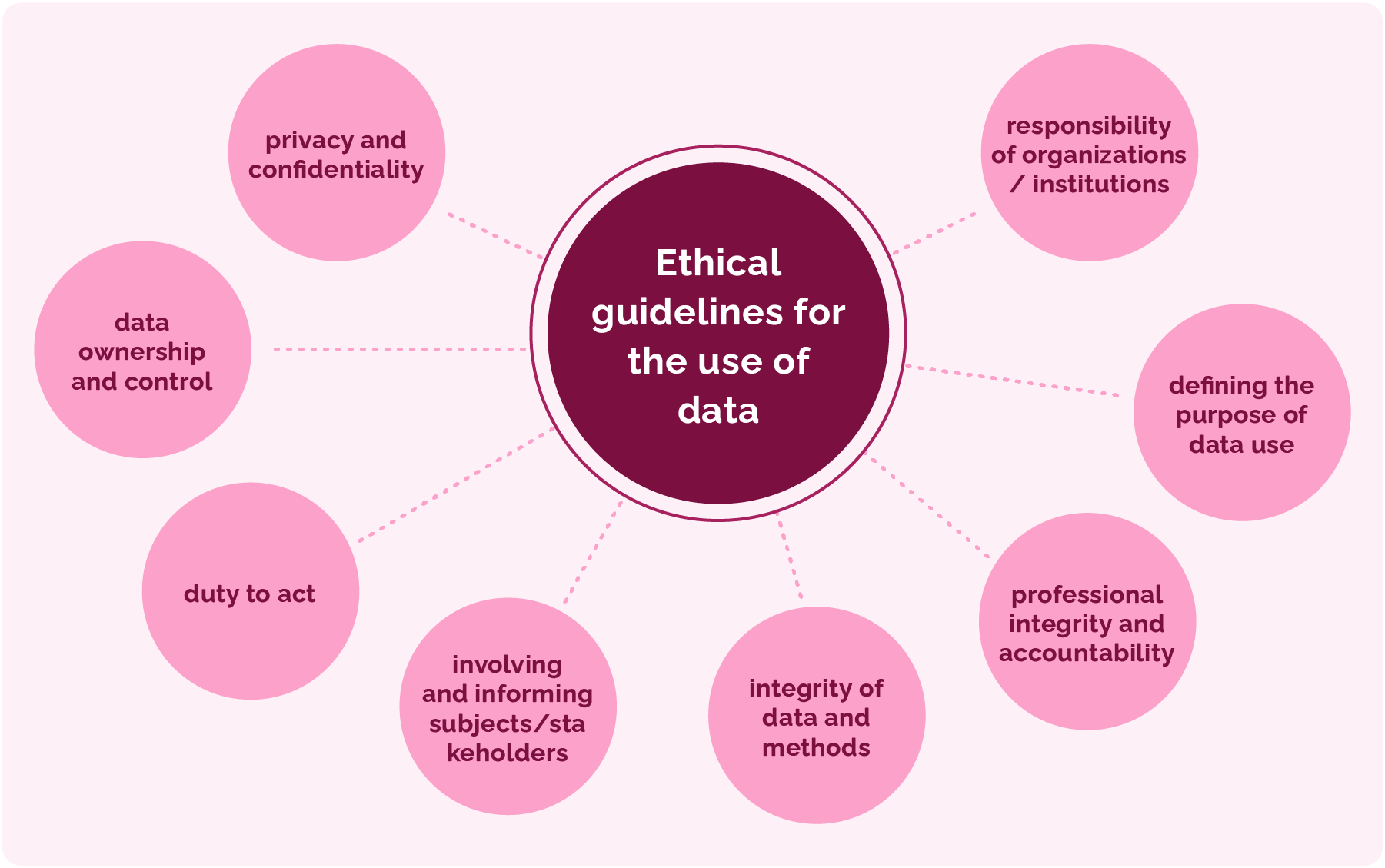
Figure 2: Ethical guidelines for the use of data
2. Ethical principles
3. Responsibility of organisations/institutions
The implementation of learning analytics, as well as its ethical aspects, does not depend solely on individuals (teachers). It is crucial that such practices are supported and guided at the institutional level.
Institutional responsibilities related to the ethical use of data and learning analytics include:
- defining which data are collected and displayed, why and how they are used, and who is responsible for learning analytics, while ensuring a focus on improving education
- promoting learning analytics as a tool that can contribute to student success, while ensuring equal opportunities and fair treatment of different student groups (including underrepresented and vulnerable groups), and preventing potential negative consequences
- promoting understanding that learning analytics cannot provide a complete insight into individual learning processes, as it may not take into account all aspects of learning or personal circumstances
- ensuring that students have appropriate autonomy in making decisions about their own learning, supported by learning analytics
- ensuring the necessary resources for learning analytics (human, technical, financial) and its ethical use
- encouraging the development of data literacy among students and teachers needed to participate in learning analytics, implement it, and use its results
- providing opportunities for the professional development of teachers in the area of ethical application of learning analytics
- identifying and mitigating potential risks associated with the use of learning analytics
- raising awareness of the potential of learning analytics to contribute to equity and fairness in education
- integrating the ethical use of data and learning analytics into institutional strategic documents, goals, and procedures
- developing an organisational culture of ethical data use and learning analytics, including encouraging staff to act in accordance with these guidelines
- promoting the sharing of good practices in the ethical use of data and learning analytics
- appointing individuals/committees responsible for the ethical use of data and the implementation of learning analytics, including handling complaints
- assuming responsibility and control over data and their processing
4. Questions for self-assessment and reflection
How can a balance be achieved between the level of data access needed for learning analytics and students’ rights to control their own data?
In what ways can institutions encourage the development of a culture of ethical data use and learning analytics?
5. Literature and sources used in the development of the guidelines
- Clark, K., Duckham, M., Guillemin, M., Hunter, A., McVernon, J., O’Keefe, C., Pitkin, C., Prawer, S., Sinnott, R., Warr, D. & Waycott, J. (2015). Guidelines for the ethical use of digital data in human research. University of Melbourne.
- Committee on Professional Ethics of the American Statistical Association. (2022). Ethical Guidelines for Statistical Practice.
- Corrin, L., Kennedy, G., French, S., Buckingham Shum, S., Kitto, K., Pardo, A., West, D., Mirriahi, N., & Colvin, C. (2019). The Ethics of Learning Analytics in Australian Higher Education.
- Drachsler, H., & Greller, W. (2016). Privacy and analytics: It's a DELICATE issue — a checklist for trusted learning analytics. In Proceedings of the Sixth International Conference on Learning Analytics & Knowledge (LAK ’16). Association for Computing Machinery, New York, NY, USA, 89–98.
- Fynn, A. (2016). Ethical Considerations in the Practical Application of the Unisa Socio-Critical Model of Student Success. The International Review of Research in Open and Distributed Learning, 17.
- Ifenthaler, D., & Schumacher, C. (2016). Student perceptions of privacy principles for learning analytics. Educational Technology Research and Development, 64(5), 923–938.
- Ifenthaler, D., & Tracey, M. W. (2016). Exploring the relationship of ethics and privacy in learning analytics and design: Implications for the field of educational technology. Educational Technology Research and Development, 64.
- Open University. (2014). Policy on ethical use of student data for learning analytics.
- Pardo, A., & Siemens, G. (2014). Ethical and privacy principles for learning analytics. British Journal of Educational Technology, 45(3), 438–450.
- Prinsloo, P. (2017). Guidelines on the ethical use of student data: A draft narrative framework. Siyaphumelela.
- Prinsloo, P., & Slade, S. (2017, March). An elephant in the learning analytics room: The obligation to act . In Proceedings of the Seventh International Learning Analytics & Knowledge Conference (LAK ’17). Association for Computing Machinery, New York, NY, USA, 46–55.
- Scholes, V. (2016). The ethics of using learning analytics to categorize students at risk. Educational Technology Research and Development, 64(5), 939–955.
- Sclater, N., & Bailey, P. (2015). Code of practice for learning analytics. Jisc.
- Slade, S., & Tait, A. (2019). Global guidelines: Ethics in learning analytics. International Council for Open and Distance Education (ICDE).
- Timmis, S., Broadfoot, P., Sutherland, R., & Oldfield, A. (2016). Rethinking assessment in a digital age: Opportunities, challenges and risks. British Educational Research Journal, 42(3), 454–476.
- Tzimas, D., & Demetriadis, S. (2021). Ethical issues in learning analytics: A review of the field. Educational Technology Research and Development, 69(2), 1101–1133.
- Wintrup, J. (2017). Higher education’s Panopticon? Learning analytics, ethics and student engagement. Higher Education Policy, 30(1), 87–103.
Background Colour
Font Face
Font Size
Text Colour
Font Kerning
Image Visibility
Letter Spacing
Line Height
Link Highlight
Paragraph Width
Text Alignment