Identifying student characteristics for the purpose of adapting learning design
| Site: | Loomen za stručna usavršavanja |
| Course: | Learning Design |
| Book: | Identifying student characteristics for the purpose of adapting learning design |
| Printed by: | Gost (anonimni korisnik) |
| Date: | Thursday, 17 September 2026, 3:39 PM |
1. Introduction
Understanding student characteristics is an important step in designing learning that is student-centred. This analysis enables teachers to adapt teaching activities, learning activities, content, and assessment methods to the actual needs of students, thereby increasing the effectiveness and relevance of teaching.
Working with this material contributes to achieving the learning outcome: to design learning for specific learning outcomes and teaching topics.
2. Objective of the task
Independently research the characteristics of the students you teach to improve the planning and delivery of your course.
3. What to investigate?
Focus your analysis on four key aspects:
1. Prior knowledge and experience
Which courses have students previously taken (e.g., course prerequisites)?
What is their general prior knowledge in the subject area covered by the course?
Do students have practical experience (e.g., internships, employment, or secondary school experience)?
Are students generally interested in the course?
2. Approaches to learning
How do students typically approach learning – superficially (focused on reproduction) or deeply (focused on understanding)?
Do they prefer independent work, teamwork, learning through practice, or digital materials?
Do they have developed digital competencies?
3. Demographic and contextual characteristics
What are the age and gender characteristics of your student group?
Are there international students, students who work alongside their studies, or students with special needs?
Are there students with specific learning difficulties or other needs that require adaptations in the learning design (UDL)?
At which study level and year are they enrolled (e.g., undergraduate, graduate)?
4. Students’ digital literacy and access to technology
How skilled are students in using digital tools?
Have they used digital tools in courses preceding yours?
Do students have their own equipment (e.g., a computer) or can they use equipment available at the university?
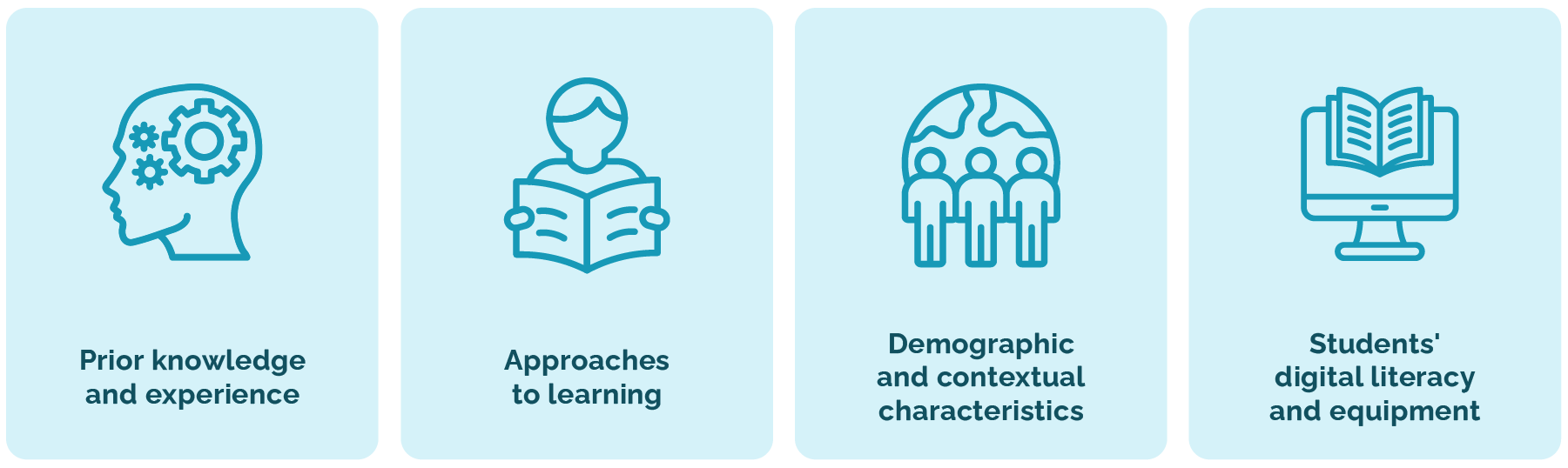
Figure 8: Student Characteristics
4. How to collect data?
Formal sources:
- ISVU/Studomat, enrolment records, results from previous courses, attendance analysis
- Student Support Centre and/or Office for Students with Disabilities
- Vice-dean for education and students
Informal sources:
- a short initial survey (e.g., Google Forms, Moodle survey, or Mentimeter)
- discussion with students during the first lecture
- feedback from previous iterations of the course
Collaboration with colleagues who teach the same student cohort.
5. How to structure the analysis?
When documenting your analysis, answer the following questions:
What are the main characteristics of my students?
Is there a need for specific accommodations, and can such needs be integrated into the learning design?
How do these characteristics influence their ability to acquire course content and achieve the intended learning outcomes?
What adjustments can I make to the learning design based on these insights?
6. What after the analysis?
The results of this analysis will serve as a basis for:
- selecting and adapting teaching methods (e.g., lectures, workshops, project work)
- aligning learning and teaching activities with the students’ prior knowledge levels
- introducing elements of student support (e.g., additional resources, teaching assistants)
- applying an inclusive approach to teaching
- creating an inclusive learning design for the course.
Note
There is no need for an exhaustive analysis – the goal is to gain a general overview that will help you improve the learning design and implementation of your course in accordance with the specific needs of your students.
7. Universal Design for Learning
Universal Design for Learning (UDL) is a pedagogical framework aimed at creating flexible and inclusive educational approaches that enable effective learning for all students, regardless of their abilities, learning approaches, language, culture, or other differences.
UDL is a proactive approach that does not adapt teaching retroactively for individuals with difficulties, but is instead designed from the start so that learning is accessible to everyone.
UDL is based on three key principles that apply to *what*, *how*, and *why* students learn:
Multiple Means of Representation – relates to *what* students learn. This principle encourages teachers to present content in various ways (text, image, video, audio, infographics), enabling students with different learning styles and levels of prior knowledge to understand the material.
Multiple Means of Action and Expression – relates to *how* students demonstrate what they have learned. Students should have opportunities to choose different ways of expressing their knowledge, such as through written work, presentations, video recordings, practical tasks, or oral exams. This approach promotes the development of diverse competencies and autonomy in learning.
Multiple Means of Engagement – relates to *why* students learn. This principle supports motivation and participation by allowing choice of topics, challenge levels, learning modes (individual, pair, or group), integrating game-based elements, and connecting content to students’ interests and experiences.
Reference: CAST Universal Design for Learning Guidelines.
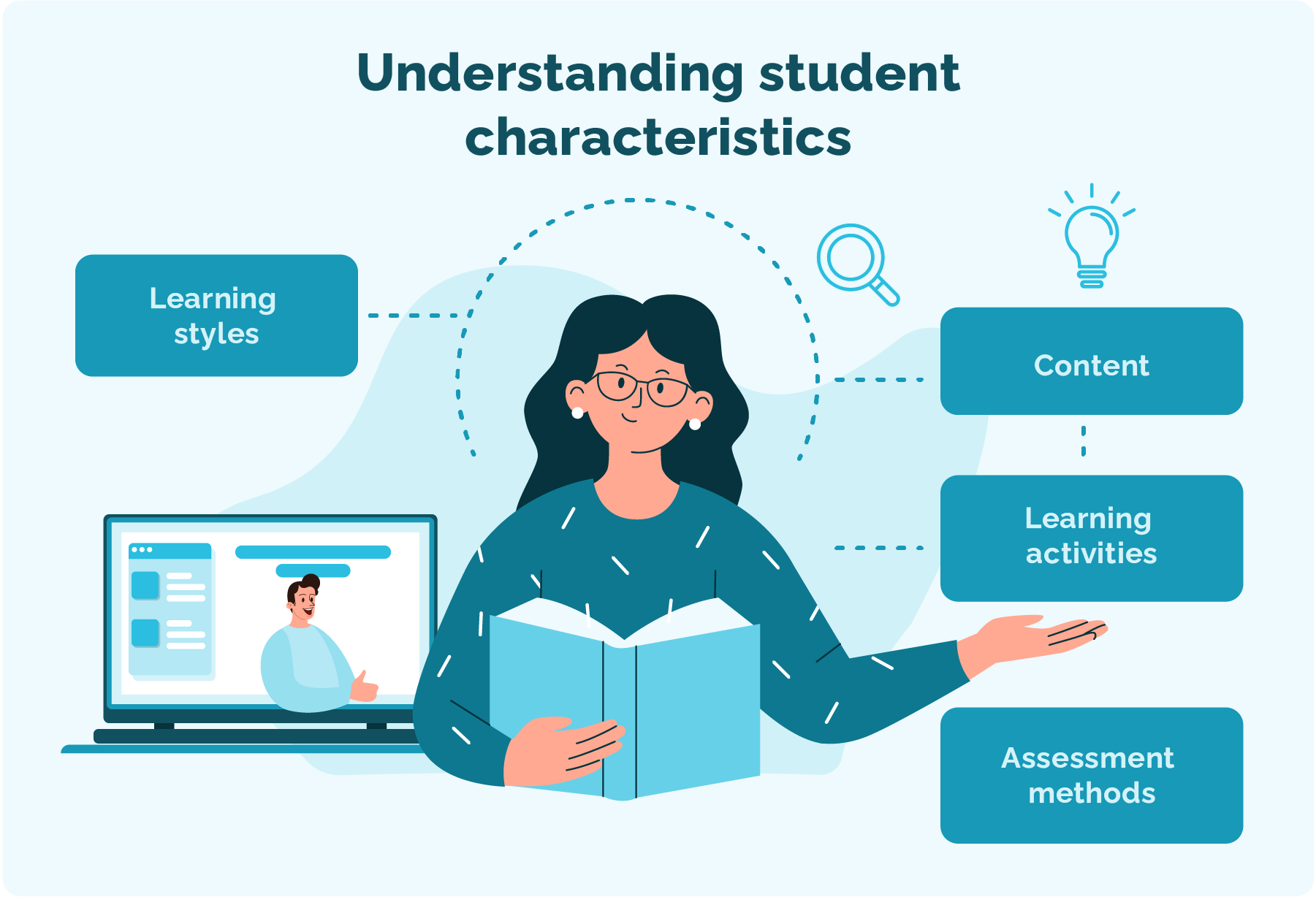
Figure 9: Understanding student characteristics
Background Colour
Font Face
Font Size
Text Colour
Font Kerning
Image Visibility
Letter Spacing
Line Height
Link Highlight
Paragraph Width
Text Alignment