Development of Open Education and Open Science
| Site: | Loomen za stručna usavršavanja |
| Course: | Open Education and Open Science |
| Book: | Development of Open Education and Open Science |
| Printed by: | Gost (anonimni korisnik) |
| Date: | Thursday, 17 September 2026, 7:25 PM |
1. Development of Open Education and Open Science
In the context of the historical development of open science, at the beginning of the 2000s, three key declarations were adopted that defined the principles of open access and initiated a global movement of openness. These are the Budapest Open Access Initiative (2002), which laid the foundations for free access to peer-reviewed publications, the Bethesda Statement on Open Access Publishing (2003), and the Berlin Declaration on Open Access to Knowledge in the Sciences and Humanities (2003). Together, these declarations promoted the idea that scientific knowledge, especially that funded by public funds, should be available to everyone, thereby encouraging transparency, collaboration, and faster scientific progress.
The Budapest Open Access Initiative, published in February 2002, is considered the foundational document of open science. It set the first widely accepted definition of open access, emphasising the importance of free availability of peer-reviewed scientific publications on the internet, with the possibility of reading, downloading, copying, distributing, and printing. The initiative promoted two main paths to open access: the "green path" (archiving in repositories) and the "gold path" (publishing in open-access journals).
In June 2003, the Bethesda Statement on Open Access Publishing followed. This statement, originating from the biomedical sector, further elaborated on the technical and legal aspects of open access. It particularly emphasized that authors must retain copyrights and grant permission for the use of their work, including the creation of derivative works, and that works must be stored in publicly accessible online repositories.
Finally, the Berlin Declaration on Open Access to Knowledge in the Sciences and Humanities, published in October 2003, expanded the concept of open access beyond publications alone. It encompassed all forms of scientific knowledge, including raw data, metadata, software tools, and multimedia materials. The Berlin Declaration called upon research institutions, funders, and governments to actively support and implement open access principles, recognising it as a key element for the global knowledge base. Together, these three declarations, often referred to as the "BBB definition" of open access, set solid foundations for the development of the global open access movement, promoting transparency, collaboration, and the dissemination of knowledge.
Two key declarations for open education are the Cape Town Open Education Declaration (2008) and the UNESCO 2012 Paris OER Declaration (2012).
The Cape Town Declaration calls for the free use, adaptation, and sharing of educational resources, emphasising the participation of educators and students and the encouragement of open policies. It was published on 22 January 2008, and represents a strong call to action for promoting Open Educational Resources (OER) and practices. Its fundamental idea is that everyone should have the freedom to use, adapt, improve, and redistribute educational materials without restrictions.
2. Cape Town Declaration and Paris Declaration
The Declaration highlighted three key strategies for achieving this goal:
- Active participation – Encouraging teachers and students to create, use, and share open educational resources.
- Open licensing – Publishing educational resources under open licenses, such as Creative Commons licenses, which enable legal and free reuse.
- Priority support – Calling on governments and educational institutions to give open education a high priority in their policies and strategies.
The Cape Town Declaration strives to empower a global revolution in teaching and learning, making education more accessible and flexible.
The UNESCO 2012 Paris OER Declaration defines OER as free materials under open licenses, calling on governments to ensure their access and promote support policies. The Paris Declaration was adopted on 22 June 2012, at the first World OER Congress, thereby gaining international legitimacy under the auspices of UNESCO. This declaration builds on earlier initiatives and more precisely defines OER as "teaching, learning and research materials in any medium – digital or otherwise – that reside in the public domain or have been released under an open license that permits no-cost access, use, adaptation and redistribution by others with no or limited restrictions."
Key calls of the Paris Declaration include:
- Encouragement to governments – Calls on governments to promote and integrate the use of OER into educational systems.
- Publicly funded materials – Appeals for all publicly funded educational materials to be published in a freely reusable format.
- Capacity building – Emphasises the need for capacity building among teachers and students for creating and using OER.
- Support policies – Advocates the creation of favourable policies that support the development, use, and sharing of open educational resources.
Both declarations were fundamental in shaping global awareness and policies related to open educational content, encouraging institutions and governments to adopt the principles of openness to make education more accessible, inclusive, and of higher quality for all.
Open access activities in Croatia began as early as 1997 with the establishment of the Croatian Scientific Bibliography (CROSBI), which had the functionalities of an open access repository. Since then, numerous national initiatives for open access have been launched, including portals such as HRČAK (Croatian open access journals), databases such as ŠESTAR (scientific-research equipment) and POIROT (projects), and infrastructures such as DABAR (national infrastructure for repositories), PUH (data storage), and the Croatian Social Science Data Archive (CROSSDA). It is important to highlight that CROSBI, ŠESTAR, and POIROT are integrated into CroRIS – the new comprehensive Science Information System of the Republic of Croatia.
Croatia actively participates in international open science initiatives, which is confirmed by its membership in the European Open Science Cloud (EOSC) since January 2021, with the University Computing Centre SRCE appointed as the mandated organization. Accordingly, in July of the same year, SRCE launched the Initiative for the Croatian Open Science Cloud (HR-OOZ) to create a national environment that encourages and supports open science. Additionally, Croatia's commitment to open science was recognized at the international level, and after the adoption of the Accession Roadmap at the OECD Council meeting in 2022, Croatia was officially confirmed in 2024 as fully aligned with the OECD Recommendations on Open Science and Access to Research Data from Public Funding.
3. Croatian Platforms and Repositories Supporting Open Access
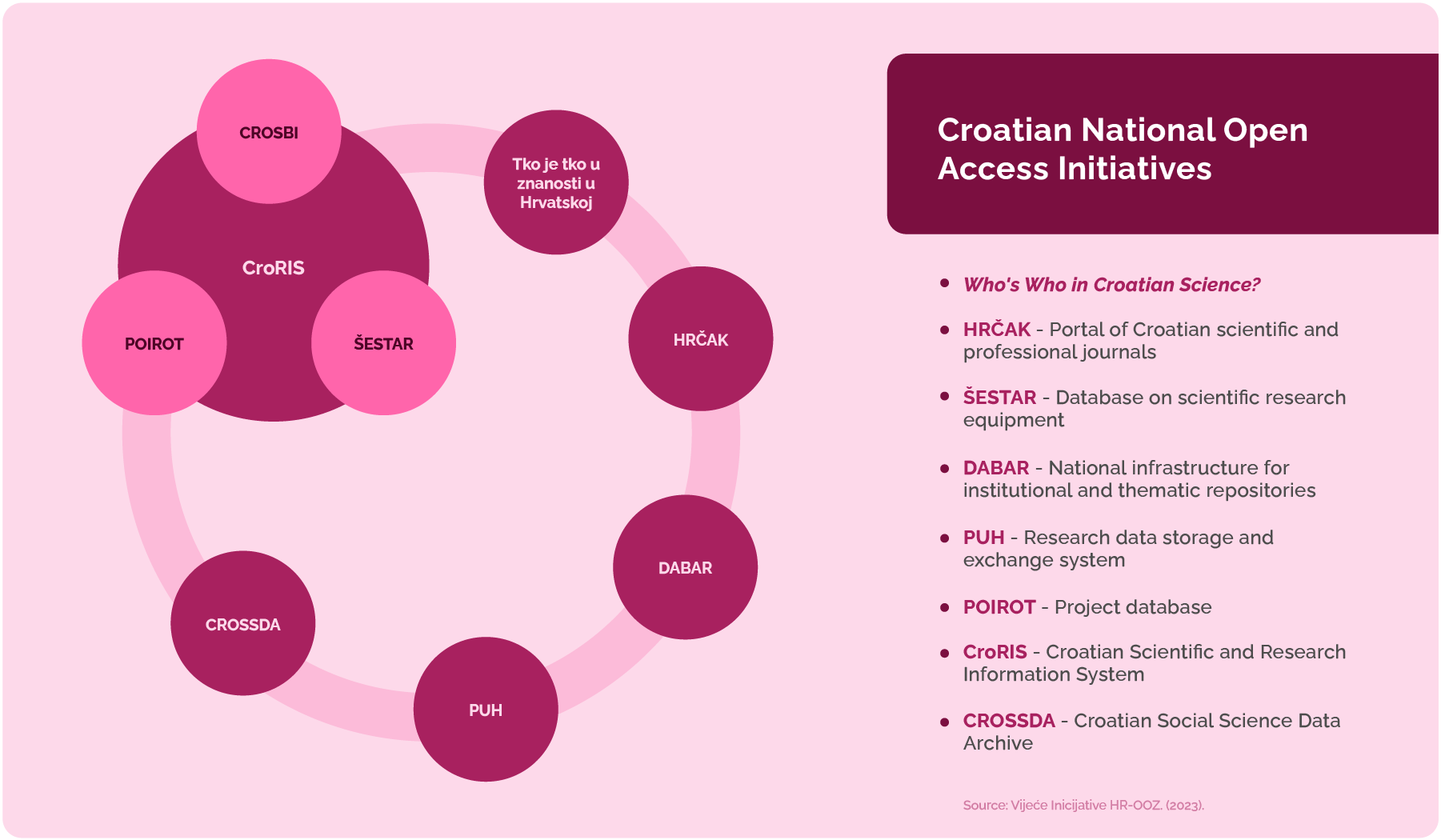
Figure 1: Croatian national open access initiatives
CroRIS is the national research information system (Croatian Research Information System), which centralises and connects all data on scientific research work in Croatia. Its aim is to consolidate information on researchers, institutions, projects, publications, equipment, and innovations into a single database.
The system supports open science and ensures the reliability and quality of data. It is interoperable with international initiatives such as EOSC, which enhances the global visibility of Croatian research. CroRIS serves as a key tool for strategic decision-making and the management of science at the national level. By integrating existing systems (such as CROSBI and POIROT), CroRIS provides a comprehensive platform for the digitalisation and organisation of scientific information in Croatia.
HRČAK is the central portal for Croatian scientific and professional journals that provide open access to their articles. HRČAK was launched in 2006 and has become a key platform for the dissemination of scientific knowledge in Croatia. It offers journal editors tools for publishing issues in open access, thereby significantly contributing to the visibility of Croatian scientific output. Currently, several hundred journals are available through the portal.
DABAR (Digital Academic Archives and Repositories) is a key component of the Croatian e-infrastructure, developed to support open science. It enables the establishment and maintenance of reliable and interoperable institutional and thematic digital repositories at no cost to institutions. DABAR ensures the long-term preservation and dissemination of digital objects created within higher education and scientific institutions, including final and diploma theses, doctoral dissertations, research data, and more. The system is aligned with international standards such as the OpenAIRE guidelines.
PUH is a data storage and management system provided by the University Computing Centre (SRCE). It is intended for the storage and sharing of data related to education and research processes within the science and higher education system. PUH forms part of SRCE’s advanced computing services, which also include the Supek supercomputer, offering a robust solution for the storage requirements of large volumes of research data.
ŠESTAR is a database that serves as a register of scientific research equipment in Croatia. Its purpose is to enable more effective use and greater accessibility of costly research equipment within the scientific community. Through this database, information on available equipment is centralised and searchable, which facilitates collaboration and the planning of research projects. Although detailed information about the ŠESTAR database is not as readily accessible to the public as some other systems, it remains an important resource for coordinating research capacities.
POIROT is a database of project activities in science and higher education in the Republic of Croatia. Its purpose is to collect and provide an overview of data on active and completed scientific projects. This database offers insight into research directions, institutions leading and participating in projects, and sources of funding. It is important to note that POIROT has become part of the Science Information System of the Republic of Croatia (CroRIS), and the entry of new data and the editing of existing projects are now carried out exclusively through the CroRIS platform.
CROSSDA is the Croatian Social Science Data Archive, more specifically, a national public infrastructural service whose role is to ensure the long-term preservation and dissemination of social science research data. CROSSDA was established in 2019 and is a member of CESSDA (Consortium of European Social Science Data Archives), ensuring compliance with European standards. The archive provides support to researchers throughout the entire project life cycle and promotes open access and open science policies within the field of social sciences.
4. Open Access: Development, Challenges, and the Key Role of Identifiers
The development of open access has transformed the way scientific knowledge is shared and used. Although the basic idea – free and no-cost access to scientific publications and data – is firmly rooted in the principles of knowledge dissemination, its implementation is not without challenges.
One of the primary challenges is funding. Traditional publishing models rely on subscriptions, whereas open access often depends on alternative models such as Article Processing Charges (APCs) or institutional support. Identifying sustainable and equitable funding models is essential for the long-term viability and growth of open access. At the same time, it is crucial to ensure the continued quality of scientific work. The peer-review process and the maintenance of academic rigour must remain uncompromised, regardless of the access model.
Additional complexity arises from copyright issues. Licences such as Creative Commons (CC) have become the standard in open access, allowing different levels of use and reuse of content. However, understanding and correctly applying these licences, as well as ensuring compliance with existing legislation, presents a challenge for authors and institutions.
Acceptance within the academic community is essential for the success of open access. Changing established publishing practices and perceptions of scientific value requires time, education, and sustained support.
In the context of these challenges, identifiers and identification systems play a crucial role in the functioning of open access. In a world of exponential growth in scientific publications and data, without standardised digital identifiers, it would be almost impossible to:
- find specific scientific papers, datasets, or authors
- cite works consistently and reliably, ensuring the accuracy of bibliographic references
- link related research results, authors, institutions, and projects, thereby enabling a more complete insight into scientific production
Identifiers such as DOI (Digital Object Identifier) for publications, ORCID (Open Researcher and Contributor ID) for authors, and ROR (Research Organization Registry) for institutions function as unique digital “number plates”. They ensure a permanent connection to a digital object or entity, even when URLs change. These systems create a network of connections that not only facilitates navigation through the body of scientific work but also enables more accurate tracking of research impact and collaboration. Without such systems, the progress of open access would be significantly hindered, and the potential for the widest possible dissemination and reuse of knowledge would remain unrealised.
5. Self-Assessment and Reflection Questions
- How does the gradual expansion of the scope of open access (from publications to data and software, as defined by the BBB declarations) affect the global progress of science?
- List and describe the three main challenges facing the implementation of open access on a global level.
- Why are unique digital identifiers (DOI, ORCID) crucial for the reliable operation of the entire open science ecosystem?
- In what ways does the implementation of open education policies (OER), defined in the Cape Town Declaration and the Paris Declaration, contribute to the inclusiveness and quality of education on a global level?
- How can successful national infrastructure, such as repositories and information systems like CroRIS, DABAR, and HRČAK, transform the visibility and impact of science in Croatia?
- What is the primary role of the CROSBI system and the ŠESTAR database within the context of the development of open science in Croatia?
- Describe the Croatian Open Science Cloud initiative (HR-OOZ) and its goals.
Background Colour
Font Face
Font Size
Text Colour
Font Kerning
Image Visibility
Letter Spacing
Line Height
Link Highlight
Paragraph Width
Text Alignment