Using and Creating Open Educational Materials
| Site: | Loomen za stručna usavršavanja |
| Course: | Open Education and Open Science |
| Book: | Using and Creating Open Educational Materials |
| Printed by: | Gost (anonimni korisnik) |
| Date: | Friday, 18 September 2026, 10:53 PM |
1. Introduction
Open education can be defined as an umbrella term for institutional policies and practices, and various initiatives aimed at expanding opportunities for access to high-quality educational programs and educational content even beyond the framework of formal education.
Open education represents a transformative approach to learning and teaching, the fundamental purpose of which is the removal of barriers to access to education and knowledge. It enables individuals to learn anywhere, at any time, using any device, and with anyone's support.
This approach is described as an umbrella (collective) term for policies and practices of educational institutions and various initiatives that strive to expand access to high-quality educational programs and content, far beyond the framework of formal education. The main goal is to make learning accessible, abundant, and customizable for all, thereby expanding the access and participation of the entire population.
This approach to education offers:
- more ways of teaching and learning centered on the learner
- effective knowledge building and exchange
- providing various access paths to formal and informal education and their systematic connection
Realizing the goals of open education is based on two key prerequisites: open educational content (Open Educational Resources - OER) and open technologies (platforms and tools).
Open education goes beyond mere availability of content and includes four key dimensions that allow a person at any point in their life to seize an educational opportunity, including:
- access to content: free and flexible use of materials
- infrastructural support: availability of tools and learning environments
- assessment: flexible mechanisms for evaluating knowledge
- certification: recognition of learning outcomes, including informally acquired knowledge
For the systematic implementation of open education at national and institutional levels, the following strategic steps need to be taken:
- clearly defining and systematically implementing policies and strategies related to open education
- developing a culture of openness, not only in education but within the wider social context
- systematically planning and securing resources for the creation of high-quality open educational content
- enabling teachers to acquire advanced digital competencies and ensuring they receive high-quality and accessible support in the use of ICT
- evaluating teaching performance, teaching quality, and openness in teaching, while encouraging the use of OER to improve existing programmes and develop new ones
- regulating issues related to intellectual property rights within the science and higher education system, and establishing mechanisms for compliance and effective enforcement
- continuing the development and expansion of information and communication infrastructure at all levels
Open education, according to "Opening up Education: A Support Framework for Higher Education Institutions", encompasses ten interconnected dimensions that represent a holistic framework for the modernization of higher education. These dimensions can be divided into two parts: internal, which are focused on the core of learning and knowledge, and external, which are focused on institutional support and leadership.
The core of open education encompasses six dimensions:
- content which refers to the creation and distribution of open educational resources (OER) and other materials for learning
- access which ensures that educational resources, programs, and technologies are accessible to everyone, removing barriers
- research which focuses on open science practices, including Open Access to publications and data
- pedagogy, which implies the adoption of open and flexible methods of teaching and learning
- recognition, which encompasses the formal recognition of non-formal and informal learning outcomes acquired in open environments
- collaboration which encourages networking and the joint creation of knowledge among students, teachers, and institutions
These dimensions are supported by four strategic and institutional dimensions:
- strategy that includes the adoption of official policies and long-term plans of the institution for the implementation of open practices
- technology, which refers to the development and maintenance of open information and communication infrastructure and tools
- quality, which encompasses mechanisms for ensuring and improving the quality of all open programs and resources
- leadership, which represents active management and support from faculty or university administration to promote a culture of openness among all stakeholders
Only the synergy of all ten dimensions ensures a comprehensive and sustainable implementation of open education in a higher education institution.
Open educational resources (OER) are materials for learning, teaching, and research, as well as any other educational materials that are publicly available under an open license that allows free access to those materials, their use, adaptation, and redistribution.
Examples of open educational resources in higher education institutions include entire courses, modules, units, lessons, textbooks, collections, articles, presentations, images, video and audio recordings, animations, quizzes, tests and tasks, various learning materials, teaching materials, lecture recordings, digital materials for learning and teaching, online tutorials, e-courses, etc.
Massive open online courses, better known as MOOCs, are often mentioned in the context of open education. Although both concepts are related to openness and education reform, it is important to understand their difference. Most MOOCs offer free course attendance, but often do not allow downloading, using, or modifying teaching materials. In contrast, true open educational resources are always accompanied by an open license that explicitly allows this. Therefore, although MOOCs are a valuable resource, not all can be considered open educational resources in the full sense of the word.
Open educational resources carry enormous potential for improving education at multiple levels. They encourage innovation because teachers and students can build on existing materials and create new, more relevant resources. Furthermore, open educational resources encourage collaboration and the joint creation of educational content, thereby enriching the learning and teaching process. From an economic standpoint, open educational resources can increase the impact of investment in education and reduce costs both for educational institutions and for the students themselves.
Placing educational content in public access contributes to improving the quality of that content, and thus to the reputation, visibility, and competitiveness of the individuals and institutions behind such content. In addition, available open educational resources allow for the improvement of one's own educational programs and processes, as these contents can be supplemented and enhanced. Based on these possibilities, new educational programs, systems, or methods can be refined or created by adopting the valuable experiences and results of others.

Figure 1. Open approach
Open education emphasises accessibility and inclusion, and learning analytics can show to what extent these goals have actually been achieved. Analytical insights help evaluate whether open educational content is being used, who is doing so, and what impact it has on learning outcomes. You can learn about learning analytics in the course titled Learning Analytics within the Digital Transformation Management of Educational Institutions programme.
2. Application and Development of Open Educational Resources in Higher Education
Open educational resources represent a key resource for the improvement of pedagogical practices and the dissemination of knowledge in the academic environment. Their application encompasses a dual approach: integration of existing OER into the curriculum and the creation of new open educational resources.
Incorporating existing OER into the curriculum allows teachers to optimize time and resources and increase the quality of teaching in the following ways:
- Availability of resources: OER repositories offer a wide range of educational materials – from digital textbooks and lecture notes, through interactive modules and simulations, to video lectures and virtual laboratories. By using these resources, teachers can significantly reduce their workload in creating materials, as well as enhance the quality of teaching materials
- Adaptation and contextualization: certain open licenses allow for the modification and adaptation of existing OER, which implies adjusting content to specific learning outcomes, student levels, local contexts, or interdisciplinary curriculum requirements. It is possible to modify, translate, supplement, or reinterpret materials to optimally serve defined didactic goals
- Supplementing traditional sources: OER repositories do not necessarily replace established sources, but can complement them, offering new perspectives. For example, certain topics can be visualized through simulations, thereby enriching the understanding of abstract concepts
- Currency and relevance: especially in dynamic scientific disciplines, the OER ecosystem allows for faster dissemination and updating of content compared to traditional publications. This ensures that teachers and students access the latest findings and methodologies in a shorter period of time
Open educational resources also enable a significant improvement in the process of creating and designing one's own teaching materials, offering efficiency, quality, and adaptability through the following steps:
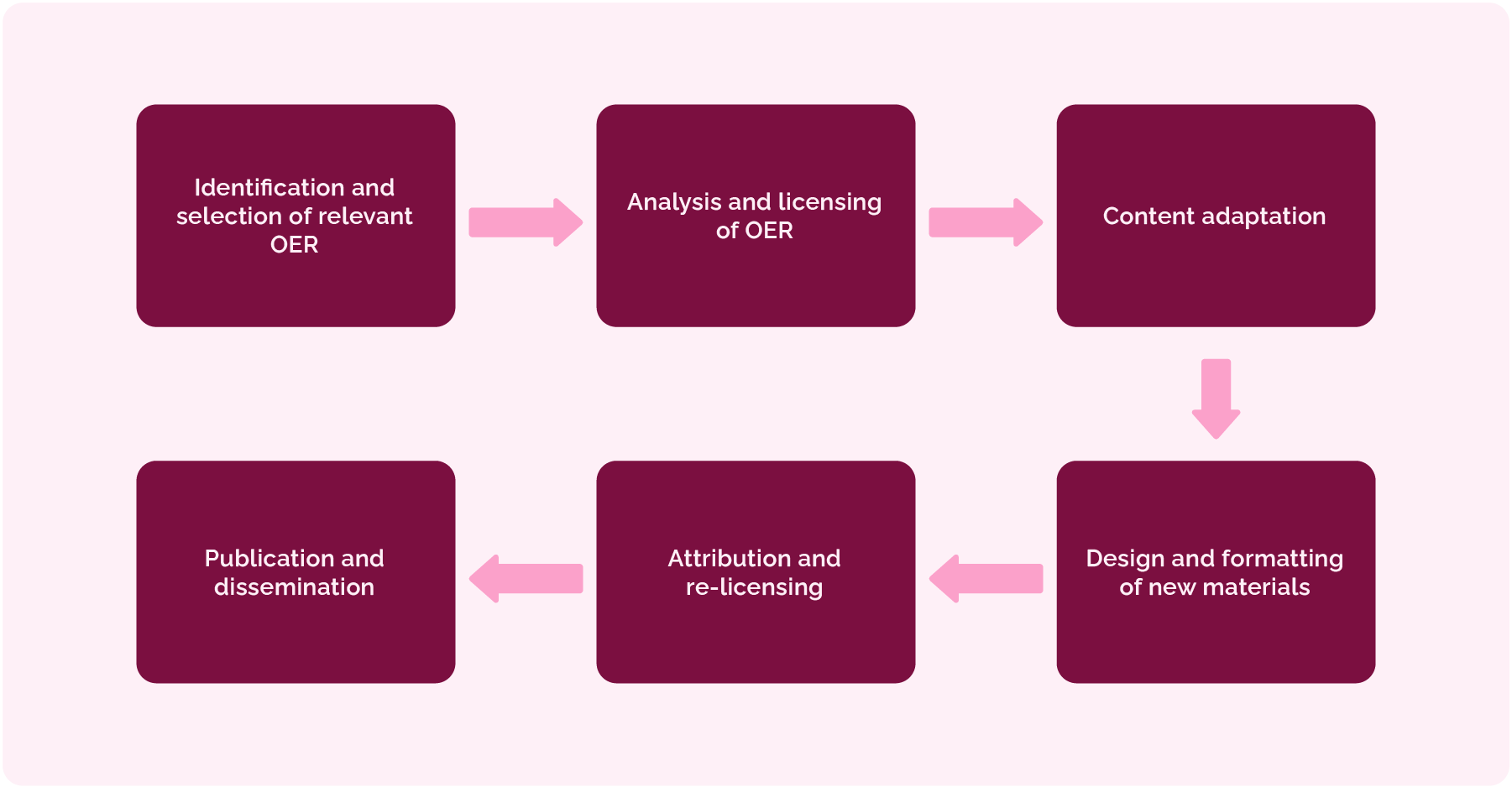
Figure 2: Steps in the Process of Creating and Designing OERs
3. Open Educational Resources (OER) Repositories
Open Educational Resources (OER) can be found or published in an institutional repository and in some of the specialized global repositories for open educational resources, such as OER Commons or DABAR.
In Croatia, the repository DABAR – Digital Academic Archives and Repositories plays a key role in the storage and promotion of open educational resources. This national system serves higher education institutions and their employees for storing various digital materials created through their work, including open educational resources. DABAR is an excellent example of the synergy of openness. It is built on open-source software, which not only reduces development costs but also encourages transparency and collaboration. At the same time, the system contributes to a significant increase in the visibility and accessibility of educational materials created within the Croatian higher education system. By searching the DABAR repository, teachers can find an abundance of high-quality open educational resources for their teaching. SRCE (University Computing Centre) is the institution responsible for the creation and maintenance of DABAR.
In the context of openness in higher education, another system maintained by SRCE also has an important task – the HRČAK system, the portal of Croatian scientific journals. HRČAK is a central portal that provides open access to Croatian scientific journals, allowing for free searching and reading of articles. Thus, it significantly contributes to the visibility of Croatian scientific production and facilitates the exchange of knowledge within the academic and wider community.
SRCE also maintains the national e-learning platform, Merlin. This platform allows institutions within the higher education system in the Republic of Croatia to open e-courses and receive support for their development and upgrade. Merlin is an important resource for the digitalisation of teaching because it is based on the open-source software Moodle. The use of Moodle provides Merlin with flexibility, adaptability, and continuous improvement thanks to the global community of developers who support it. In this way, Merlin significantly contributes to the development and implementation of modern teaching methods in Croatian higher education.
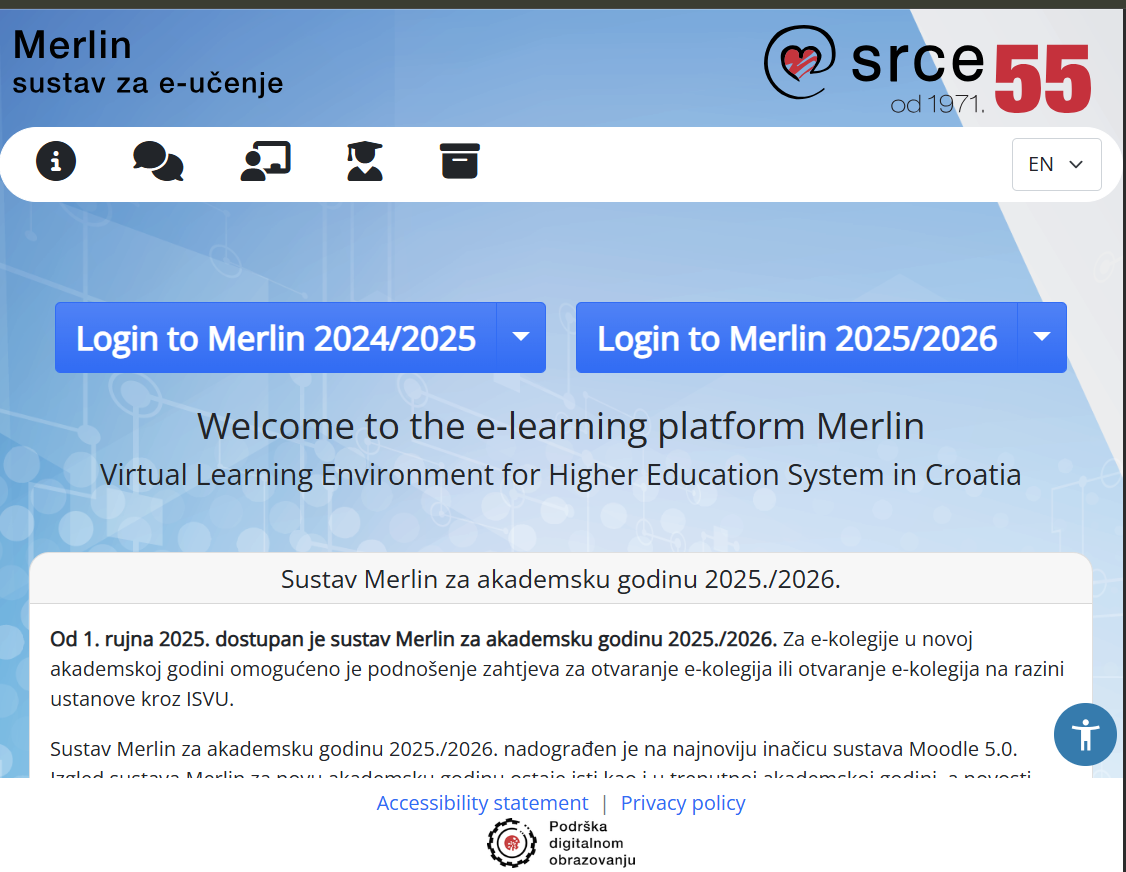
Figure 3: View of the Merlin Home Page
OER Commons is a dynamic digital library that offers free access to thousands of educational materials. It serves as a central hub where teachers, students, and self-directed learners can find, use, remix, and share open educational resources for all levels of education – from preschool to higher education.
This platform allows users to search for materials by subject, educational level, and resource type (e.g., textbooks, lesson plans, videos, interactive activities) and licences. All content on OER Commons is available under open licences, most often CC licences, which guarantees its free use, adaptation, and distribution. In addition to serving as a repository, OER Commons also encourages the creation of a community around OER. Teachers can share their own materials, rate and comment on those of others, and engage in discussions about the best practices for the application and development of open educational resources. In this way, OER Commons not only facilitates access to resources but also encourages active collaboration and knowledge sharing in a global educational context.
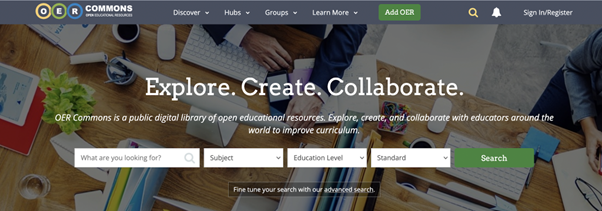
Figure 4: View of the OER Commons Home Page
4. Self-Assessment and Reflection Questions
- What is the key legal difference between MOOCs and Open Educational Resources (OER), and why is this element crucial for the definition of OER?
- Why is the "Share Alike" (SA) clause important for maintaining openness, and how does it affect the licence of newly created material based on such content?
- Identify three ways in which OER save time and resources for teachers while improving teaching quality.
- Describe the roles of the national systems DABAR, HRČAK, and Merlin in supporting open education and science in Croatia.
- Why is licence analysis the most important step before integrating any OER, and what types of restrictions are most commonly encountered?
Background Colour
Font Face
Font Size
Text Colour
Font Kerning
Image Visibility
Letter Spacing
Line Height
Link Highlight
Paragraph Width
Text Alignment