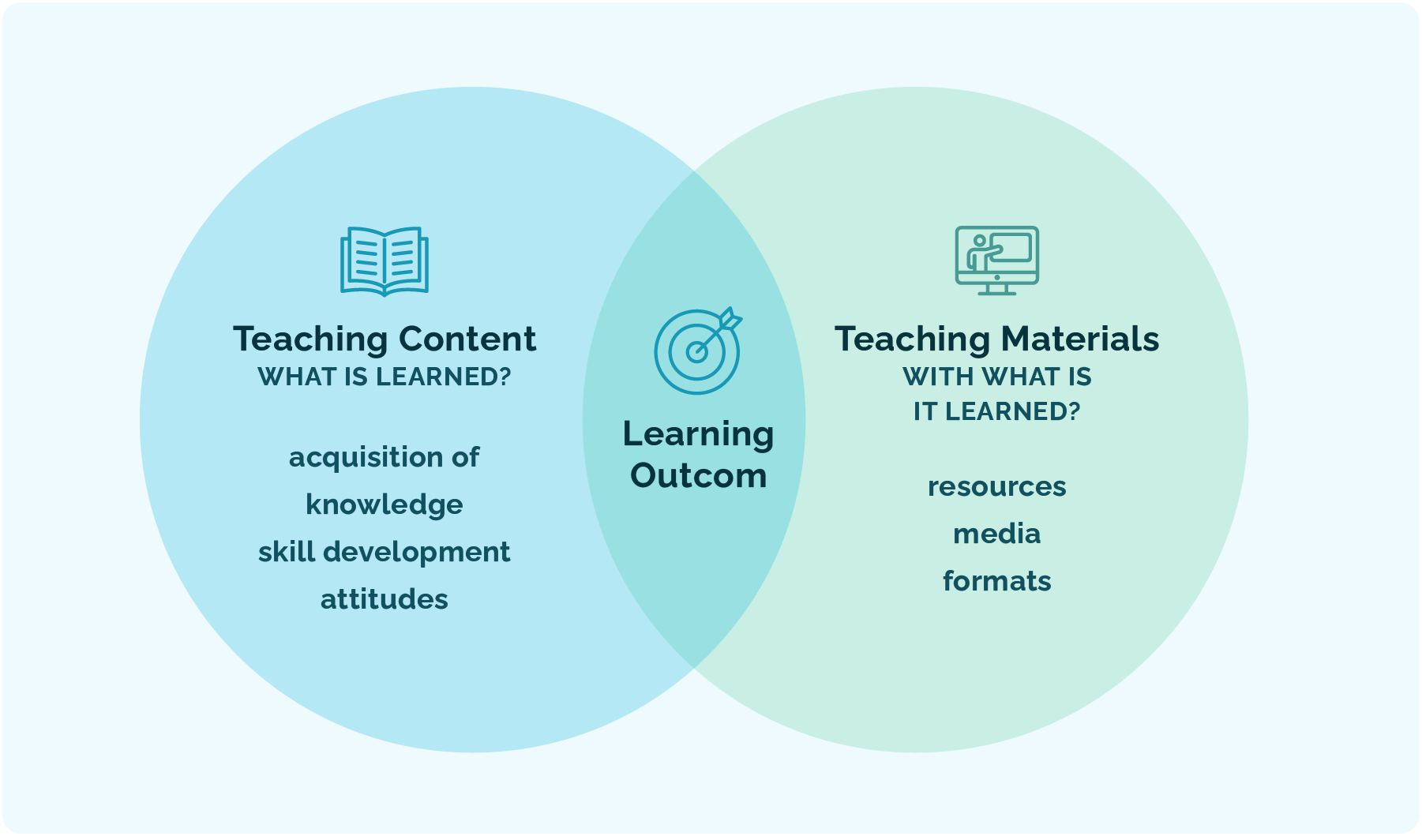
Figure 1. The relationship between teaching content and materials in achieving learning outcomes
Basics of Digital Teaching Content
| Site: | Loomen za stručna usavršavanja |
| Course: | Developing Digital Teaching Content |
| Book: | Basics of Digital Teaching Content |
| Printed by: | Gost (anonimni korisnik) |
| Date: | Thursday, 17 September 2026, 12:58 AM |
Table of contents
- 1. Basics of Digital Learning Content
- 2. The Difference Between Teaching Content and Teaching Materials
- 3. Pedagogical and Technical Elements
- 4. Definition and Role of Digital Teaching Content
- 5. Digital Competences of Teachers
- 6. Challenges and Opportunities
- 7. Quality Criteria for Digital Teaching Materials
- 8. Conclusion
- 9. Literature
1. Basics of Digital Learning Content
Digital learning content is a key component of contemporary education, shaping how students access knowledge, collaborate, and develop skills in the 21st century. Their importance has also been recognised at the European level. The Digital Education Action Plan (2021–2027) identifies the development of digital education as a strategic priority, emphasising the need to integrate technology at all levels of education by developing the digital competences of teachers and students, as well as ensuring high-quality, accessible, and inclusive learning resources (European Commission, 2020).
This e-course is designed to equip teachers with the skills needed to design effective digital teaching content, where the focus is not solely on technical implementation but also on pedagogical reflection, planning, accessibility, and assessment.
2. The Difference Between Teaching Content and Teaching Materials
In instructional design, it is important to distinguish between teaching content and teaching materials.
Teaching content refers to what is being taught — the thematic and conceptual framework, knowledge, skills, and attitudes that students are expected to acquire.
Examples: critical source analysis, fundamentals of algorithms, principles of copyright law.
Teaching materials refer to how teaching takes place — the specific resources, media, and formats through which the content is delivered.
Examples: presentations, quizzes, videos, texts, infographics, etc.
In other words, teaching content represents the pedagogical objective, while teaching materials are the means used to achieve it. This distinction supports effective planning because it shifts attention from the technical implementation to the actual educational purpose (Gregory-Ellis, 2022). Only through the connection between the two can learning outcomes be achieved — content determines what students need to master, while materials provide the pathway and the form through which that knowledge, skill, or attitude is communicated.
3. Pedagogical and Technical Elements
Effective digital teaching content is based on constructive alignment (Biggs, 1999) — meaning it is aligned with learning outcomes, teaching and learning activities, and assessment. In other words, every piece of teaching content should be designed to clearly articulate what students are expected to learn (outcomes), how they will achieve it (activities), and how their knowledge and skills will be assessed (assessment).
In a digital environment, this means that pedagogical elements and technical elements work together to ensure that the content is not only informative, but also meaningful, engaging, and accessible to all learners.
4. Definition and Role of Digital Teaching Content
Digital teaching content is defined as structured instructional material in digital format, designed to achieve educational goals and learning outcomes. It may include texts, presentations, videos, interactive tasks, simulations, and other resources created using digital tools (Bates, 2015). Its role is multifaceted — digital content increases the accessibility of learning, encourages engagement and collaboration, enables personalisation, and supports different learning styles and paces (UNESCO, 2021).
5. Digital Competences of Teachers
The development of digital learning content requires the development of digital competences. According to the Digital Education Action Plan (2021–2027), teachers should be able to:
-
plan learning content in alignment with learning outcomes;
-
use digital tools to create and share materials;
-
evaluate and adapt content according to context and learner needs;
-
understand accessibility, digital ethics, and copyright regulations.
Teachers are increasingly becoming learning designers – creators of learning experiences rather than mere transmitters of information. Their ability to combine technological tools with sound pedagogical principles makes the difference between digital content that merely provides information and content that truly educates.
In the context of digital education, teachers are strategic planners of learning experiences – integrating pedagogical insights, technological tools, and learning analytics to provide effective support for students (Divjak et al., 2025).
6. Challenges and Opportunities
Despite the availability of tools and institutional support, several challenges remain:
-
time constraints;
-
technical limitations;
-
uneven levels of digital competence;
-
limited experience with digital pedagogical models (Laurillard, 2012; Esteve-Mon et al., 2020).
Moreover, it is essential to balance enthusiasm for technology with critical reflection on its pedagogical purpose.
On the other hand, tools powered by artificial intelligence (e.g., ChatGPT, Eduaide.ai, Canva Magic Write) are opening new opportunities—from idea generation and summarisation to the development of personalised learning materials. However, they also require additional competences, such as the ability to critically evaluate generated outputs, recognise potential data biases, and integrate AI tools meaningfully into pedagogical contexts.
Furthermore, educators must understand the ethical and methodological implications of using AI tools in education, particularly concerning transparency of processes, data validity, and the reliability of AI-generated results.
7. Quality Criteria for Digital Teaching Materials
8. Conclusion
Digital teaching content is not merely a tool for transmitting knowledge, but a means of shaping meaningful, inclusive, and engaging educational experiences. In line with the Digital Education Action Plan (2021–2027), its development should be pedagogically grounded, technically feasible, accessible, and focused on the quality of learning. Through theoretical and practical activities, participants in this e-course develop the essential competences needed to operate professionally, responsibly, and innovatively in digital learning environments.
9. Literature
Bates, T. (2015). Teaching in a digital age: Guidelines for designing teaching and learning for a digital age. Canada: Tony Bates Associates Ltd. ISBN: 978-0-9952692- 0-0
Biggs, J. (1999). Teaching for Quality Learning at University.
Divjak, B., Barthakur, A., Kovanović, V., & Svetec, B. (2025). The Impact of Learning Design on the Mastery of Learning Outcomes in Higher Education. In LAK25: The 15th International Learning Analytics and Knowledge Conference (pp. 1–12). ACM.
Laurillard, D. (2012). Teaching as a Design Science.
UNESCO. (2021). Digital learning and transformation of education.
European Commission. (2020). Digital Education Action Plan 2021–2027.
Esteve, Francesc & Llopis, Mª Ángeles & Adell, Jordi. (2020). Digital Teaching Competence of University Teachers: A Systematic Review of the Literature. Revista Iberoamericana de Tecnologias del Aprendizaje. 15. 399-406.
Gregory-Ellis, Charlotte. (2022). Experiences of creating digital content for teaching and learning through working in staff-student partnerships. International Journal for Students as Partners. 6. 12-26.
Background Colour
Font Face
Font Size
1
Text Colour
Font Kerning
Image Visibility
Letter Spacing
0
Line Height
1.2
Link Highlight
Paragraph Width
0
Text Alignment