Planning and integrating digital teaching materials
| Site: | Loomen za stručna usavršavanja |
| Course: | Developing Digital Teaching Content |
| Book: | Planning and integrating digital teaching materials |
| Printed by: | Gost (anonimni korisnik) |
| Date: | Thursday, 17 September 2026, 12:58 AM |
1. Planning and integration of digital teaching materials
Digital tools and resources are increasingly shaping contemporary education. However, their mere presence does not guarantee quality teaching. What matters is the pedagogically meaningful integration of digital teaching materials into the learning process. This means that we do not use digital technologies simply because they are available, but because they contribute to achieving learning outcomes, encourage active learning, and adapt to learners’ needs.
Up to this point in the e-course, you have explored the fundamental elements of designing digital teaching materials: from defining learning outcomes and structuring instructional units, through creating high-quality digital content, visual design, and multimedia, to ethics and responsibility in the digital environment. This topic builds on everything previously learned and focuses on its application in real teaching contexts.
To ensure a meaningful learning experience, a teacher must consider various aspects of instruction—from planning and implementation of materials to monitoring their effectiveness.
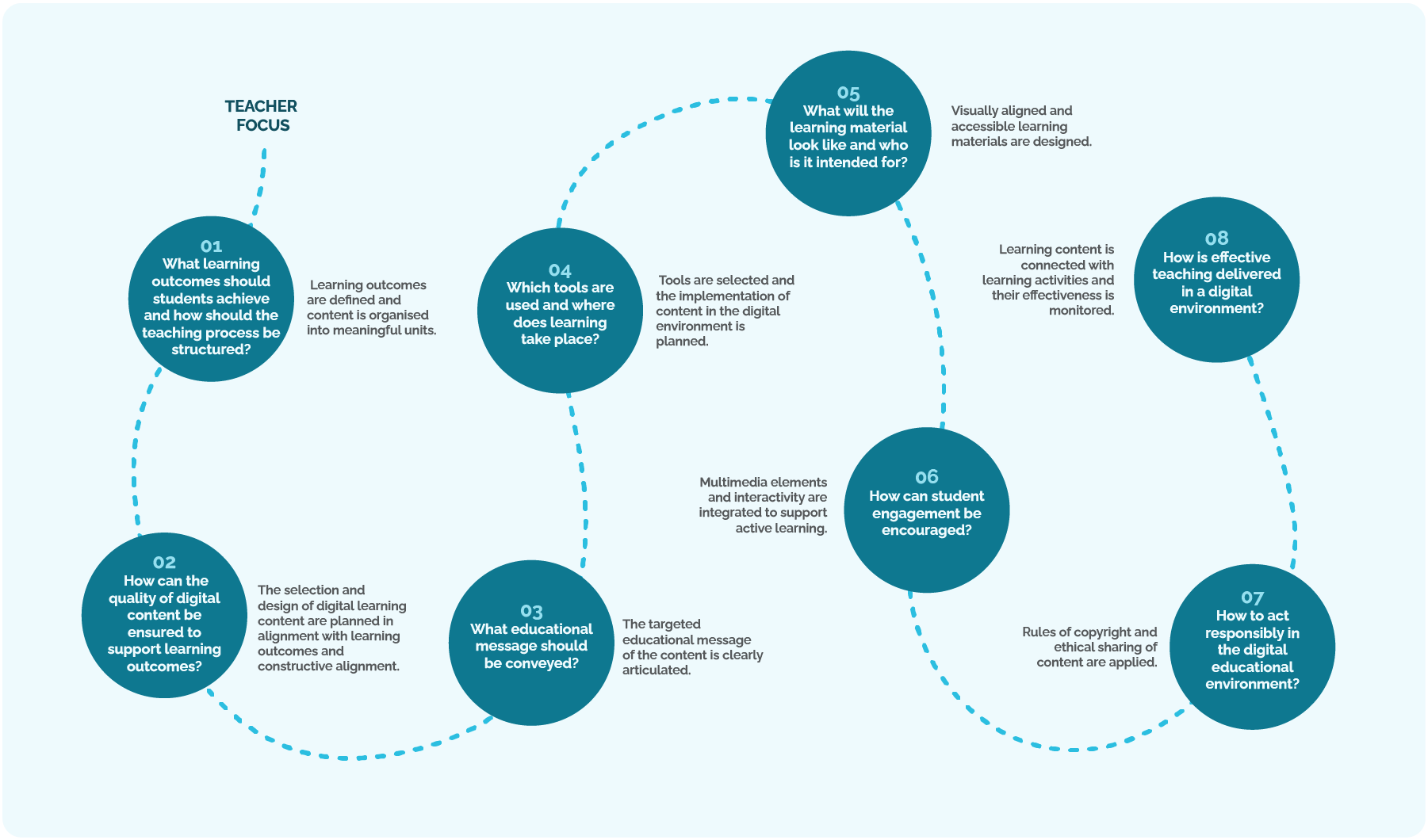
Figure 1. From learning design to teaching
2. Balanced Design Planning (BDP) tool
In contemporary education, quality teaching is no longer defined solely by content, but by pedagogical design that connects learning outcomes, activities, modes of delivery, and technology. Learning design tools such as the Balanced Design Planning (BDP) tool play a key role in this process.
BDP enables teachers to design learning starting from the learning outcomes, linking them to learning and teaching activities, the mode of delivery (face-to-face, online, blended), and assessment methods. An important advantage of BDP is that it allows planning of student workload, ensuring a balance between course requirements and students’ realistic capacities (Divjak et al., 2022). In addition, the tool supports constructive alignment—the coherent connection between learning outcomes and assessment (Biggs, 1999).
3. Integration of digital teaching materials into learning and teaching activities
The integration of digital teaching materials into learning and teaching activities refers to the planned and purposeful alignment of instructional materials with various types of activities that promote active participation, comprehension, and application of knowledge. This involves considering when, where, and how digital resources will be used, as well as the roles of teachers and students throughout the process.
4. BDP tool
The BDP tool enables teachers to precisely plan all these aspects for each Teaching and Learning Activity (TLA).
When entering an activity into the BDP tool, the teacher can define:
-
name of the activity;
-
description of the activity – a detailed explanation of what students will do, the goals of the activity, which digital materials will be used, and which tools will support the activity;
-
type of learning – whether the focus is on acquiring knowledge, discussion, research, practical application, creation, or assessment;
-
learning outcomes – what students should know, understand, or be able to do after completing the activity;
-
workload – the time required to complete the activity;
-
delivery mode – whether the activity takes place online/on-site/hybrid; synchronously/asynchronously; with or without teacher presence;
-
collaboration – whether the activity is done individually or in collaboration with other participants;
-
group work – whether students work in groups and what the group size is;
-
feedback – who provides feedback (the teacher, automated system, peers, or someone else);
-
activity requirement – whether the activity is mandatory for students;
-
completion criteria – what students must do for the activity to be considered completed (e.g., read materials and mark the activity as done, achieve a minimum score);
-
assessment – whether the activity will be graded or not.
In this way, the BDP tool ensures that the integration of digital teaching materials is not accidental, but intentionally planned with a clear purpose and aligned with learning outcomes. Digital resources become part of well-designed learning experiences, significantly contributing to the quality of teaching.
5. From a planned learning design to implementation into the LMS
Once activities and digital materials are carefully planned in the BDP tool, the next step is their implementation in a Learning Management System (LMS) such as Moodle.
BDP allows teachers to export planned activities directly into Moodle, enabling the plans to be easily transformed into concrete teaching materials, assignments, and interactive elements within the virtual environment. In this way, teaching becomes structured and aligned with the principles of meaningful learning design, ensuring coherence between teaching objectives, methods, content, and assessment. Digital resources are therefore not separate elements, but are integrated into a coherent and purposeful flow of learning and teaching.
6. Literature
J. Biggs, "What the Student Does: teaching for enhanced learning", Higher Education Research & Development, 18(1), pp. 57–75, 1999.
B. Divjak, D. Grabar, B. Svetec, and P. Vondra, “Balanced Learning Design Planning: Concept and Tool”, J. inf. organ. sci. (Online), vol. 46, no. 2, Dec. 2022.
Background Colour
Font Face
Font Size
Text Colour
Font Kerning
Image Visibility
Letter Spacing
Line Height
Link Highlight
Paragraph Width
Text Alignment