Peer Assessment
| Site: | Loomen za stručna usavršavanja |
| Course: | Assessment Using Digital Technology |
| Book: | Peer Assessment |
| Printed by: | Gost (anonimni korisnik) |
| Date: | Thursday, 17 September 2026, 4:56 PM |
1. Peer Assessment
This chapter provides a theoretical framework for peer assessment as well as examples of its application in the context of higher education. In addition, a list of digital tools suitable for implementing peer assessment is provided, along with an overview of Moodle resources in which peer assessment can be used.
Later in this course, we will also examine self-assessment. Self-assessment and peer assessment are two complementary but distinct forms of formative assessment. Both encourage active student engagement in the learning assessment process and foster metacognition, reflection, and self-regulation. However, they differ in terms of who performs the assessment and, to some extent, in their pedagogical purpose. While self-assessment promotes reflection on one’s own progress and the development of self-regulation, peer assessment places greater emphasis on developing critical thinking and the ability to provide constructive feedback.
2. Application of Peer Assessment in Education
Peer assessment is widely used in various forms across almost all academic disciplines in higher education. Although these forms are often labelled with the same name, it is important to understand that peer assessment is an umbrella term encompassing different types of assessment that share a common feature: it is a social activity in which both the assessor and the author of the assessed work hold similar academic status (Panadero and Alqassab, 2019).
Helden et al. (2023) distinguish three types of peer assessment, each serving a different function in the learning outcome.
Regardless of the type of peer assessment, we can say that students assume the role of the teacher in the assessment process. There are numerous benefits for students participating in giving and receiving peer feedback.
During this process, students:
- practice assessing quality
- align their own judgements
- develop the ability to conduct self-assessment (Reinholz, 2016)
Furthermore, Divjak and Matretić (2017) classified the advantages and disadvantages of peer assessment, summarised in the table below.
Table 1. Advantages and disadvantages of peer assessment (based on Divjak & Maretić, 2017)
|
Logistical |
Saves teachers’ time in assessment |
Teachers need more time to discuss the criteria and the purpose of the assessment with students |
|
Pedagogical |
Assessing peers’ work enables additional learning about the topic |
Students tend to give higher grades to peers, especially when authors are not anonymous |
|
Metacognitive |
The assessment process becomes demystified, and students can better assess their work and achievements |
Some students lack the metacognitive skills necessary for assessment and require gradual and meaningful involvement by the teacher |
|
Affective |
Students share ownership of the assessment process |
Learning analytics often shows patterns in which students assess peers superficially without following the criteria, believing it is not their responsibility |
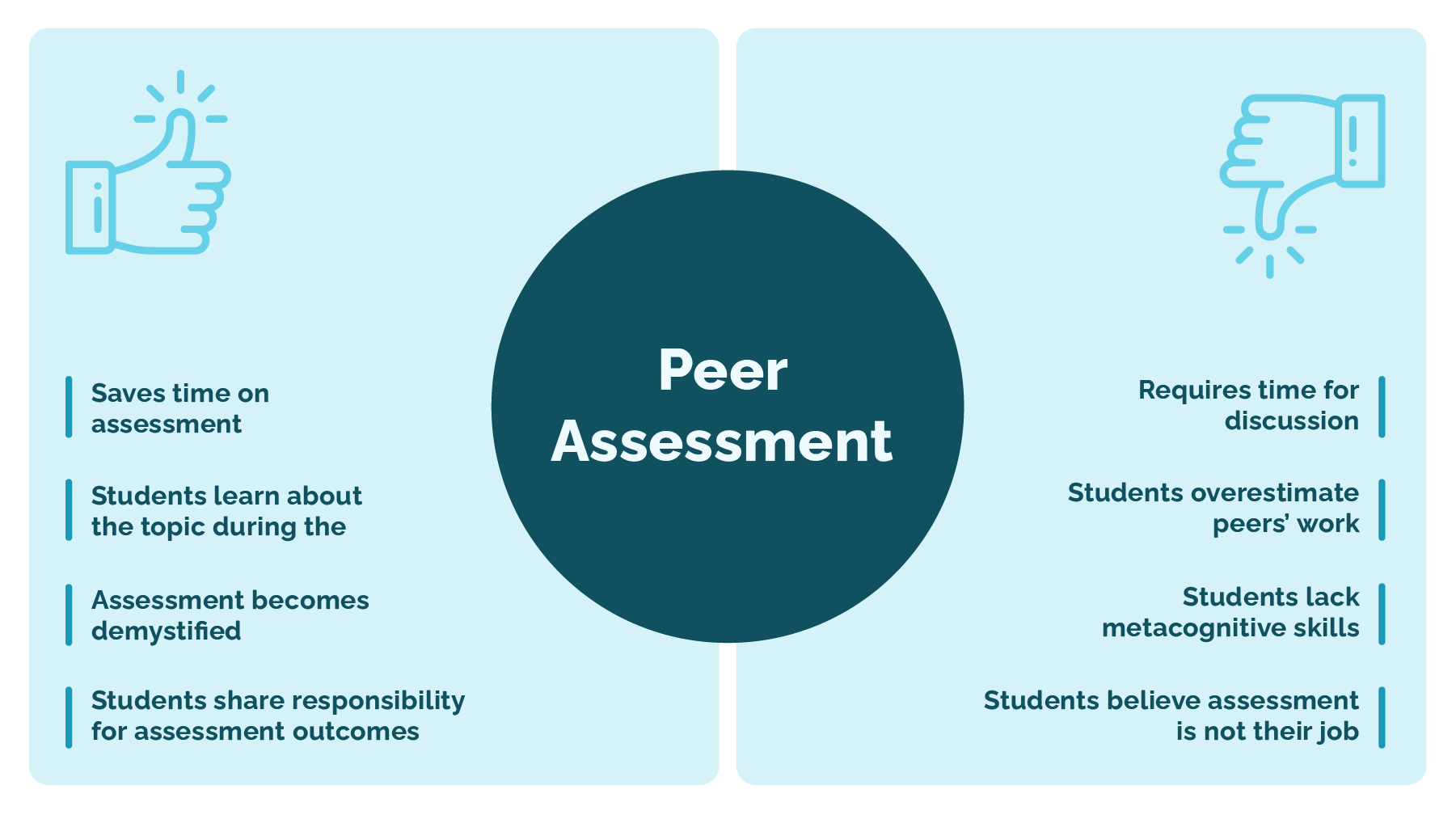
Figure 1: Positive and negative aspects of peer assessment
3. Suggestions for (Partially) Addressing the Identified Drawbacks of Peer Assessment
1. Logistical challenge – the need for additional teacher time
Prepare clear rubrics and instructions before the activity begins and use assessment examples to align understanding of the criteria. The activity can be partially automated through digital tools such as the Moodle Workshop or FeedbackFruits, which reduces the teacher’s workload.
2. Affective challenge – the tendency of students to give overly high grades
Where possible, ensure anonymity of assessment and assign multiple reviewers per submission, as well as include teachers in the assessment process with a higher weighting. It is important to familiarise students with the purpose of the assessment and emphasise that it serves learning rather than grading their peers.
3. Metacognitive challenge – insufficiently developed assessment skills
Introduce short practice assessments with sample work before the real activity. Gradually develop students’ ability to provide reasoned feedback and reflect on their own assessment process.
4. Analytical challenge – superficial assessment without relying on criteria
Use rubrics with clear performance level descriptions and encourage students to briefly justify their grades. The teacher may review a sample of assessments and, if necessary, calibrate the results.
A specific type of assessment is self-assessment, which enables students to evaluate their own work based on predefined criteria and thus improve it. Self-assessment is often used in combination with peer assessment of peers’ work.
Peer assessment and self-assessment are often used alongside contemporary teaching and learning methods such as project-based learning and flipped classrooms (Van Helden et al., 2023).
4. Using Digital Tools in Peer Assessment
The increased use of digital tools in educational environments has enabled easier implementation of peer assessment, especially in courses with a large number of students (more than 50) and those involving remote participants (students or teachers).
Even before the COVID-19 pandemic, higher education institutions around the world had begun introducing Virtual Learning Environments (VLEs) (Heaton-Shrestha et al., 2009) and Learning Management Systems (LMS).
Although the level of use varies among teachers, VLE and LMS systems often already include various online tools that support different forms of peer assessment (Bri et al., 2009). Plugins and add-ons have also been developed for certain systems to support specific aspects of peer assessment, such as calculating a fairer final grade based on peer assessment (Divjak & Maretić, 2017).
Tools for self-assessment are also prominent, particularly e-portfolio systems. An e-portfolio system that includes functionalities for self-reflection, goal planning, and progress tracking – such as Mahara, which is widely used in higher education (Balaban et al., 2012) – supports this purpose.
There are many specialised tools on the market designed specifically for peer assessment, such as Spark, FeedbackFruits, Scorion, and CATME (Van Helden et al., 2023). Basic versions with limited functionality are often free for smaller groups of students, while full functionality is available only through paid plans (e.g., Peergrade and FeedbackFruits).
5. Moodle
Moodle supports various options for implementing peer assessment, and if additional features are needed, it can be extended with external tools; however, teachers usually require assistance from system administrators for such upgrades.
As a Learning Management System (LMS), Moodle offers numerous possibilities for implementing peer assessment, encouraging active learning, the development of reflective and metacognitive skills, and fostering a collaborative teaching environment.
“Workshop” Activity
The most direct support for peer assessment in Moodle is provided through the “Workshop” activity. This activity enables students to:
- submit their work
- assess the work of their peers – and their own work – according to predefined criteria
- receive feedback on their own work and on the quality of their assessment
- receive feedback on how their assessment compares with that of the teacher or other students
Moodle automatically combines the grade for the submitted work and the grade for the assessment given, which encourages careful and responsible participation.
“Assignment” Activity with Manual Pairing
Although not originally designed for peer assessment, the “Assignment” activity can be adapted for this purpose by manually assigning students’ work to peers for commenting or evaluation. The teacher can use the commenting and feedback features, while students can be encouraged to respond to one another’s comments.
“Forum” Activity
Discussion forums allow open and structured exchange of feedback. Students can post their work, and peers comment on it according to agreed criteria. Although this method does not involve formal grading, it strengthens reflective and communication skills.
Using External Tools Integrated into Moodle
Moodle supports integration with external tools for peer assessment, such as FeedbackFruits, Peergrade, or Turnitin PeerMark, which further automate the distribution of submissions and the collection of grades and feedback.
Thus, Moodle enables the implementation of all major forms of peer assessment – from review and grading to the evaluation of teamwork. By making smart use of activities such as Workshop, Assignment, and Forum, and through integration with external tools, teachers can effectively implement peer assessment across a variety of pedagogical scenarios.
6. Self-Assessment and Reflection Questions
Self-assessment questions
-
How is peer assessment defined?
-
What is the main difference between peer assessment and self-assessment?
-
What are the main pedagogical and metacognitive benefits of peer assessment for students?
-
What opportunities does Moodle provide for implementing peer assessment, and which activity is most suitable for it?
-
Name at least two digital tools (outside Moodle) that enable structured peer assessment.
Reflection questions
-
In what ways does the combination of peer assessment and self-assessment contribute to the development of self-regulated learning?
-
How can a teacher prepare students for high-quality peer assessment, especially if they have not yet developed metacognitive skills?
-
What are the four groups of challenges in peer assessment (logistical, affective, metacognitive, analytical), and how can they be mitigated in practice?
-
In which situations would it be advisable to use an anonymous assessment, and when an open assessment? Explain the pedagogical rationale.
-
How can learning analytics help the teacher evaluate the credibility and reliability of peer assessment in a digital environment?
7. Links to Peer Assessment Tools
FeedbackFruits
A platform for structured peer assessment and feedback provision.
Peergrade
A tool specifically developed for peer assessment that enables anonymous assessment based on predefined criteria.
Note: Peergrade is no longer actively developed as an independent platform; its functionalities have been integrated into FeedbackFruits.
Turnitin PeerMark
Part of the Turnitin suite used for originality checking, which also supports structured peer assessment.
CATME (Comprehensive Assessment of Team Member Effectiveness)
A tool focused on assessing collaboration in team-based work (peer assessment).
SparkPLUS / Spark+
A tool that supports both quantitative and qualitative assessment of collaborative activities within teams.
Scorion
An e-portfolio system with support for peer assessment, particularly in health sciences and STEM fields.
8. Literature
Balaban, I., Divjak, B., Grabar, D., Žugec, B. (2012). Implementing ePortfolios: From Pilot Project to Full Scale Implementation // E-Portfolios and Global Diffusion: Solutions for Collaborative Education. Hershey (PA): IGI Global, pp. 41-55.
Bri, D., Garcia, M., Coll, H., Lloret, J. (2009) A study of virtual learning environments. Wseas Trans. Adv. Eng. Educ., vol. 6, no. 1, pp. 33–43.
Divjak, B. & Maretic, M. (2017). Learning Analytics for Peer-assessment: (Dis)advantages, Reliability and Implementation. Journal of Information and Organizational Sciences, 41(1).
Heaton-Shrestha, C., May, S., & Burke, L. (2009) Student retention in higher education: What role for virtual learning environments? J. Further Higher Educ., vol. 33, no. 1, pp. 83–92, Feb. 2009
Panaderoand, E., Alqassab, M. (2019). An empirical review of anonymity effects in peer assessment, peer feedback, peer review, peer evaluation and peer grading. Assessment Eval. Higher Educ., vol. 44, no. 8, pp. 1253–1278, Nov. 2019
Reinholz, D. (2016) The assessment cycle: A model for learning through peer assessment. Assessment Eval. Higher Educ., vol. 41, no. 2, pp. 301–315, Feb. 2016
Van Helden, G., Van Der Werf, V., Saunders-Smits, G. N., & Specht, M. M. (2023). The Use of Digital Peer Assessment in Higher Education – an Umbrella Review of Literature
Background Colour
Font Face
Font Size
Text Colour
Font Kerning
Image Visibility
Letter Spacing
Line Height
Link Highlight
Paragraph Width
Text Alignment