Guidelines for introducing artificial intelligence into the educational environment
| Site: | Loomen za stručna usavršavanja |
| Course: | Artificial Intelligence in Education |
| Book: | Guidelines for introducing artificial intelligence into the educational environment |
| Printed by: | Gost (anonimni korisnik) |
| Date: | Thursday, 17 September 2026, 9:53 AM |
1. Introduction
This resource provides practical guidance for teachers, instructors, and other educational stakeholders on introducing artificial intelligence into the teaching process. The goal is to ensure the responsible, ethical, and effective use of artificial intelligence tools and systems, in accordance with the recommendations of the European Commission and UNESCO.
Integrating artificial intelligence into education is not only a technical challenge but also a pedagogical, strategic, and organisational process that requires collaboration among various experts, ongoing professional development, and clearly defined ethical and legal frameworks. The following key guidelines can assist educational institutions and teachers in designing and implementing a sustainable and responsible approach to artificial intelligence in educational settings.
The guidelines and recommendations in this section are based on current European and international documents that define the principles of responsible, ethical, and sustainable use of artificial intelligence in education.
These documents highlight the need for an integrated approach that connects technology, pedagogy, and ethics, and supports the professional development of teachers:
- European Commission (2024). Artificial Intelligence Act (EU AI Act)
- European Commission (2022). Ethical Guidelines on the Use of Artificial Intelligence (AI) and Data in Teaching and Learning for Educators
- UNESCO (2021). Artificial Intelligence and Education: Guidance for Policy-makers
- European Commission (2020). European Framework for the Digital Competence of Educators (DigCompEdu)
- European Commission (2022). European Digital Education Action Plan (2021–2027).
2. The role of support teams in AI implementation
Integrating AI into education is a complex, multidimensional process that requires coordinated efforts from various experts and effective collaboration among pedagogical, technical, and management levels within the institution. Support teams are essential to ensuring the successful, safe, and ethical application of AI technologies in educational environments.
Most higher education institutions already have established e-learning teams that support teachers and students in using digital technologies and online platforms. However, the development and implementation of AI require expanding and upgrading these teams with new experts who understand the complexity of AI systems and their impact on the educational process.
These multidisciplinary teams typically include:
- Pedagogical experts, who help design teaching activities that incorporate AI and ensure alignment with learning objectives
- Technical experts, who develop, test, maintain, and monitor AI systems and address technical challenges during implementation
- Legal and ethical advisors, who ensure compliance with applicable regulations, such as the General Data Protection Regulation (GDPR) and the EU AI Act, and help maintain transparency and data privacy
- Information security experts, who oversee secure data management, protect information systems and promote the responsible use of educational technologies.
Teachers do not play a passive role in collaboration with support teams. Instead, they should actively participate in planning, implementing, and evaluating AI tools and regularly provide feedback on their effectiveness, pedagogical value, and ethical implications.
This collaboration fosters a sustainable and responsible ecosystem in which technology serves education, not the other way around. Teachers and support teams together contribute to developing a culture of innovation, professional dialogue, and continuous improvement in the quality of AI-based teaching.

Image source: Shutterstock
3. The role of support teams in AI implementation
Integrating AI into education requires a thoughtful, pedagogically informed, and ethically responsible approach. The teacher’s role in this process is not only technical but primarily strategic and educational – the teacher acts as a mediator between technology, students, and the institution, ensuring that AI enhances rather than undermines the quality of teaching and learning.
For the effective and sustainable application of AI, the following is recommended.
-
Understand the capabilities and limitations of AI tools
Before incorporating AI tools into teaching, teachers should understand how each tool works, what data it uses, and its pedagogical benefits and risks. A critical understanding of technology is the foundation for responsible use. -
Align technology with learning goals and outcomes
AI tools should support clearly defined educational goals. Their use should contribute to achieving learning outcomes, not replace the pedagogical process. -
Adapt teaching and assessment methods
Teachers can use AI systems for personalised learning, automated assessment, simulations, content adaptation, and support for different learning styles. It is essential to maintain human oversight and pedagogical control over the processes that AI supports. -
Develop critical thinking and ethical awareness in students
Teachers should encourage students to reflect on the impact of AI on education and society, including issues of algorithmic bias, privacy, transparency, and academic integrity. This fosters the digital and ethical literacy needed for responsible participation in modern educational and professional environments. -
Maintain transparency and respect data privacy
Teachers must clearly inform students about how AI tools are used, what data is collected, and how it is used. All tools should comply with the General Data Protection Regulation (GDPR) and the principles of the EU AI Act. - Collaborate with support teams and institutional structures
Teachers should actively collaborate with pedagogical, technical, and legal support teams to ensure quality implementation, system security, and compliance with institutional digitalization policies. The teacher’s role in this context also includes providing feedback to the institution on the effectiveness and ethical challenges of applying AI. - Continuously develop competencies in the field of AI
Teachers should regularly update their knowledge through training, workshops, and professional communities. Competencies should include technical understanding, pedagogical application, ethical principles, and reflective practice, in line with international frameworks such as DigCompEdu and the UNESCO Guidelines for Artificial Intelligence in Education (2021). - Promote a culture of knowledge sharing and innovation
Artificial intelligence offers the opportunity to create a community of practice – teachers who share experiences, examples of good practice, and recommendations for improvement. This approach strengthens the institutional culture of innovation and shared learning.
4. Guidelines for the introduction of artificial intelligence (AI) in education for all educational stakeholders
The introduction of artificial intelligence in education requires a systematic, strategic, and coordinated approach at the institutional level. This process extends beyond individual teacher initiatives and involves cooperation among administration, technical teams, pedagogical advisors, professional services, and teachers.
To ensure the sustainable and ethical integration of artificial intelligence into the educational process, the following guidelines are recommended.
1. Define the Vision and Goals for AI Application
The institution should clearly define the strategic goals and purpose of applying artificial intelligence in education, aligned with its mission and digital transformation policies. The vision should focus on improving the quality of learning, accessibility, and efficiency of the educational process, while preserving human values, ethics, and inclusiveness.
2. Form Multidisciplinary Implementation Teams
A successful AI application requires forming multidisciplinary teams that include:
- Teachers and instructors (as pedagogical experts and end users)
- IT and technical experts
- Data and information security experts
- Legal and ethics advisors
- Professional student support services.
Collaboration within these teams ensures a balanced approach to technology, pedagogy, and ethics, reducing the risk of fragmented or superficial implementation.
3. Provide Professional Support and Continuing Education
Institutions should offer systematic education and training programmes for teachers and other stakeholders, focused on understanding the possibilities, limitations, and risks of applying AI in education.
These programmes should align with international guidelines, such as the UNESCO Recommendations on Artificial Intelligence in Education (2021) and the Digital Competence Framework for Teachers (DigCompEdu).
Continuous training is essential to strengthen AI competencies and to develop pedagogical reflection on when, why, and how to use technology.
4. Select and Test Appropriate AI Tools
Before widespread implementation, AI tools should be tested in controlled conditions, and their pedagogical value, safety, and ethical acceptability assessed.
The institution should develop protocols for selecting tools that include criteria such as transparency, availability, accessibility, and regulatory compliance.
5. Ensure Ethical and Legal Compliance
All AI tools and systems must comply with relevant European and national regulations, including:
- General Data Protection Regulation (GDPR)
- EU AI Act
- National regulations on copyright, academic integrity, and digital security.
Institutions should promote transparency, fairness, and accountability in the use of AI and establish ethics committees or commissions to oversee the application of technology in the educational context.
6. Integrate AI into Curriculum and Teaching Practice
AI should be both a tool and a topic of learning. Institutions should include content on AI in their curricula so that students develop an understanding of its operation, possibilities, and ethical limitations. At the same time, AI can serve as pedagogical support through adaptive systems, personalised progress monitoring, automated assessment, and predictive analytics.
It is crucial to ensure that all applications retain pedagogical value and human supervision.
7. Monitor, Evaluate, and Improve Application
Institutions should establish mechanisms to monitor the effects of AI application, including collecting feedback from teachers and students, analysing pedagogical outcomes, and conducting ethical evaluations. Evaluation results should be used to continuously improve practice and adapt institutional policies to new knowledge and needs.
This approach ensures that the application of AI in education remains a dynamic, reflective, and responsible process, rather than a one-time innovation.
These recommendations are based on UNESCO and European Commission guidelines for the responsible use of artificial intelligence in education.
5. Conclusion
The introduction of artificial intelligence into education is not only a technical challenge but also a strategic and pedagogical advancement that transforms how knowledge is taught, learned, and understood. Successful integration requires a thoughtful approach, a clear vision, and ongoing cooperation among all stakeholders – from administrations and teachers to technical and pedagogical support.
Institutions that choose to take this step have the opportunity to enhance the educational process, making it more accessible, flexible, and focused on individual needs. It is essential to invest in education, build trust in technology, and establish clear ethical, legal, and security frameworks for the application of artificial intelligence, in accordance with documents such as the European Union AI Act, the General Data Protection Regulation (GDPR), and the European Commission's ethical guidelines.
With professional support, pedagogical reflection, and open dialogue, artificial intelligence can become a valuable ally in education, not a replacement for educational staff. Its true value lies in supporting human work – empowering teachers, fostering critical thinking, and developing inclusive and ethically responsible learning environments.
As UNESCO and the DigCompEdu framework emphasise, the future of education is not automation but responsible collaboration between humans and technology.
AI can significantly improve the efficiency of education, but its true power is realised when it frees the time and resources of human experts to focus where they are indispensable – in ethical decision-making, emotional support, and the creation of meaningful, empathetic, and inclusive learning experiences.
- Question for reflection:
How can we ensure that the implementation of AI in education does not replace, but rather reinforces, human connection, empathy, and ethical responsibility in teaching?
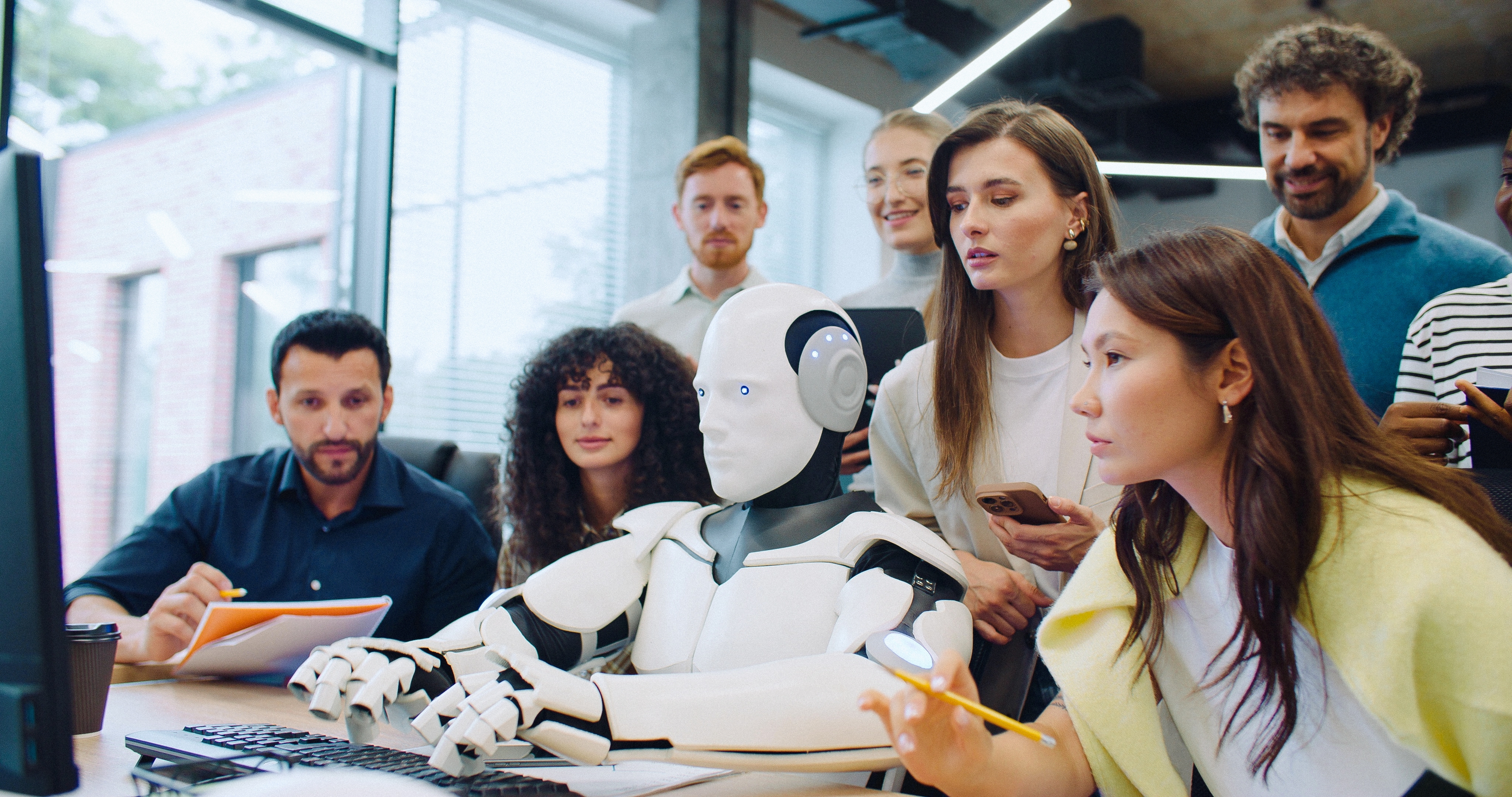
Image source: Shutterstock
6. Literature
-
Meylani, R. (2024). Artificial Intelligence in the Education of Teachers: A Qualitative Synthesis of the Cutting-Edge Research Literature. Journal of Computer and Education Research, 12(24), 600–637.
-
Foltýnek, T., Bjelobaba, S., Glendinning, I., & Lancaster, T. (2023). ENAI recommendations on the ethical use of artificial intelligence in education. International Journal for Educational Integrity, 19, Article 12.
-
Ghimire, A. & Edwards, J. (2024). From guidelines to governance: A study of AI policies in education [Preprint]. arXiv.
-
Riordan, A., Echeverría, V., Jin, Y., Yan, L., Swiecki, Z., & Martinez‑Maldonado, R. (2023). Human‑centred learning analytics and AI in education: A systematic literature review [Preprint]. arXiv.
-
Avallain & Educate Ventures Research. (2024). Guidelines for Ethical Implementation of AI in Educational Technology: A Framework. Avallain.
-
Zheng, Y. & Webber, C. (2025). Implementing artificial intelligence in academic and administrative processes through responsible strategic leadership in higher education institutions. Frontiers in Education.
-
Porayska‑Pomsta, K., Holmes, W., & Nemorin, S. (2024). The ethics of AI in education. arXiv.
Background Colour
Font Face
Font Size
Text Colour
Font Kerning
Image Visibility
Letter Spacing
Line Height
Link Highlight
Paragraph Width
Text Alignment