Curriculum design for ensuring well-being and mental health
| Site: | Loomen za stručna usavršavanja |
| Course: | Impact of Digital Technologies on Well-being |
| Book: | Curriculum design for ensuring well-being and mental health |
| Printed by: | Gost (anonimni korisnik) |
| Date: | Thursday, 17 September 2026, 10:16 AM |
Table of contents
- 1. Introduction
- 2. Key curriculum areas for ensuring well-being and mental health from the content aspect
- 3. Well-being and mental health are the responsibility of every segment of the academic community
- 4. Holistic approach to curriculum design and transformation from the process aspect
- 5. Recommendations contributing to a holistic approach in curriculum design with the aim of ensuring well-being and mental health
- 6. Examples of curriculum design elements for promoting well-being and mental health
- 7. Literature
1. Introduction
The well-being of university students and employees should be a key priority in higher education. In addition to strategic guidelines, policies, and recommendations that higher education institutions should prepare, one of the key activities is the design and delivery of a curriculum that affects the ensuring of student well-being, as well as their academic success and personal development. The document Supporting student wellbeing through curriculum design and delivery states that the best and most important way in which academic staff can support the well-being of their students is precisely through the curriculum.
Curriculum design and delivery that directly or indirectly covers topics related to well-being, digital well-being, and mental health, as well as methods of learning and teaching that develop problem-solving and critical thinking skills, directly shape the student experience, and can act preventively by ensuring student well-being and mental health as well as personal and professional success.
Student well-being and mental health are best supported by a curriculum that enables students to prepare, receive support, and engage in reflection. The curriculum and its implementation must be such that students are informed in advance and prepared for demanding tasks, that they are provided with a secure support network in fulfilling their obligations, and that reflection is encouraged to help them become aware of their own strength and progress.
Preparation includes clear and timely communication of expectations and ensuring the necessary prior knowledge before placing new challenges before students. Support includes the provision of help and resources during the process of mastering content. Reflection means helping students become aware of their own progress and the skill development that occurred after they overcame a challenge.
These three components should be an integral part of curriculum design and its implementation, as the best way the academic community can support students in ensuring well-being is not just by taking on the role of a counsellor, but through purposeful curriculum design. This creates an environment in which academic integrity and the assurance of well-being and mental health are linked goals.
The integration of well-being and mental health into the curriculum can be carried out through two key aspects: content and process. The content aspect includes linking academic content with themes of mental health and well-being through literature, discussions, and reflection. Although at first glance, well-being and mental health are linked to studies in medicine or social work, it is actually an interdisciplinary issue that connects the natural and social sciences, arts, and humanities. The approach of integration through content means including themes of well-being and mental health in all areas in a certain way, for example, studying mood disorders as part of a biology module, using mathematical models to explain the effects of eating disorders, or developing a video game in which the main character has certain behavioural disorders.
The integration of well-being and mental health from the process aspect includes methods of learning and teaching, giving feedback, the share of formative and summative assessment, peer assessment, teamwork, innovative methods in learning and teaching, all with the aim of developing required knowledge and skills, a sense of belonging, success, and self-confidence.
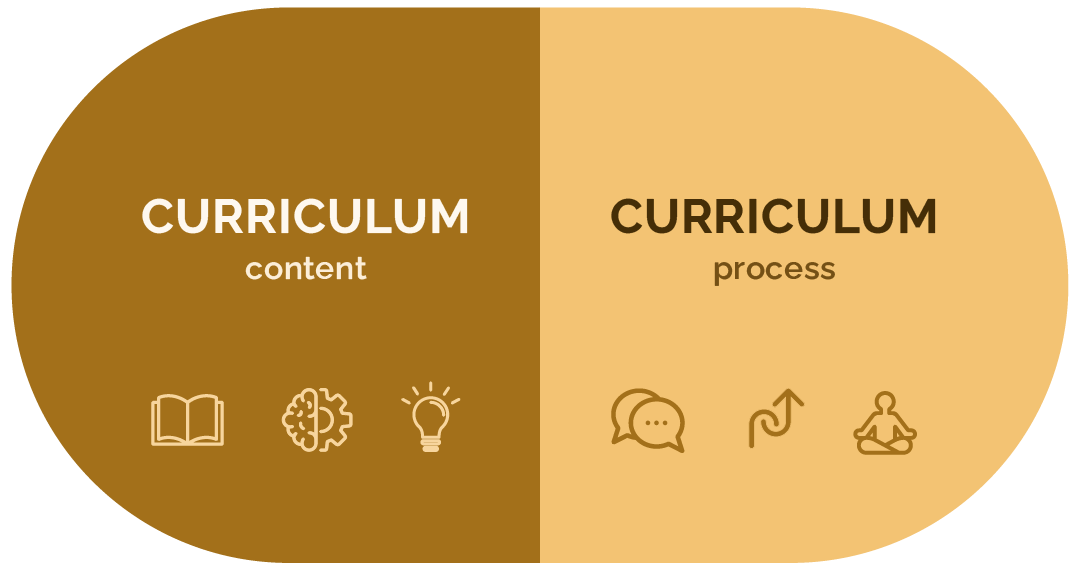
Figure 1. Two aspects of curriculum design and transformation – content and process (Houghton & Anderson, 2017)
2. Key curriculum areas for ensuring well-being and mental health from the content aspect
Curriculum design focused on well-being and mental health is not just an addition to teaching, but a systematic integration of content and methods of learning and teaching through an interdisciplinary approach that should be implemented in the teaching process, based on a developed or transformed curriculum.
There are four areas that are recommended to be introduced into courses in a way that they need to be embedded into existing content and teaching methods being applied:
Social and emotional well-being, in which the focus is on the development of self-confidence, communication and presentation skills, empathy, and emotion management. The development of these skills enables students to be better prepared for the labor market, increases their self-confidence, reduces stress, and contributes to success as well as the preservation of well-being and mental health.
Stress coping strategies, which include the integration of methods for identifying stressors and developing strategies to overcome them within the academic environment, as well as later in the business environment. It is important to raise students' awareness of the negative aspects of stress and stressful situations, teach them how to prevent, recognize, and overcome them. Likewise, to recognize when it is necessary to seek help for oneself as well as for others.
Interdisciplinarity is extremely important, especially in the curriculum and its implementation, because connecting topics such as ensuring digital well-being, addiction prevention, and digital hygiene with the primary field of study greatly contributes to the preservation of well-being and mental health, both during studies and in later life. Projects can be social; they can be done by connecting two or more courses with organizations or companies outside the higher education institution.
Prevention and early recognition of signs of impaired mental health allow timely familiarization of students with mechanisms for preserving mental health, as well as clear referral to professional services such as counseling centers before serious problems arise.
A curriculum design that supports the ensuring of well-being among students must not be reactive but act preventively, creating an inclusive and supportive academic community in which mental health care is integrated into the core process of learning and teaching.
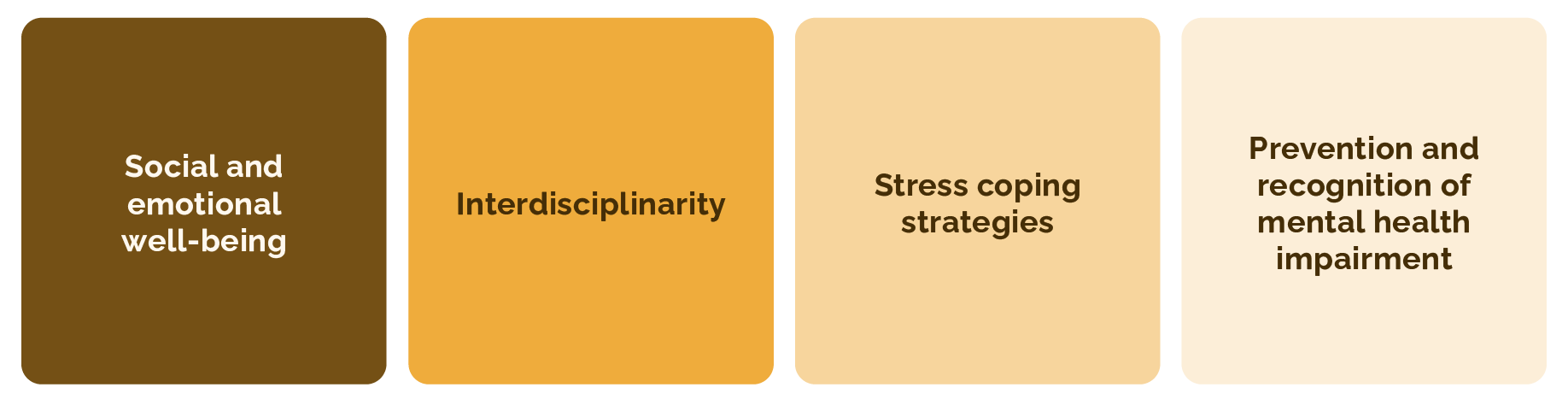
Figure 2. Four areas contributing to mental health and well-being
3. Well-being and mental health are the responsibility of every segment of the academic community
Within the framework of the University Mental Health Charter (University Mental Health Charter Framework, 2024), it is decidedly stated that well-being and mental health should be the responsibility of every segment of the academic community.
The framework consists of four basic domains: 1. Learn, 2. Support, 3. Work, and 4. Live which form the backbone of the approach to make well-being and mental health an integral part of every aspect of the university experience. The Learn domain is important as it indicates that the way students are taught and assessed directly affects their mental health. The focus is on creating an inclusive curriculum and providing support during the completion of obligations, in order to reduce academic stress and encourage resilience through the education process itself. The Support domain refers to the establishment and availability of easily accessible, safe, and effective services for students, teachers, and staff who are facing difficulties related to well-being and mental health. This includes not only university counseling centers but also clear protocols for crisis management and collaboration with external health institutions (such as hospitals and health centers). The Work domain emphasizes the importance of the mental health of academic and administrative staff. A healthy work environment, in which employee well-being is valued and job satisfaction is achieved while offering them professional development, is a prerequisite for creating a functional academic community. The Live domain covers the physical and social environment, from the quality of student accommodation to a sense of belonging to the community. It promotes the creation of spaces (physical and digital) that encourage healthy habits, physical activity, and social integration, thereby reducing the sense of isolation among students (Hughes, G. & Spanner, L., 2024).
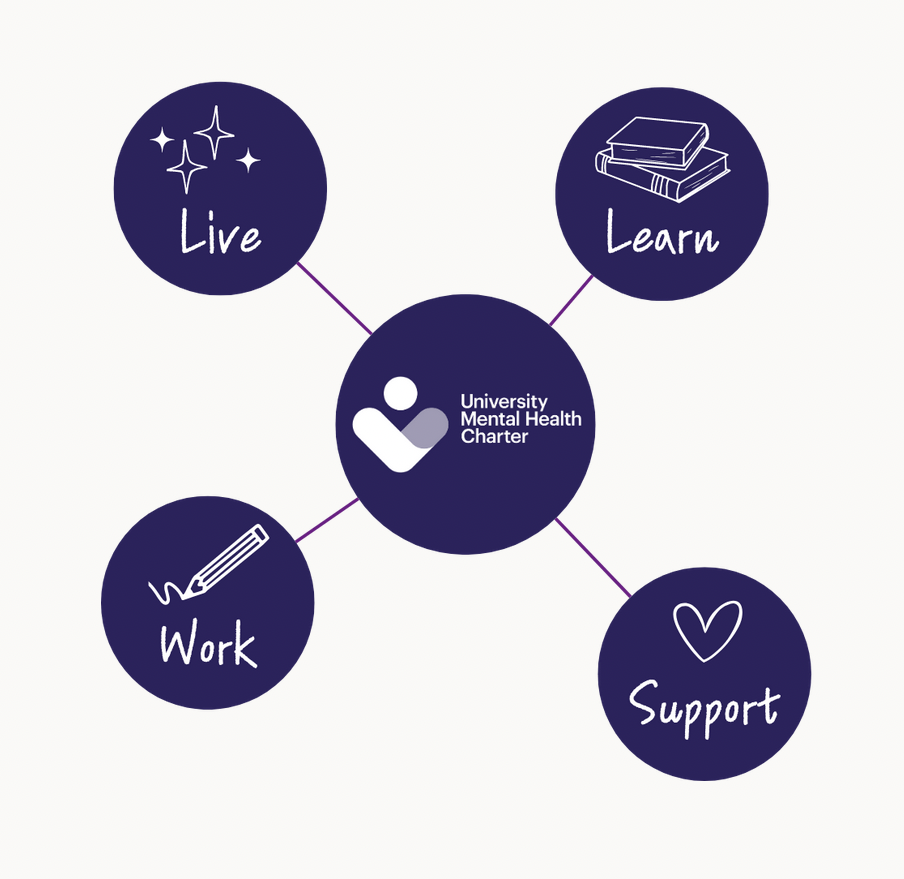
Figure 3. The four basic domains of the University Mental Health Charter Framework (Hughes, G. & Spanner, L., 2024).
The development of the framework is based on evidence and research, and its main purpose is to transform universities into places that proactively nurture well-being and contribute to the preservation of the mental health of all stakeholders. In accordance with the charter, it is important to focus on preventative action, culture, and environment for ensuring well-being and mental health.
In this context, the university takes responsibility for guiding students throughout their entire academic journey, starting from the transition that begins even before the application for study and continues through the first year and all key stages of progress until the labor market, preparing them for a professional career as well as the challenges of private life. The goal is to ensure measures that encourage not only academic integration but also strong social connection and a sense of self-efficacy in every individual.
A key role in this process is played by curriculum design and pedagogical practice. The curriculum is viewed holistically and inclusively, using methods that enable students to acquire knowledge at an appropriate pace, applying constructive alignment, an even workload, and flexibility of deadlines. By applying innovative methods of learning and teaching, such as project-based work, work-based learning, or the flipped classroom, students are encouraged to engage in deep learning and develop academic self-confidence.
Teaching staff need to be given clear guidelines on their role in supporting mental health, but of course, while respecting professional boundaries. Parallel to academic development, the university should also provide support services that must be professional, available, and responsive, with an emphasis on ensuring enough capacity for all the needs that students, as well as teachers and university staff, have.
Risk management, including the prevention of crisis situations and suicide, must be carried out through clear protocols and continuous staff education, with maximum respect for privacy and data confidentiality.
Student well-being is inseparable from the well-being of teachers and staff, which is why the Charter emphasizes the importance of creating a psychologically safe work environment. The university must empower employees to recognize signs of impaired mental health in themselves and others and allow them access to education on well-being, digital well-being, and mental health.
At the same time, the physical and social environment of the campus, from student dormitories to building projects, common spaces for socializing, content that encourages this, as well as access to nature, must be designed to reduce social isolation and promote a sense of belonging. Finding one's way around the campus and the measures that contribute to this can greatly help boost self-confidence, especially in the first years of study. For example, designing spaces that are accessible, safe, and functionally adapted to the work performed in them, as well as navigation that facilitates orientation on campus and reduces stress when moving around.
Inclusivity and understanding of different life backgrounds are key to removing barriers faced by marginalized groups. Universities must systematically work to prevent social isolation and loneliness, ensuring that every student feels like part of the community.
The final success of such an approach depends on strong leadership and strategic planning that sets well-being and mental health as the core mission of the institution. Visible leadership is needed that shows commitment to well-being through all policies and procedures of the university, and not just through isolated projects.
All policies and procedures should be created in direct partnership with students and staff, respecting their voice in all stages of decision-making and enabling their participation, which raises awareness of the importance of well-being. Students as well as staff should not just be service users, but partners. Support strategies and services must be developed in collaboration with students and staff, ensuring that their real voices and experiences are included in the decision-making process.
Continuous implementation of activities to achieve the goals of ensuring well-being, the implementation of innovations, and the evaluation of measures taken ensure that the university remains a dynamic and adaptable community that constantly learns and improves its practices for the purpose of preserving the well-being and mental health of all its stakeholders.
The Charter emphasizes three components that Universities need to ensure in order to strategically enable the preservation of well-being and mental health of their students and staff:
- build a strong sense of belonging,
- ensure system support,
- create an environment that respects individual differences.
4. Holistic approach to curriculum design and transformation from the process aspect
In order to ensure well-being and mental health and to design or transform the curriculum with that goal and purpose, it is important that the curriculum is developed and implemented holistically and relies on the following three pillars (StudentMinds, 2019; StudentMinds, 2024):
Curriculum design in a way that study courses are connected into a meaningful whole at the level of the entire study program to achieve curriculum coherence with vertical and horizontal integration of content as well as methods of learning and teaching.
In order to achieve curriculum coherence, it is necessary to connect course content, avoid redundant content, and create shared project tasks through linking subjects that require the application of knowledge from multiple subjects simultaneously.
Thematic linking of courses within the same semester through shared projects, assignments, and case studies makes it easier for students to perceive cause-and-effect relationships and develops problem-solving and critical thinking skills.
Interdisciplinarity allows for the merging of different perspectives and helps in problem-solving, while teamwork fosters connection and strengthens the sense of belonging so that the student feels like part of a group, which reduces anxiety associated with a sense of loneliness in large study groups.
Assessment for learning while encouraging deep learning
Assessment for learning while encouraging deep learning includes the application of strategies such as "3R" - Remove, Reduce, Rethink to reduce the assessment load and encourage deep learning among students.
In the 3R strategy, "Remove" means that it is necessary to remove multiple testing of the same knowledge through different formats, as well as the assessment of purely factual knowledge.
The "Reduce" strategy means introducing more frequent, smaller continuous checks or tasks that ultimately contribute to the course grade.
The "Rethink" strategy refers to assigning tasks in which real business problems, their resolution, and case study analysis are simulated.
As recommendations for assessment design, it is suggested to assess work phases (drafts, pilot research, reflection on feedback) along with a defined, timely, and openly communicated monitoring method for each subject.
It is recommended that feedback in assessment be focused on future work and improvements in the continuation of work in the next phase, which will reduce the sense of failure among students and allow them to improve their work results.
Also, encouraging self-assessment and peer assessment develops critical thinking and objectivity towards one's own work as well as the work of one's colleagues.
Ensuring inclusivity and support for all students
- Ensuring inclusivity and support for all students includes inclusive teaching that anticipates and addresses physical, cultural, and cognitive barriers.
- Addressing barriers through curriculum design and its implementation means offering flexibility by, for example, providing digitally accessible materials that are readable by screen readers or the availability of presentations before the lecture itself.
- It is important to enable different modes of participation in class, from asynchronous and synchronous online teaching to a combination of live lectures, recordings, interactive digital materials, quizzes, interactive books, and other content.
- It is necessary to ensure the adaptation of teaching materials as well as assessment for students with neurodiversities, thereby reducing cognitive barriers.
- Teaching materials should contain different perspectives (gender, cultural, socioeconomic), which helps students identify with the subject matter and feel a sense of belonging to the community.
5. Recommendations contributing to a holistic approach in curriculum design with the aim of ensuring well-being and mental health
Present to students the integrity of the curriculum as well as the connections within it, with the aim of perceiving the meaningfulness of the curriculum and achieving learning outcomes. In this way, students understand why they are learning something and how it builds on what they have already learned.
Design courses in a way that they are divided into smaller, logical units - modules/topics, and so that knowledge is transferred gradually. Modular design gives students the impression of smaller, manageable steps.
Explain at the beginning of each class how today's lesson/topic/content builds on the previous one and how it prepares the students for future challenges and topics.
Communicate student obligations clearly, timely, transparently, and with understanding.
Use the first class of a course as an "anchor," which is important for creating links between subjects in that semester, but also with the future professional life of the students. Horizontal anchoring is connecting the course with other subjects that students are attending in the same semester, and vertical anchoring is connecting the material with future professional life. In this way, the meaningfulness of the course is achieved, it acts motivationally, and understanding and the integrity of the approach are increased.
Identify the prior knowledge that students bring, for example, from high school or from previous years, which can be done through specific prior knowledge testing. Namely, in this way, knowledge is built on good foundations of students' prior knowledge, which significantly reduces stress for students and brings benefits in mastering the content.
Design assessment that is not just a knowledge check but also allows for the promotion of deep learning. Link assessment with real problems from future professional life (e.g., project development, case studies).
Use innovative methods of learning and teaching, such as project-based learning, work-based learning, or the flipped classroom, to develop practical knowledge and skills needed in the labor market, critical thinking, decision-making, and problem-solving.
Coordinate deadlines for the submission of projects and other tasks, as well as exams at the level of the study program, so that periods in which students have multiple project tasks to submit and defend at the same time or multiple demanding exams almost simultaneously are avoided. Such a method of good organization and load balancing contributes to ensuring the well-being and mental health of students.
Use so-called "exemplars" in teaching by showing students examples of excellent, average, and poor work from past years. When students see a concrete example of what is expected of them, anxiety about the "unknown" decreases.
Create a Glossary of Terms that contributes to greater awareness and understanding of the content by students. A short glossary of key course terms, as well as terms related to grading (e.g., what exactly "critically analyze" means in relation to "describe"), can be created.
Introduce choice gradually, starting from the first year, in a way that for first-year students, most courses, topics, and content are defined, but as they progress toward higher years, increase freedom of choice so that students themselves shape paper topics, projects, and research questions according to their own interests.
Create a group identity in higher education institutions as one of the ways to contribute to a sense of belonging. A sense of belonging is one of the factors that most influences mental health. It is recommended to utilize the introductory hours of the course to establish social rules of communication and build a group identity. A student who feels accepted by colleagues will find it easier to seek help if they need it.
Ensure diversification of teaching materials by using examples, case studies, and authors from different cultural and social backgrounds, with the aim of achieving inclusivity. When students see such examples and their representation in materials, they feel certainly less marginalized.
Increase the number of formative tasks in assessment that do not carry points, but in this way, students solve tasks and check their level of knowledge of the material, so that they can approach summative evaluation with less fear and greater confidence. It is also important that they are provided with feedback so that they know which elements they need to improve.
6. Examples of curriculum design elements for promoting well-being and mental health
Increase student flexibility in setting deadlines and selecting tasks
Providing choice allows students to feel control over their own learning, which ultimately acts to reduce the likelihood of anxiety appearing.
The possibility of allowing students to choose seminar paper topics and task formats (for example, an essay or a presentation) and opening the possibility of increasing flexibility in task submission deadlines (at least for those of lesser importance) helps students in ensuring well-being.
Example:
Universities, as well as teachers, can introduce the possibility of delaying minor tasks without the need for a medical certificate. In this way, pressure on students is reduced.
Ensure clarity during task assignment and familiarize students with their obligations
Anxiety is often caused by uncertainty, and by clearly assigning tasks and familiarizing students with their obligations, the likelihood of its occurrence is reduced.
Examples:
Detailed syllabi: A clear overview of the entire semester, including all deadlines, monitoring methods, assessment methods, and expectations (without changes during the academic year).
Transparent grading: Using detailed rubrics that clearly show students how they will be graded, based on which criteria and points.
Apply constructive alignment in curriculum design
Curriculum design focused on student well-being actively uses the principles of constructive alignment to ensure that teaching, learning, and assessment methods are mutually aligned. In this way, the student experience is optimized and unnecessary stress is reduced.
Quality assessment based on constructive alignment ensures that assessment methods:
- test key knowledge and skills that are explicitly defined by learning outcomes
- encourage deep learning instead of surface learning focused solely on passing.
Example:
It is recommended to replace one extensive exam with several smaller formative checks. Using portfolio-type evaluation is particularly useful because it shifts the focus from the end result to the learning process and skill development throughout the entire semester.
Raise the level of transfer of knowledge and skills needed for life
The curriculum should include disciplinary knowledge, but also skills crucial for student life and the future of their professional and private lives.
It is necessary to embed into the curriculum the teaching of topics that are crucial for a quality student life, and later for private and professional life.
Examples:
Teaching students metacognitive skills, such as how to learn, how to plan time, and how to manage workload.
Teaching students about topics such as digital well-being and integrating into teaching topics about the critical use of digital technologies and the impact of the online environment on mental health.
As academic staff, you have the opportunity to positively influence student well-being and learning, and you can achieve this by using your role in teaching to increase confidence, self-efficacy, deep learning, and students' love for their studies and subjects. However, you do not have to become their counselor because maintaining your own boundaries and effectively referring to support services is the correct path.
7. Literature
Houghton, A. M., & Anderson, J. (2017). Embedding mental wellbeing in the curriculum: Maximising success in higher education. Higher Education Academy.
Hughes, G. Heriot Watt University. Learning + Teaching Academy. Supporting student wellbeing through curriculum design and delivery.
Pugh, V. (2021). A curriculum for wellbeing: Improving all aspects of wellbeing in curricula & schools. British Educational Research Association (BERA).
Student Minds. (2019). University Mental Health Charter.
Student Minds. (2024). University Mental Health Charter Framework.
University of Bath, Centre for Learning and Teaching. (2023). Designing your curriculum to help support student wellbeing. Learning and Teaching Hub.
Background Colour
Font Face
Font Size
Text Colour
Font Kerning
Image Visibility
Letter Spacing
Line Height
Link Highlight
Paragraph Width
Text Alignment