Factors of Inclusiveness in Higher Education
| Site: | Loomen za stručna usavršavanja |
| Course: | Ensuring Inclusive Access Through the Use of Assistive Technology |
| Book: | Factors of Inclusiveness in Higher Education |
| Printed by: | Gost (anonimni korisnik) |
| Date: | Thursday, 17 September 2026, 5:00 PM |
1. Factors of Inclusiveness in Higher Education
Education is a fundamental human right, and quality education that ensures inclusive and equitable access for all is one of the United Nations (UN) Sustainable Development Goals (SDGs) to be achieved by 2030. In line with the principles of social justice, researchers and organisations such as the UN and UNESCO have raised awareness and called for action to increase inclusive practices in higher education, which has influenced university curricula and policies, as well as teaching and learning practices (Moriña, 2017).
Inclusion in higher education is defined as the policies, practices, and processes that support students' right to access higher education and reduce the exclusion of students from study-related environments and practices such as curriculum, teaching strategies, and learning materials (Filippou et al., 2025).
2. Understanding Inclusion and the Challenges Faced by Teachers in Inclusive Higher Education
Korthals Altes et al. (2024) presented the results of a review of 36 studies on higher education teachers’ understanding of inclusion and the challenges they encounter.
3. Factors Influencing Inclusive Higher Education
Teachers identify several ways to achieve inclusive higher education (Korthals Altes et al., 2024, pp. 11):
- application of universal design
- student-centred learning
- group assignments to increase social interaction
- an inclusive environment
- oral and shorter written assignments as incentives for inclusive learning
- guidelines outlining expectations for participation
- student time management.
Filippou et al. (2025) defined indicators of inclusive higher education in three categories through a review of papers:
- inclusive policies – university level, regional level, state/national level
- inclusive practice – syllabus, administration, teaching, and learning
- accessibility – social, physical, digital, and attitudinal.
At the University of Hull, a Framework for Inclusive Higher Education was conceptualised (Hubbard & Gawthorpe, 2025). The Framework details five areas of action that contribute to inclusive practice in a higher education institution and six key principles or ways of working (Figure 1).
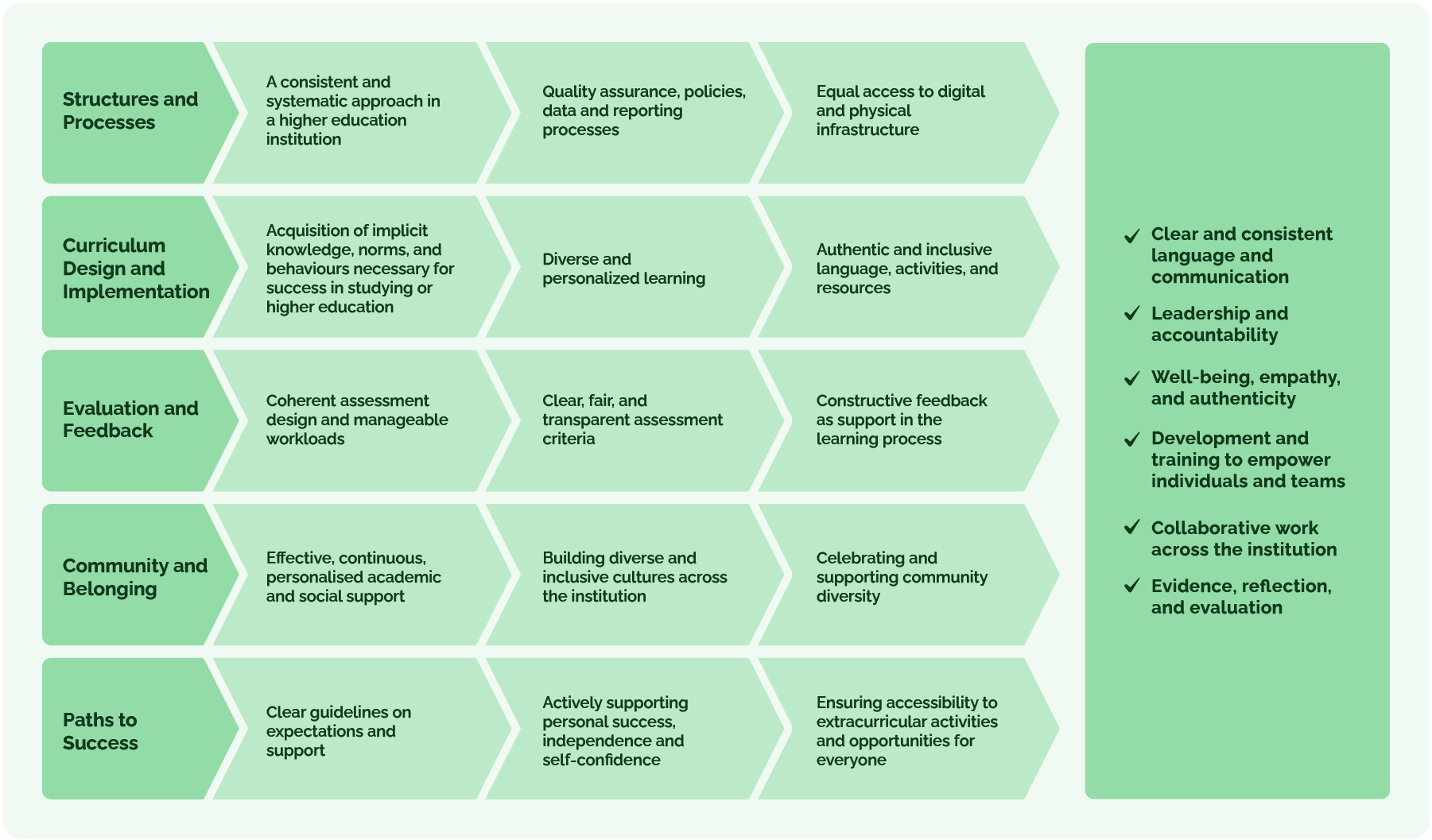
Figure 1. Framework for Inclusive Higher Education (Hubbard and Gawthorpe, 2025)
Inclusive education does not mean compromising academic standards or the quality of the process. Inclusion does not require grade inflation or simplification – inclusive programmes can and should be challenging, enabling the acquisition of knowledge, skills, and discipline in meeting obligations. Adopting an inclusive approach recognises that some students are systematically disadvantaged and proactively ensures that all students have equal opportunities for success. Inclusiveness is the responsibility of everyone involved. It requires students, academic staff, non-teaching staff, and the administration of higher education institutions to collaborate in creating the most inclusive environment possible.
4. Questions and Statements for Self-Assessment and Reflection
- How is inclusion in higher education defined?
- List five challenges faced by teachers in higher education.
- List at least three ways in which inclusiveness is ensured in higher education.
5. References
Filippou, K., O. Acquah, E., & Bengs, A. (2025). Inclusive policies and practices in higher education : a systematic literature review. Review of Education, 13(1). https://doi.org/10.1002/rev3.70034
Hubbard, K., & Gawthorpe, P. (2025). Inclusive Higher Education Framework. Teaching Excellence Academy.
Korthals Altes, T., Willemse, M., Goei, S. L., & Ehren, M. (2024). Higher education teachers’ understandings of and challenges for inclusion and inclusive learning environments: A systematic literature review. Educational Research Review, 43, 1–16. Article 100605. https://doi.org/10.1016/j.edurev.2024.100605
Moriña, A. (2017). Inclusive education in higher education: Challenges and opportunities. European Journal of Special Needs Education, 32(1), 3–17. https://doi.org/10.1080/08856257.2016.1254964
Background Colour
Font Face
Font Size
Text Colour
Font Kerning
Image Visibility
Letter Spacing
Line Height
Link Highlight
Paragraph Width
Text Alignment