Assistive Technology Assessment
| Site: | Loomen za stručna usavršavanja |
| Course: | Ensuring Inclusive Access Through the Use of Assistive Technology |
| Book: | Assistive Technology Assessment |
| Printed by: | Gost (anonimni korisnik) |
| Date: | Thursday, 17 September 2026, 3:50 PM |
1. Assistive technology Assessment
Assistive technology (AT) has a positive impact on the health and well-being of individuals, their families, and society as a whole. Despite these advantages, it is estimated that only 10% of people who need AT currently have access to it, even to basic devices such as hearing or optical aids. Data from WHO and UNICEF (2022) indicate that over 2.5 billion people worldwide require one or more forms of AT and that this number will reach 3.5 billion by 2050.
To ensure that assistive devices are fit for purpose, the WHO recommends four types of services:
- assessment,
- fitting,
- user education,
- and follow-up.
Well-being and safety can be compromised if there are difficulties in any of these steps. When device availability and related services are inadequate or unavailable, more time and financial resources are required for AT services. A negative experience with the availability of AT services can discourage users from seeking them. The lack of early screening – such as hearing or vision screening – results in unmet AT needs. For those who do have access to AT services, the quality of available products and services depends on the training of professionals, service standards, delivery time, the required number of visits, and the procurement of safe and effective products (WHO and UNICEF, 2022, p. 44).
Assessing user needs to select and potentially adapt assistive technology is necessary for the effective use of AT and to reduce the possibility of assistive device rejection. AT needs assessment is a multi-step process (Delzotto, 2022). In addition to assessing the user's abilities and needs, AT needs assessment should also include setting goals, selecting solutions, AT procurement, implementation, and fitting, continuous monitoring of progress, and providing support for the use of AT in the environment (Delzotto, 2022; Pinjatela and Vinceković, 2023).
Experts in the Republic of Croatia who use AT in their work believe they are not sufficiently familiar with assessment instruments for AT selection and are not adequately trained to apply AT when working with users (Stančić and Pinjatela, 2023). The results indicate a need for additional training for professionals in this area.
In Croatia, there is still no standardised model or instrument for assessing the need for assistive technology. However, experts in certain rehabilitation centres have developed their own models for assessing the need for assistive technology. One of these is the Veruda Protocol, by Ines Delzotto, Univ. mag. rehab. educ. A comprehensive model for assessing the need for assistive technology, which would be standardised for the Republic of Croatia, is currently under preparation.
2. Models of assistive technology assessment
Assessment of the need for assistive technology is a process in which information about a person with a disability is collected and analysed to recommend suitable assistive technology.
A thorough assessment includes:
- assessment of the person's functional abilities and needs
- identification of the activities for which the technology will be used
- selection of the assistive technology to be implemented
- procurement and implementation of the necessary equipment
- monitoring and reassessment.
It is important that the assistive technology assessment is conducted in a timely and transdisciplinary manner.
Appropriate models and assessment instruments are used during the evaluation.
The alignment of technological solutions with the individual's needs must be carefully evaluated – simpler technological solutions are often more effective and easier to integrate into a person's lifestyle.
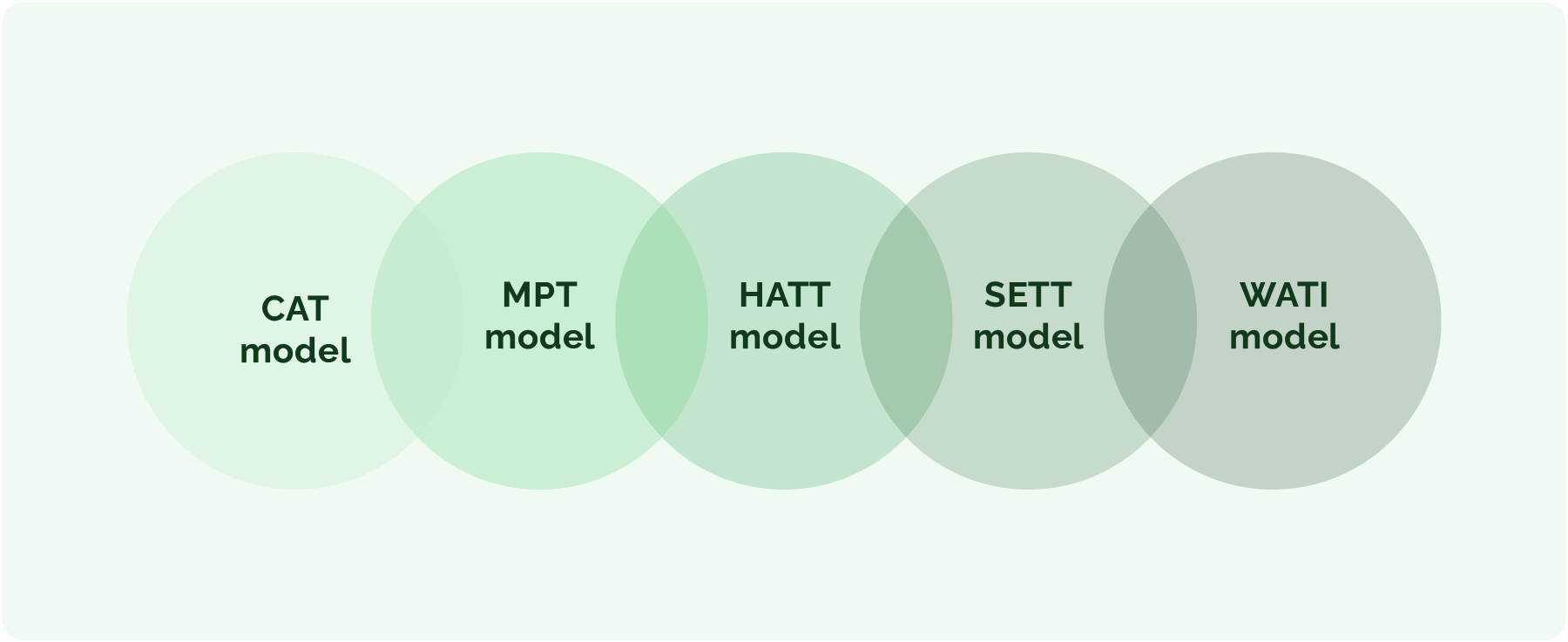
Figure 43. Models of assistive technology assessment
3. CAT model
The Comprehensive Assistive Technology (CAT) model was developed to provide common terminology and definitions within a unique, unified framework for defining, describing, specifying, developing, and evaluating assistive technology solutions.
The model has a hierarchical structure based on four components: Person, Context, Activities, and Assistive Technology. It is person-centred and represents an individual or a specific group who uses assistive technology to perform particular activities within a given context.
4. MPT model
The MPT (Matching Person and Technology) model was developed in 1989 by Dr Maria Scherer, Director of the Institute for Matching Person & Technology.
The core of this model is an individualised approach to the person, the selection of the most appropriate assistive technology, and its successful use.
The model focuses on three main areas:
- personal and psychosocial characteristics of the user
- environmental factors where the assistive technology is used
- functions and features of the proposed assistive technology solution.
The characteristics within these three areas are interconnected and are extremely important for assessment, as they can have a positive or negative impact on the use of the technology. Although a particular technology may appear to be a perfect solution for an individual, if it does not meet the person's needs or the person does not receive the necessary support, the technology will be useless, rejected, or inadequately used (Matching Person & Technology).
MPT also identifies potential barriers to optimal technology use, targeted areas for education to ensure optimal use, and potential additional support that can enhance usage. After the person receives the most suitable technology for their needs, MPT forms are completed multiple times following the acquisition of assistive technology to assess changes in perceived abilities, quality of life, or subjective well-being, and various psychosocial factors such as participation, support, and user mood.
This assessment model is based on collaboration between the expert and the individual. It consists of a series of assessment instruments, worksheets, observation sheets, and evaluation sheets.
Each instrument is divided into two parts:
- the first part is intended for the service provider (expert)
- the second part is intended for the user.
The instruments have shown high reliability and validity, and are often used in research. MPT assessment instruments are intended for persons with disabilities over 15 years of age. Instructions for application and assessment sheets in English are available at the link.
5. HAAT model
The HAAT model (Human Activity Assistive Technology) places the human at the centre, rather than the assistive technology, and its purpose is for the assistive technology to adapt to the individual, not the other way round (Cook and Hussey 1995; Cook and Polgar 2015).
The HAAT model comprises four components: human, activity, context, and assistive technology. It is important to study these components both separately and in their interaction.
The human refers to the physical, emotional, and cognitive functions of the body that are important and necessary for carrying out activities, participating in the community, and using assistive technology.
Activity refers to the actions of the individual.
Context refers to the environment and its components that influence the individual's activities.
Assistive technology refers to the aids and devices used by an individual when, due to certain conditions, they cannot successfully perform an activity.
The HAAT assessment model includes six steps: referral to assistive technology options, initial assessment, recommendation and report, implementation, monitoring and evaluation, and reassessment after a prolonged period of assistive technology use.
6. SETT Framework
The SETT (Student, Environment, Tasks, and Tools) Framework was developed in the 1990s by Joy Zabala, Ed.D. It is designed for use when considering assistive technology services for children and individuals with disabilities, their implementation in the environment, and the evaluation of the effectiveness of these services. With minor adaptations, it has been useful at all levels of service provision, from early intervention to adult services. In the original SETT Framework, 'S' stands for the student; however, 'S' can also refer to any individual with a disability who wishes to perform a task with greater independence.
- Using the SETT Framework, individuals with disabilities actively participate in decision-making concerning assistive technology and service provision.
- A key aspect of the SETT Framework in a person-centred plan is the individual's involvement in expressing their own dreams, ideas, goals, strengths, and needs.
- All team members collaborate to create an environment where the information, skills, observations, and perspectives of individuals with disabilities, families, and professionals are valued and respected.
- Team members work together to build a shared vision of what technology may be needed and how it will be used, beginning with a common understanding of the individual with a disability, the environment, and the tasks.
- The discussion continues until consensus is reached that there is sufficient shared knowledge to make an informed, reasonable decision supported by data (The SETT Framework).
Through continuous monitoring and data collection, professionals ensure that the selected assistive technology is adapted to the needs of individuals with disabilities across various environments and tasks.
7. WATI model
The Wisconsin Assistive Technology Initiative (WATI) was established in 1993 to provide technical support and implement requirements for assistive technology provision. It offers assessment models, suggested procedures, materials, and access to assistive technology for trial use. The initiative aims to ensure both education and specific strategies for delivering assistive technology services. Its objective is to improve outcomes for children with developmental disabilities and individuals with disabilities from birth to 21 years of age by applying assistive technology to enhance access to services, curricula, and school and community activities (WATI, 2022).
The WATI (Wisconsin Assistive Technology Initiative) assessment model also originated from this initiative. The WATI model is primarily intended for use in the educational system, but with certain adaptations, it can also be used in the healthcare system. The WATI assessment model incorporates the SETT Framework, which enables the straightforward collection and organisation of information on which the team bases its selection of appropriate assistive technology (WATI, 2009).
The instruments and checklists in the WATI assessment model are divided into four main groups:
1. WATI Checklists for Gathering User Information
These checklists are designed to collect general user data, assess abilities and needs, and review previous experience with assistive technology. Initially, general information about the user must be completed (personal data, details of disability, type of therapy attended, medical condition, information on current and previous use of assistive technology). The checklists also cover 12 areas: seating, positioning, and mobility; communication; access to computers and devices; motor aspects of writing; composition of written materials; reading; mathematics; organisation; leisure; vision; hearing; and general.
2. WATI Checklists for Gathering Environmental Information
These checklists are intended to describe the user's environment, sensory stimulation, people present, access to assistive technology, methods of task completion, and difficulties encountered during task performance. All questions in these checklists may be adapted depending on the environment.
3. WATI Checklists for AT Decision Making
This checklist summarises all previously collected information. Specific problems are identified and solutions proposed; the most suitable solution is then selected from the proposed options, a plan and programme are created and implemented, and finally, members reconvene to evaluate the assistive technology solution.
4. WATI AT Checklist
This consists of a list of assistive technologies according to their purpose and serves as a reminder to team members of possible assistive technology solutions.
The following link is available in Croatian only. Participants may use free AI-powered translation tools to access the provided materials.
The instructions for implementation and the assessment checklists of the WATI instrument have been translated into Croatian and are available in the paper by Pinjatela, R., and Vinceković, I. (2023). Assistive Technology Assessment. ATTEND e-tečaj: Vodič do ostvarenja jednakih mogućnosti za učenike s teškoćama u razvoju. Taken under the CC BY-NC-SA 4.0 International license.
8. References
Delzotto, I. (2022). Quality Assessment of Needs for AT Implementation. The ATTEND Conference Our Way (unpublished presentation). Opatija: CARNET.
Pinjatela, R., & Vinceković, I. (2023). Assistive technology assessment. ATTEND e-course: A Guide to Achieving Equal Opportunities for Students with Developmental Disabilities. Licensed under CC BY-NC-SA 4.0 International.
Stančić, Z., & Pinjatela, R. (2023). Assistive technology from a professional perspective / Asistivna tehnologija iz perspektive stručnjaka. In Mirić, M., Miholić, D. (Eds.) Assistive Technology in the 21st Century – State of the Art and Perspectives. Zagreb: Faculty of Education and Rehabilitation Sciences, University of Zagreb, pp. 45-70.
WATI (2009) Assessing Students’ Needs for Assistive Technology (ASNAT) Process.
World Health Organization and United Nations Children's Fund (UNICEF). (2022). Global report on assistive technology. World Health Organization. License: CC BY-NC-SA 3.0 IGO
Zabala J. (2005). Ready, SETT, go! Getting started with the SETT framework.
Background Colour
Font Face
Font Size
Text Colour
Font Kerning
Image Visibility
Letter Spacing
Line Height
Link Highlight
Paragraph Width
Text Alignment