Introduction to Open Education, Recommendations, and Documents
| Site: | Loomen za stručna usavršavanja |
| Course: | Open Education and Open Science |
| Book: | Introduction to Open Education, Recommendations, and Documents |
| Printed by: | Gost (anonimni korisnik) |
| Date: | Thursday, 17 September 2026, 7:25 PM |
Table of contents
- 1. Introduction to Open Education, Recommendations, and Documents
- 2. Dimensions of Open Education
- 3. The OpenEdu Framework and 10 Dimensions of Open Education
- 4. Recommendations for Strategic Planning
- 5. Dimension: Opening Access to Education (Access)
- 6. Dimension: Pedagogy and Open Educational Practices (Pedagogy)
- 7. Dimension: Open Educational Resources (Content)
- 8. Dimension: Recognition of Open Learning (Recognition)
- 9. Dimension: Collaboration in Open Education
- 10. Dimension: Research
- 11. Dimension: Strategy
- 12. Dimension: Technology
- 13. Dimension: Quality
- 14. Dimension: Leadership
- 15. Reflection Questions
- 16. Literature
1. Introduction to Open Education, Recommendations, and Documents
This lesson introduces the concept of open education, with a particular focus on practical guidelines for its implementation in higher education. These guidelines are based on the publication "Practical Guidelines on Open Education for Academics: Modernising Higher Education via Open Educational Practices (based on the OpenEdu Framework)". The goal of these guidelines is to encourage teachers, researchers, and other staff in the higher education system to apply open education practices supported by institutional policies. The document outlines the core dimensions of open education and presents examples of open educational practices that can be implemented within higher education institutions.
Open Educational Practices (OEP) are collaborative approaches that go beyond the creation, use, and adaptation of open educational content. They also include pedagogical practices that make use of digital technologies and social networks to support collaboration, peer learning, knowledge creation, and student empowerment.
Open Education (OE) primarily refers to the removal of all types of barriers in education, enabling everyone to learn anywhere, at any time, and with anyone's support, often with the support of digital technologies. According to the definition from the JRC OpenEdu Framework, its goal is to expand access to education by removing barriers and making learning accessible and adaptable for everyone. Open education promotes diverse approaches to teaching and learning and connects formal and informal educational contexts.
The following link is available in Croatian only. Participants may use free AI-powered translation tools to access the provided materials.
Additional information on open education can be found via the link. For more information on open educational resources, you can watch a short video. A transcript of the video is provided bellow or can be downloaded here.
2. Dimensions of Open Education
The framework and guidelines were developed with the aim of raising awareness and motivation among teachers, researchers, and institutional leaders, encouraging them to harness the potential of digital technologies and open education in higher education. The framework aims to:
- enable and increase access to education
- encourage innovation in teaching
- improve access to lifelong learning
- transfer new (digital) skills and competencies key to employability and social inclusion
3. The OpenEdu Framework and 10 Dimensions of Open Education
The OpenEdu framework for higher education institutions defines 10 dimensions of open education. The framework provides a holistic view of open education, encompassing different areas in which higher education institutions can increase their openness. Involved in the development and evaluation of the framework were 43 experts in open education from Europe and the world, as well as university leaders from 19 EU Member States [2].
The ten dimensions of the framework are divided into two categories: core dimensions and transversal dimensions. Although all dimensions are interconnected and equally important, they are categorized by their role:
|
Category |
Dimensions |
Role (What/How) |
|---|---|---|
|
Core (6) |
access, content, pedagogy, recognition, collaboration, and research |
indicate what constitutes open education |
|
Transversal (4) |
strategy, technology, quality, and leadership |
highlight how to achieve openness and open education |
Within each dimension, the framework contains descriptors of possible practices and institutional policies. In this way, by providing insight into the dimensions involved in open education, the framework serves as support for institutions when designing strategies for opening up education.
4. Recommendations for Strategic Planning
Persons involved in the strategic planning of higher education institutions are encouraged to:
- develop a holistic strategy for opening up education that encompasses all 10 dimensions of the OpenEdu framework
- integrate the open education strategy into the overall institutional strategy
- promote internal, inter-institutional, and cross-border collaboration, as well as partnerships to achieve open education goals
- explore new practices and be open to change
- revise practices at all levels to embrace openness: from mission and vision statements, through current organizational structures and decisions, all the way to the role of the institution in the community and globally
Further information is available via the link.
Below, we present and describe all 10 dimensions of open education.
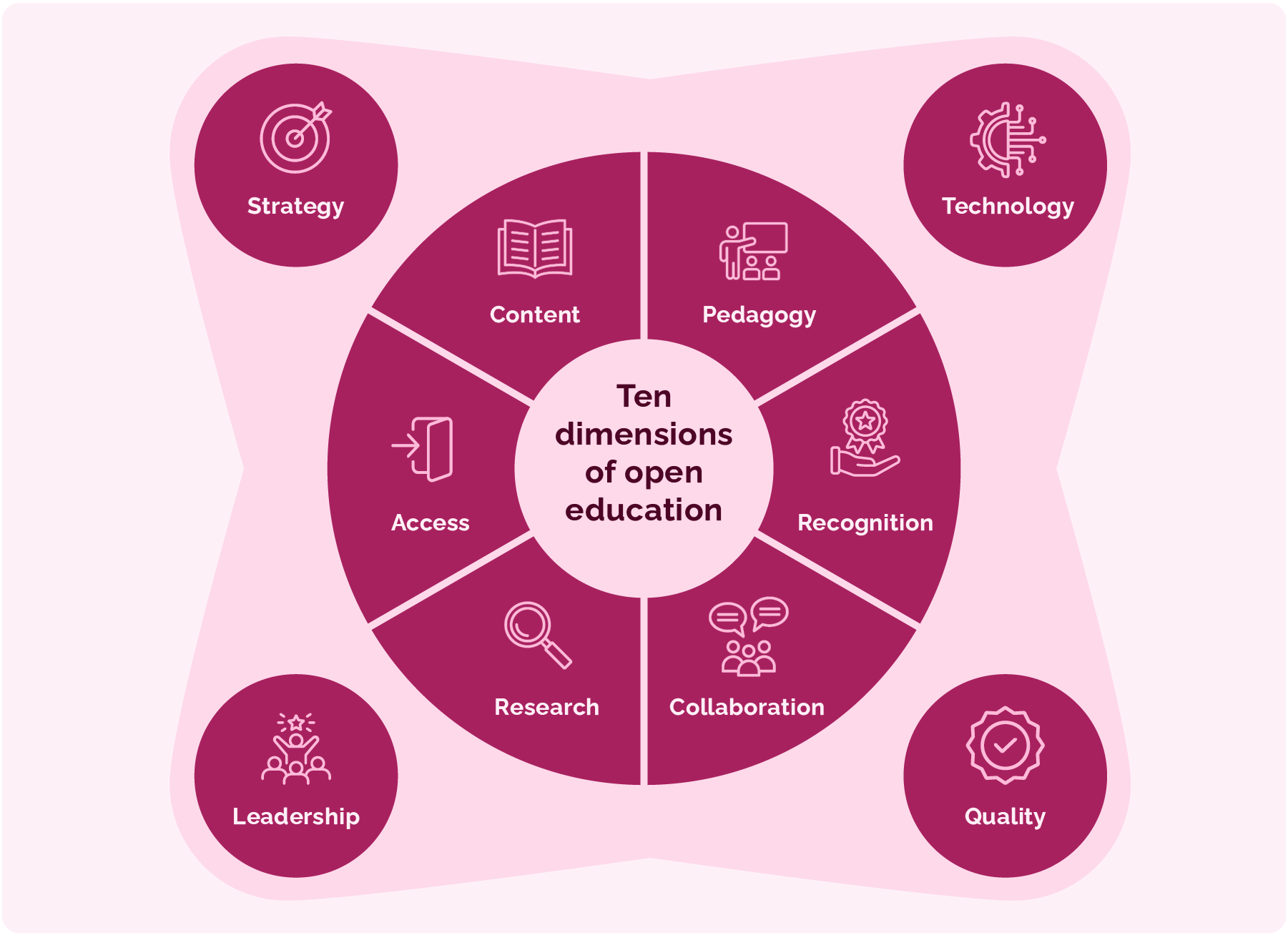
Figure 1: Ten Dimensions of Open Education (Source)
5. Dimension: Opening Access to Education (Access)
Opening access to education means removing economic, technological, geographical, and institutional barriers to knowledge and education. It refers to creating conditions that allow everyone to engage in formal or informal learning, with or without the support of digital technologies.
From the perspective of an educational institution, opening access to education can be promoted at four levels:
- access to open programs leading to a degree or qualification
- access to open courses, didactically prepared content for the purpose of teaching a specific topic, such as massive open online courses (MOOCs)
- access to content, namely various types of openly licensed educational materials, such as texts, images, podcasts, etc.
- access at a transversal level (accessibility), making content easily understandable and accessible to everyone, including persons with special learning needs or special physical needs. This also implies increased access to networks and communities of practice, including all applicable educational services offered by educational institutions

Figure 2. Opening Access to Education
6. Dimension: Pedagogy and Open Educational Practices (Pedagogy)
Open Educational Practices (OEP)
Open Educational Practices (OEP) make a range of different teaching and learning approaches more transparent, easier to share, and more visible. OEP refers to specific teaching and educational practices that not only use open educational resources (OER) but are also open to change, adaptation, and collaboration.
Open educational practices are also linked to the formal recognition of certificates acquired through open learning and are primarily based on the use of digital technologies. OEP supports the use of open educational resources, curricula, recorded lectures, and lesson plans, as well as the sharing of experiences and learning and teaching strategies. The goal of OEP is to shift the focus from resources and focus on the practices and methods that are part of teaching and learning a particular subject or unit.
In addition, OEP encourages the sharing of syllabi, lessons, teaching assignments, assessments, and expected learning outcomes in order to increase the transparency of teaching and educational practices and to encourage peer learning. OEP is also intended to be applied in a way that motivates students to design their own ways and approaches to learning, with a wide choice of educational resources, thereby promoting open learning.
The use of OEP in teaching and learning promotes a culture of sharing. This leads to increased availability of open educational resources and teaching and educational practices that are student-centered and based on peer learning and collaboration.

Figure 3. Open Educational Practices
7. Dimension: Open Educational Resources (Content)
What are open educational resources (OER)?
Open educational resources (OER) are educational materials for teaching and learning in any format or medium, as well as research results, data, and literary works, which are free of charge and licensed as open or are in the public domain.
OER helps increase access to education by allowing educational materials to be freely shared, adapted, and reused without infringing on copyrights.
The benefits of publishing content from teachers and researchers as OER include increasing the visibility of their teaching materials outside the higher education institution, which enhances their own visibility as well as the institution's reputation.
By publishing OER in the form of written texts, videos, audio, or other types of media, they demonstrate their own way of teaching to others, thereby contributing to openness and the sharing of knowledge.
The quality of published OER can increase because their openness to the public can bring useful comments, recommendations, revisions, and updates.
Teaching practices can also be improved by using OER (e.g., publishing, reusing) because teachers and researchers will be exposed to knowledge, practice, and teaching methods of other colleagues from different backgrounds.
Examples of OER are: curricula and programs, course materials, lessons, books and textbooks, videos, podcasts, multimedia applications, teaching papers, assessment templates, photographs, brochures, reports, research data, scientific papers, research data sets, websites, blogs, and any other resource or tool designed for teaching, learning, and research that has a visible open license.

Figure 4. Open Educational Resources
8. Dimension: Recognition of Open Learning (Recognition)
Recognition of open learning is crucial for formalizing knowledge acquired in flexible and open environments and has two main aspects.
Issuing formal accreditation is a process usually conducted by an accredited institution, and refers to the issuance of a certificate, diploma, or title that has formal value, even if the learning took place informally. This process includes a formal assessment of the individual's acquired knowledge and skills.
The second aspect is the process of formal acceptance, such as digital badges, certificates, or diplomas issued by a third-party institution. Such acceptance serves as proof that a set of learning outcomes (knowledge, skills, and/or competencies) achieved by an individual has been assessed by a competent body.
Figure 5. Recognition of Open Learning
9. Dimension: Collaboration in Open Education
Collaboration implies the exchange of knowledge and experience, as well as the joint sharing of strategies and initiatives, for the purpose of improving learning and teaching.
It is achieved by promoting awareness-raising activities, creating networks between institutions, and through agreements that support open educational practices (OEP) at different levels: among individuals, regional and national institutions, and at the international level.
Different stakeholders (e.g., competent authorities (government), institutions, and teachers) must collaborate in open education to promote awareness-raising about the importance of openness as well as the sharing of practices.
Collaboration in open education promotes the exchange of knowledge, the co-production of OER and courses, the joint offering of open online courses and MOOCs, joint certification and recognition, the development of open digital learning environments, and the acquisition and enhancement of digital competencies. It can also reduce the financial burden of preparing educational content.
10. Dimension: Research
Openness in research refers to the removal of barriers to access data and research results, as well as the expansion of participation in research processes, thereby embracing the Open Science approach.
Open Science is an approach to scientific processes based on collaboration and new ways of disseminating scientific knowledge, using digital technologies and collaborative tools. It encompasses Open Access, Open Data, open research processes, and Open Science policies and tools.
Open Access refers to free online access to peer-reviewed scientific content with limited copyright and licensing restrictions.
Open Data refers to data that can be freely used, reused, and redistributed, subject only to the requirements of their open license.

Figure 6. Open Science
11. Dimension: Strategy
Open Education Strategy
The strategy of a higher education institution should include a commitment to the integration of open educational practices (OEP) in the context of vision and mission drivers for development, modernization, and transformation of the higher education institution in the following aspects:
- academic programmes
- outreach, access, and flexibility
- research
- knowledge and technology transfer
- contribution to society
This recommendation must be visible in the strategic implementation plan in the form of specific and measurable activities.

Figure 7. Strategy
12. Dimension: Technology
Technology in open education
Technology functions as an enabler of all other dimensions of openness when it is based on open standards and open-source technologies that are interoperable with other platforms and services.
Open document standards refer to software norms that grant users permission to create, copy, distribute, and use documents under certain conditions. These standards must be documented, publicly available, and free to use. Open document standards must be compatible with open-source solutions and proprietary licensed solutions.
Free and open-source technologies imply software that is open and free, and the source code used to create the program is also available for viewing, editing, and redistribution. Such open-source software is usually developed and maintained through the collaboration of various stakeholders, including the general public.
13. Dimension: Quality
Institutions are responsible for defining and meeting their own goals, practices, and quality standards in open education.
Higher education institutions must be responsible for defining and achieving:
- quality objective of applying open education practices
- quality standards for the design and implementation of open education practices
- quality procedures for their realization and evaluation
Quality standards should cover all levels of open education:
- open educational resources and courses (curriculum design, course design, and course delivery)
- open educational services (support for teachers, researchers, staff, and student support)
- open education management (strategic planning and development) and contribution to society
Institutions can develop their own quality goals, standards, and procedures for open education or adapt existing ones to ensure quality in open education practices.
14. Dimension: Leadership
Leadership in open education is the promotion of open educational practices while transforming these practices into institutional policies.
Leadership that includes the promotion of openness in all three areas of activity of higher education institutions should define open education and open science policies and/or guidelines that will be implemented using the following approaches:
- top-down (from management to staff and students)
- bottom-up (from staff and students to university management)
- from the side of society
Institutional leadership should take care of strategy creation, but also implementation by delegating tasks and responsibilities. It is also recommended to identify ambassadors for open education at all levels, who will take the lead in different dimensions of open education within the institution.
Leadership in open education should implement an openness policy in a way that promotes the adoption of openness guidelines throughout the entire higher education institution.
15. Reflection Questions
General concepts and objectives
- What is open education according to the definition from the OpenEdu framework, and what is its primary goal?
- What are Open Educational Practices (OEP)?
- What are the key objectives of the JRC EC guidelines related to the application of open education in higher education institutions?
OpenEdu framework and strategic planning
- The OpenEdu framework contains 10 dimensions divided into two categories. What are those two categories, and which dimensions belong to which category?
- What is the role of the core dimensions in relation to the role of the transversal dimensions?
- What are the three key recommendations that should be taken into account during the strategic planning of open education and science in a higher education institution?
Core dimensions
- What are the four levels at which opening access to education can be promoted from the perspective of a higher education institution?
- Provide the definition of OER and state at least two benefits that publishing OER brings to teachers and researchers.
- What are the two main aspects of recognition of open learning?
- What is open science, and what do open access and open data encompass?
Transversal dimensions
- In which three key aspects must higher education institutions integrate open educational practices to fulfill their vision and mission of openness?
- What is the role of technology as an enabler of other dimensions, and what must technology be based on to support open education?
- Which three approaches are recommended to leadership for the successful implementation of open education policies?
16. Literature
Inamorato dos Santos, A. Practical Guidelines on Open Education for Academics: Modernising Higher Education via Open Educational Practices (based on the OpenEdu Framework), EUR 29672 EN, Publications Office of the European Union, Luxembourg, 2019, ISBN 978-92-76-00194-2, doi:10.2760/55923, JRC115663
Inamorato Dos Santos, A., Punie, Y., and Castaño Muñoz, J. Opening up Education: A Support Framework for Higher Education Institutions. EUR 27938. Luxembourg (Luxembourg): Publications Office of the European Union; 2016. JRC101436
Background Colour
Font Face
Font Size
Text Colour
Font Kerning
Image Visibility
Letter Spacing
Line Height
Link Highlight
Paragraph Width
Text Alignment