3. E-course structure
The e-course consists of six thematic units. The following table shows the percentage contribution of each of the six topics to each learning outcome.
|
|
Describe the purpose and characteristics of digital transformation (10) |
Explain the goal, characteristics, and phases of strategic planning (10) |
Analyze the components and areas of the digital technology application strategy (10) |
Apply methods and techniques to define elements of a digital technology application strategy (10) |
Develop a strategy for implementing digital technologies (30) |
Create an action plan for the application of digital technologies (30) |
|
Digital Transformation |
60 % |
10 % |
||||
|
Areas of the Digital Technology Implementation Strategy |
10 % |
10 % |
70 % |
10 % |
5 % |
|
|
Strategic Planning |
20 % |
60 % |
10 % |
5 % |
||
|
Methodology for Developing a Strategy for Implementing Digital Technologies |
10 % |
60 % |
30 % |
10 % |
||
|
Action Plan for Implementing Digital Technologies |
10 % |
10 % |
10 % |
10 % |
40 % |
|
|
Agility in Strategic Planning, and final evaluation of created strategies and action plans |
10 % |
10 % |
10 % |
10 % |
50 % |
50 % |
E-course structure:
- Thematic unit 1. Digital Transformation
- Theoretically, this unit outlines the basic theoretical assumptions related to digital transformation, including its characteristics, determinants of maturity, types of digital changes, and the role of stakeholders in the process of digital transformation of higher education institutions.
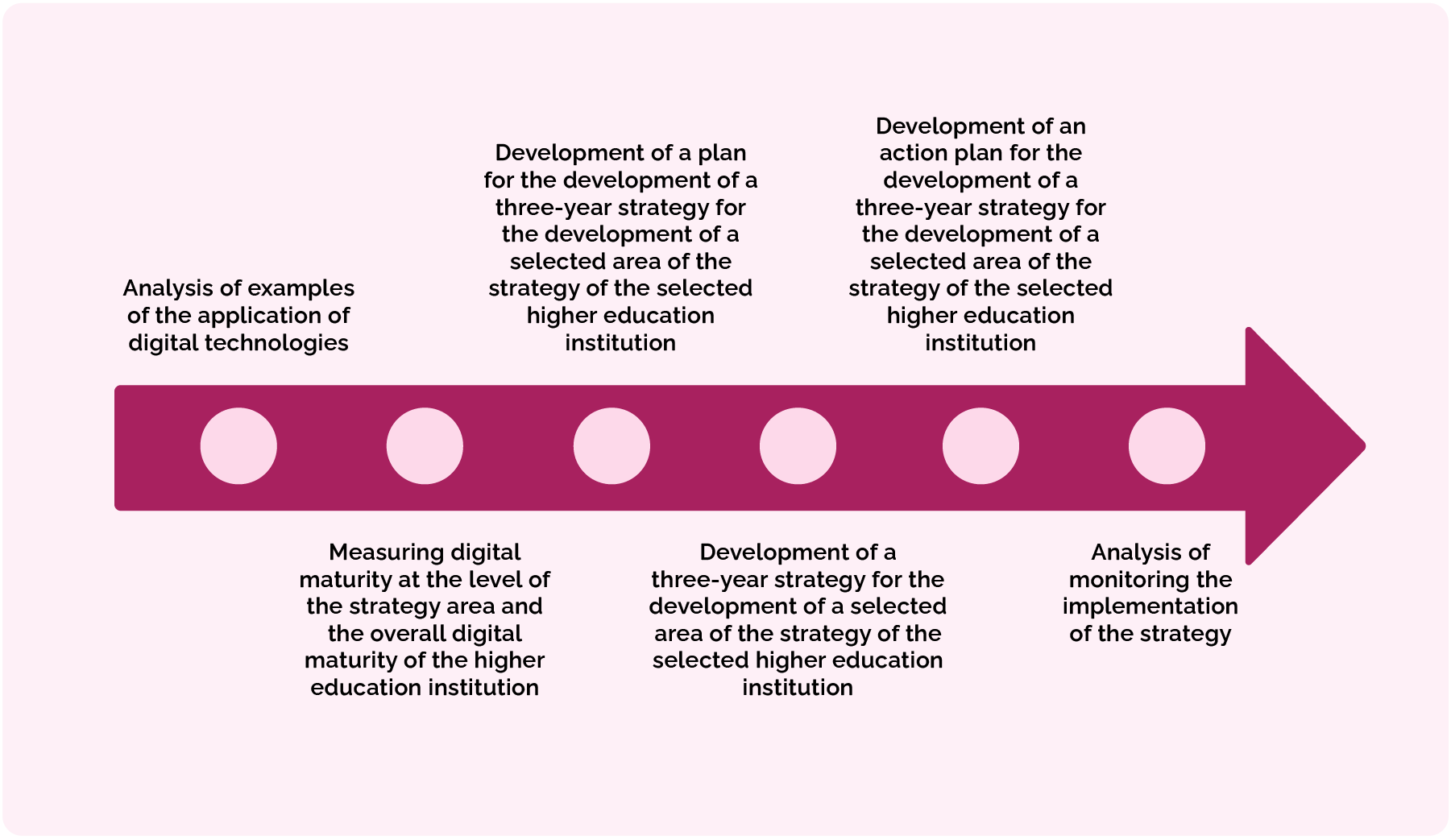
- In practical terms, within this unit, participants need to select and analyze, according to given criteria, examples of business processes that represent examples of the application of digital technologies.
- Theoretically, this unit outlines the basic theoretical assumptions related to digital transformation, including its characteristics, determinants of maturity, types of digital changes, and the role of stakeholders in the process of digital transformation of higher education institutions.
- Thematic unit 2. Areas of the Digital Technology Implementation Strategy
- Theoretically, this unit analyzes the different frameworks of digital maturity used in the different approaches to defining the area of strategy for the application of digital technologies. The unit includes seven areas of strategy for the application of digital technologies, specific examples of the application of digital technologies for each area from Croatia and the world, and a presentation of trends in the area. Additionally, the connection between the field of application of digital technologies and two digital maturity frameworks for higher education, DigCompOrg and the digital maturity framework for higher education institutions (DMFHEI), is presented.
- In practical terms, participants work in pairs to choose a higher education institution of their choice (preferably their own) and, independently or with the help of responsible persons (board member(s)), conduct an evaluation of the institution to identify the digital maturity of the institution and each of the seven areas of digital maturity.
- Theoretically, this unit analyzes the different frameworks of digital maturity used in the different approaches to defining the area of strategy for the application of digital technologies. The unit includes seven areas of strategy for the application of digital technologies, specific examples of the application of digital technologies for each area from Croatia and the world, and a presentation of trends in the area. Additionally, the connection between the field of application of digital technologies and two digital maturity frameworks for higher education, DigCompOrg and the digital maturity framework for higher education institutions (DMFHEI), is presented.
- Thematic unit 3. Strategic Planning
- Theoretically, this unit provides a definition of strategic planning and its characteristics, strategy components, preferred practices regarding the formation of teams for the creation of strategies, the structure of the strategic planning plan, and statistics on the success of strategic planning.
- In the practical part, participants develop a plan for creating a three-year development strategy for the selected higher education institution for one of the areas of the digital technology application strategy. Ideally, they should select the area that is the least mature based on the analyses conducted in the task of the previous thematic unit.
- Theoretically, this unit provides a definition of strategic planning and its characteristics, strategy components, preferred practices regarding the formation of teams for the creation of strategies, the structure of the strategic planning plan, and statistics on the success of strategic planning.
- Thematic unit 4. Methodology for Developing a Strategy for Implementing Digital Technologies
- The theoretical part of this unit provides a detailed overview of the methods for developing a strategy, from analysis of the current situation to defining the strategic goals. The missions, visions, core values, strategic initiatives, and strategic goals of four Croatian and four foreign higher education institutions are presented.
- In the practical part, participants analyze the existing strategic plans for the selected higher education institution, analyze the current state of the field of application of digital technologies selected in the task of the previous thematic unit, and create a strategy for that field (vision, mission, values, and three strategic goals).
- The theoretical part of this unit provides a detailed overview of the methods for developing a strategy, from analysis of the current situation to defining the strategic goals. The missions, visions, core values, strategic initiatives, and strategic goals of four Croatian and four foreign higher education institutions are presented.
- Thematic unit 5. Action Plan for Implementing Digital Technologies
- In the theoretical part, the topic provides an overview of different approaches for the operationalization of strategic goals (breaking them down into concrete activities and operational goals). The steps of operationalizing strategic goals with a simplified balanced scorecard system (BSC) are clarified and demonstrated.
- In practical terms, an action plan needs to be created for the strategy created in the task of the previous thematic unit.
- In the theoretical part, the topic provides an overview of different approaches for the operationalization of strategic goals (breaking them down into concrete activities and operational goals). The steps of operationalizing strategic goals with a simplified balanced scorecard system (BSC) are clarified and demonstrated.
- Thematic unit 6. Agility in Strategic Planning
- The theoretical overview outlines the characteristics of agile management and the role of agility in monitoring the implementation of the action plan.
- In practical terms, participants simulate the implementation of an action plan using a template for an activity log in strategy implementation. After entering several completed activities in the activity log, participants will be able to simulate the progress of achieving operational and strategic goals through quarters. In the simulation, participants will be able to determine whether their operational goals are being achieved as intended or whether appropriate decisions need to be made, and thus see the role of agility in strategic management in a concrete example.
- The theoretical overview outlines the characteristics of agile management and the role of agility in monitoring the implementation of the action plan.
Background Colour
Font Face
Font Size
Text Colour
Font Kerning
Image Visibility
Letter Spacing
Line Height
Link Highlight
Paragraph Width
Text Alignment