6. Strategy components: mission, vision, goals, values
The components of a strategy represent the fundamental pillars of every strategic plan. A clearly defined mission, inspiring vision, specific goals, and core values ensure the alignment of all stakeholders and give the organization its identity and direction.
Mission defines the purpose and core function of the institution – why it exists.
Example:
Mission of the University of Split: “To make education accessible to all, based on innovative teaching methods and guided by scientific excellence that inspires societal change.” [16]
Example:
Mission of the Massachusetts Institute of Technology (MIT): “The mission of MIT is to advance knowledge and educate students in science, technology, and other areas of scholarship that will best serve the nation and the world in the 21st century.” [17]
Vision represents an ambitious yet realistic picture of the desired future state.
Example:
Vision of the University of Split: “A European university recognized for the exceptional quality and impact of our graduates, research, innovation, and social contribution to solving the challenges of the future.” [16]
Example:
MIT does not formally state a separate vision, but its official presentation highlights: “MIT strives to be the world leader in research, innovation, and education in science, technology, and engineering.” [18]
Core values express the principles and beliefs that guide the institution’s behavior and decision-making.
Example:
The University of Split lists the following core values: inclusiveness, inspiration, innovation, collaboration, and talent [16].
Example:
MIT’s core values are: excellence and curiosity, openness and respect, belonging and community [17].
Strategic goals represent a more operational elaboration of the vision.
Goals must be formulated according to the SMART criteria [7]:
- Specific: clearly describe what is to be achieved, without ambiguity.
- Measurable: contain quantitative or qualitative success indicators.
- Achievable: realistically attainable given available resources and conditions.
- Relevant: aligned with the mission and strategic priorities of the institution.
- Time-bound: have a clearly defined deadline for completion.
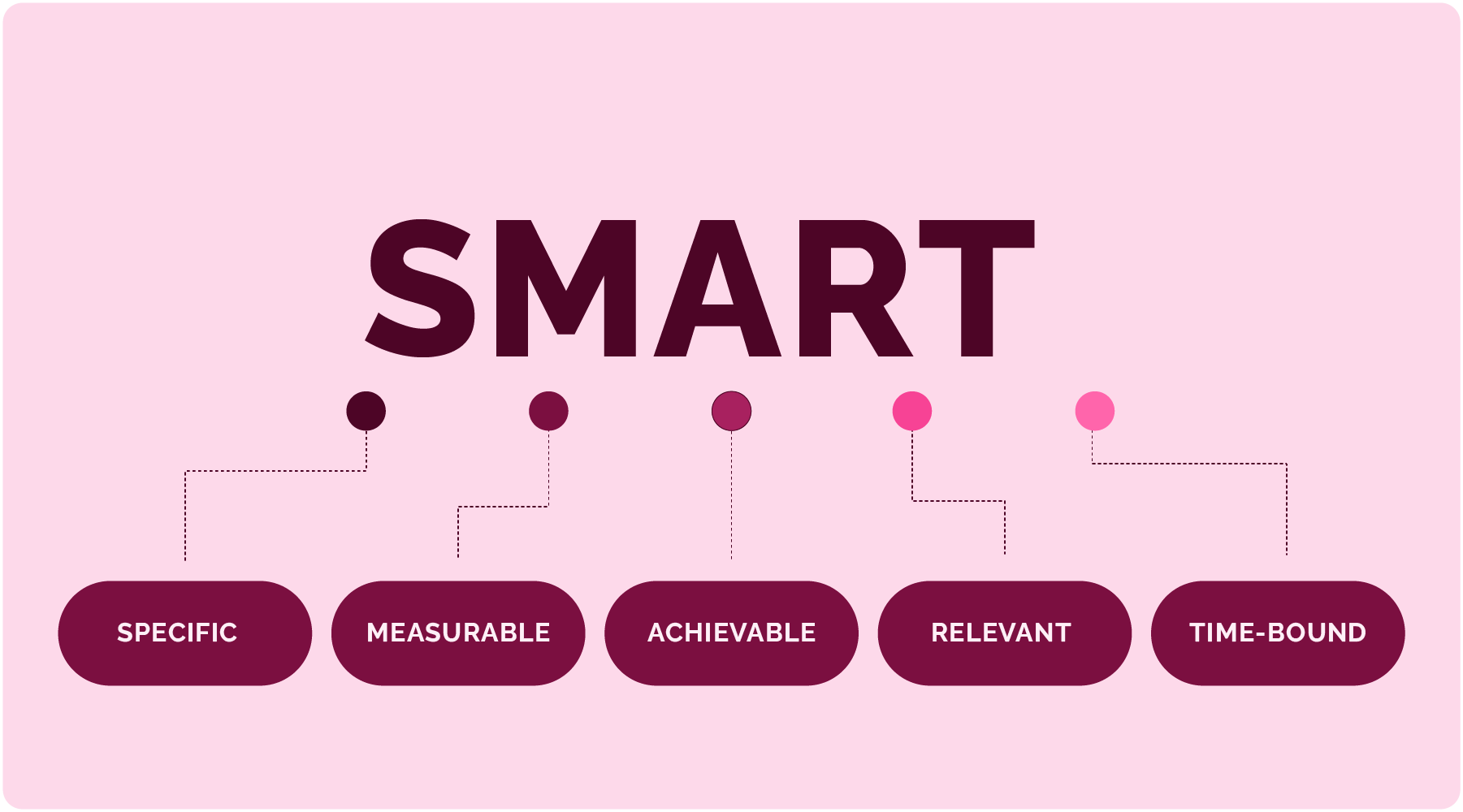
Example: “Increase the number of scientific papers published in Q1 journals by 25% by the end of 2026.”
-
- Specific: the goal refers to publishing in Q1 journals.
- Measurable: “25 %” increase is clearly stated.
- Achievable: ambitious but realistic target.
- Relevant: research output is key to the university’s mission.
- Time-bound: deadline clearly defined – by the end of 2026.
Additional examples of SMART goals:
- “Introduce digital certificates for all first-year courses by July 2025.”
- “Increase the number of students in international exchange programs by 15 % over the next two academic years.”
- “Develop and implement three new interdisciplinary study programs by the end of 2026.”
- “Increase the number of full-time undergraduate students to 4000 by 2025.” [19]
Examples that are not SMART:
- “Improve the quality and relevance of education.” [16] → not measurable or time-bound.
- “Become a better university.” → not specific, measurable, or operationally relevant.
- “Enhance education and the student experience.” [17] → vague, lacking a time frame and concrete metrics.
Vision, mission, core values, and strategic goals form the central part of strategic planning. In some cases, after identifying the mission and vision, strategic areas can be defined, within which strategic goals are then developed. This step is not mandatory and is not always applied. These elements together form the continuum of strategic management (see Figure).
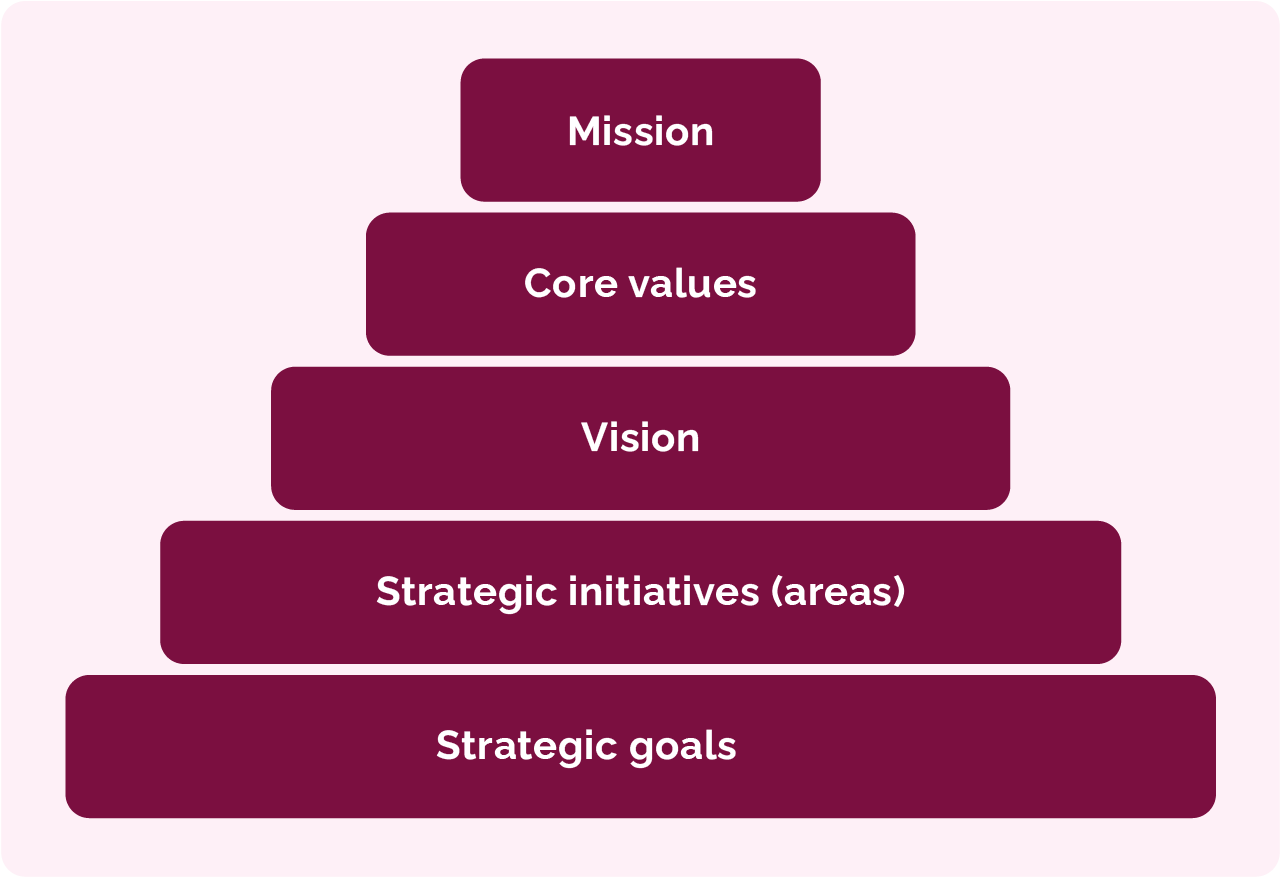
Figure: Continuum of Strategic Management
Background Colour
Font Face
Font Size
Text Colour
Font Kerning
Image Visibility
Letter Spacing
Line Height
Link Highlight
Paragraph Width
Text Alignment