2. Continuum of strategic planning
Imagine a process in which a higher education institution continuously learns, adapts, and evolves—like navigating through unknown waters while constantly adjusting its course. This process represents the continuum of strategic planning, where analysis, formulation, implementation, and evaluation form an inseparable cycle. The key steps of the continuum are:
- Analysis of the current situation: Assessing the institution’s digital maturity using frameworks such as DigCompOrg [1], SWOT and PESTLE analyses [2], benchmarking, and user needs research.
- Defining strategic frameworks: Formulating the mission, core values, and vision that guide the entire process.
- Setting strategic initiatives: Identifying key investment areas and priorities based on a gap analysis between the current situation and the desired state.
- Defining strategic goals: Developing specific and measurable objectives following the SMART approach [3] within each initiative.
- Developing an action plan: Operationalizing strategic goals into specific activities, resources, and timelines.
- Implementation of the strategy: Executing planned activities with the engagement of relevant stakeholders and the support of institutional leadership.
- Monitoring and evaluation: Continuously collecting progress data, tracking indicators, and reporting on results every few months.
- Revision and adaptation: Based on evaluation findings and changes in the environment, updating the strategy to maintain its effectiveness.
This cycle repeats throughout the entire duration of the strategy, ensuring a living and adaptable document that responds to changes in the digital environment and the internal needs of the organization.
The vision, mission, core values, and strategic goals represent the central elements of strategic planning. In some cases, it is possible—after identifying the mission and vision— to define strategic areas and then formulate goals within each area. This step is not mandatory and is not always applied. These elements form the continuum of strategic management (see figure below).
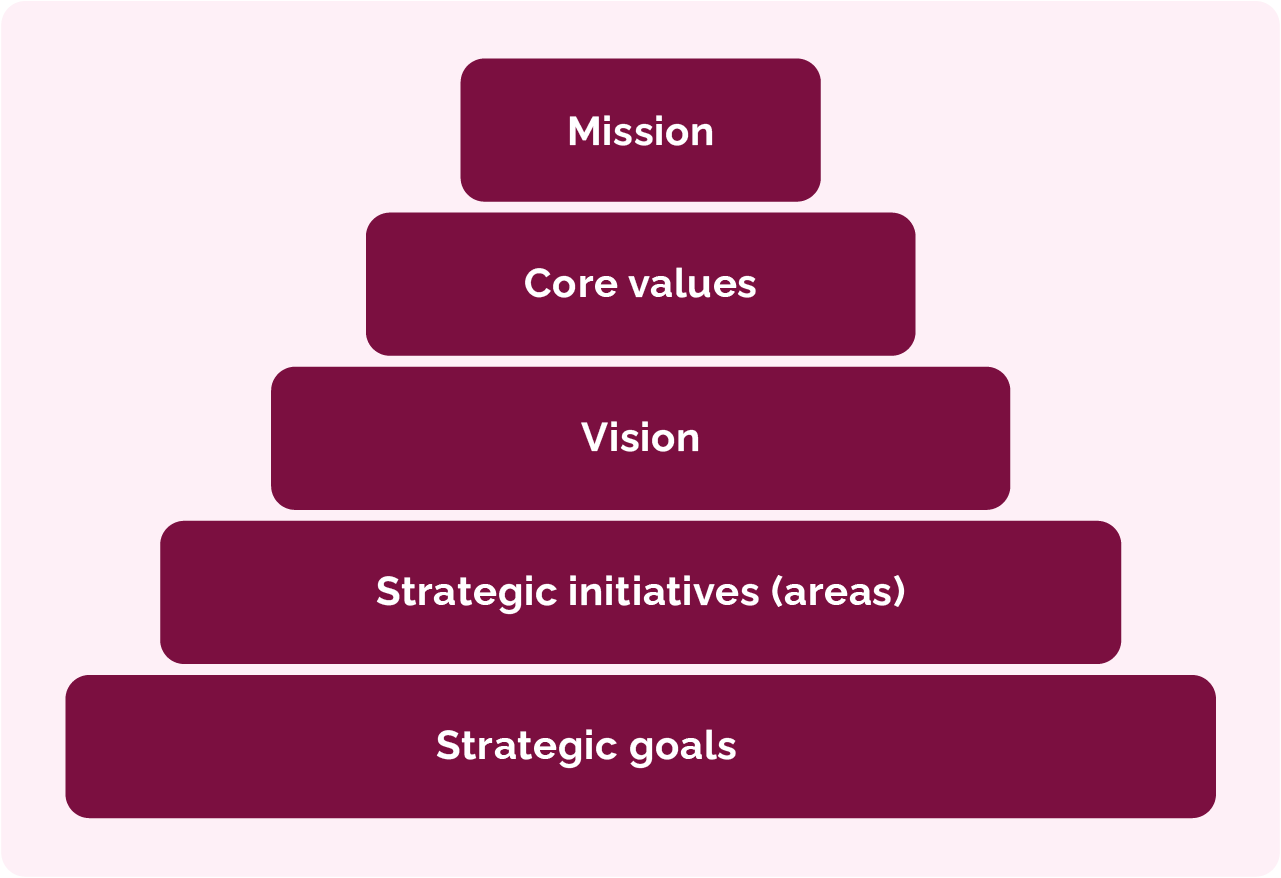
Figure: Continuum of strategic management
Background Colour
Font Face
Font Size
Text Colour
Font Kerning
Image Visibility
Letter Spacing
Line Height
Link Highlight
Paragraph Width
Text Alignment