3. ADDIE model
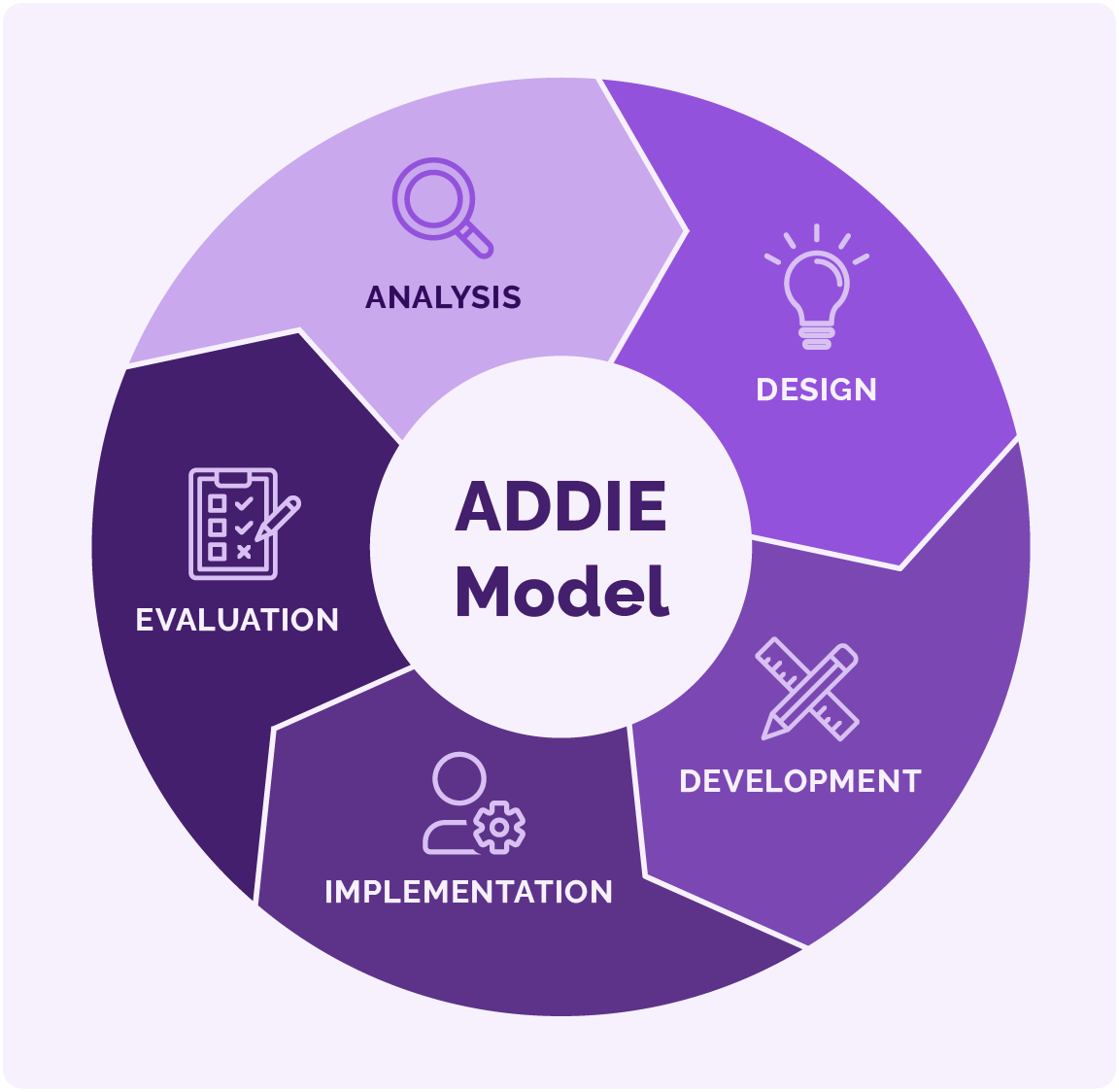
ADDIE model
One of the best-known and most used models of instructional design is ADDIE (Analyse, Design, Develop, Implement, Evaluate), which provides a clear framework for structured planning and implementation of the educational process during the five stated phases: analysis, design, development, application, and evaluation. The questions mentioned after each phase refer to what the instructional designer assisting the teacher/subject matter expert should pay particular attention to. If the teacher is also an instructional designer, they will solve some of these questions through internal analysis.
In the first phase, analysis, the educational problem is defined, the characteristics of the target group are identified (prior knowledge, competencies, motivation, technical readiness), the objectives are established, and the contextual conditions of learning are specified. In higher education, this phase includes, for example, an analysis of the study program and the expected outcomes of the qualification, but also an analysis of the conditions of teaching (number of students, possibility of using e-learning, availability of resources, etc.).
Questions that need to be asked during this phase are usually:
- What are the learning objectives?
- What is the audience?
- What are their needs?
- Are there any limitations in learning?
- What is the learning environment like?
- What tools and resources are available?
- What is the time frame?.
The design phase, in which the teaching content is structured, didactic strategies are determined, the sequence of activities is planned, and the form of assessment is defined. This phase also determines the types of teaching media and technologies that will be used, paying attention to their didactic function. It is crucial that the design is aligned with the learning outcomes, as well as the program outcomes.
During this phase, it is necessary to:
- interview subject experts (experts whose expertise covers the content of the future e-college, if you are both an expert and the author of the e-college, do the analysis yourself) in order to get detailed information and insights into the content
- determine the appropriate media and technological tools for students to use
- determine how collaborative and interactive the content should be
- determine the knowledge and skills that students should develop after each assignment.
Development phase refers to the creation of actual teaching materials: lectures, scripts, visuals, quizzes, case studies, and other resources. In digital education, this includes the creation of interactive elements, videos, and templates for independent work, as well as the development of tests and evaluation rubrics. Pilot testing of individual elements is often carried out during this phase.
Questions that need to be asked during this phase are usually:
- Is the creation/development of digital teaching materials timely in order to meet the target deadlines?
- Do any content or resources need to be redesigned or developed?
- Are there any incompatibilities (related to tools and digital content)?
- Are some digital tools or activities unusable?.
Implementation is the phase in which the designed teaching materials and activities are applied in a real educational situation. This could be the implementation of a course in the next semester or a workshop for teachers or students. During implementation, the instructional designer or teacher monitors how what has been planned works in real conditions and records user reactions and technical and pedagogical challenges encountered by the students or teacher.
If it is a project where the instructional designer helps teachers in the development of e-colleges, at this stage, it is necessary:
- begin training instructors/teachers on learning outcomes, recommended delivery methods, and appropriate use of tools and technology
- ensure that the leader of the e-course/e-college has all the materials and tools the participants need to complete the necessary learning activities
- establish a way to document student performance during the e-course
- create a backup plan for lessons and activities if the instructor encounters technical difficulties while delivering the e-course/e-college.
The final phase, assessment, includes a dual aspect: formative evaluation, which is carried out during all previous phases to improve the material and approach, and summative evaluation, which is carried out after implementation to determine the effectiveness of the program. Evaluation can be carried out, for example, by: student surveys, learning analytics, etc.
Questions at this stage usually concern how to improve an already conducted e-course/e-college for the next year of execution:
- Have the problems been solved and the learning objectives achieved?
- How receptive were the participants to the activities and materials?
- Are changes needed in the scope and sequence of e-course content?
- Are there areas that could be improved or made more efficient?.
Background Colour
Font Face
Font Size
Text Colour
Font Kerning
Image Visibility
Letter Spacing
Line Height
Link Highlight
Paragraph Width
Text Alignment