2. Methods of evaluation while learning
Methods of evaluation while learning
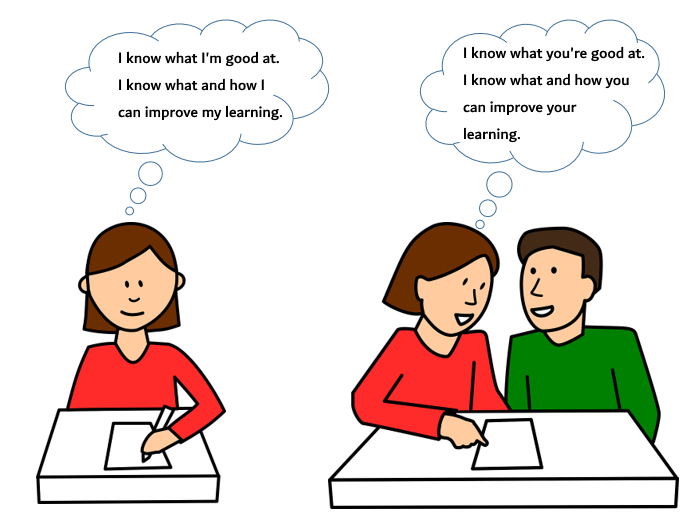
In assessment while learning, the procedures are based on methods of self-assessment, i.e., self-reflection and peer assessment (e.g., self-assessment using grading tables, learning diaries, assessment scales, consultations with the teacher, etc.). It refers to the active involvement of the student in the assessment process with constant support from the teacher through various peer and self-reflective assessment activities.
In e-learning, it is possible to use assessment scales, interactive lessons, tasks, or simulations, choosing the complexity of tasks according to self-assessment, reflection after solving, digital learning diaries, e-portfolios, and exit tickets. It is possible to include peer evaluation as part of collaborative activities in which peers monitor group work, with students deciding on evaluation criteria.*
For assessment as learning to be effective, in analyzing the success of their own learning, students must clearly know in advance what the goals/outcomes are for a particular lesson/unit/week/semester.
In addition to learning outcomes, students should also be familiar with evaluation criteria so that they can recognize different levels of their own achievements.
Peer assessment
Peer assessment is a form of collaborative learning regulation that is applied as a method in assessment while learning. By providing peer feedback, the student is actively involved in evaluating the learning and achievements of their peers, helping them to observe, monitor, and regulate the learning process.
Peer review helps students develop the ability to manage their own learning and set their own goals. It can follow self-review. For example, self-reviews can be followed by peer reviews, where students should be encouraged to focus on the positive aspects of others' work and then on ways to improve that work (rather than the negative aspects).
* Jandrić, P. & Tomić, V. (2020). CARNET-ov priručnik Postajem e-učitelj
Background Colour
Font Face
Font Size
Text Colour
Font Kerning
Image Visibility
Letter Spacing
Line Height
Link Highlight
Paragraph Width
Text Alignment