2. ADDIE model
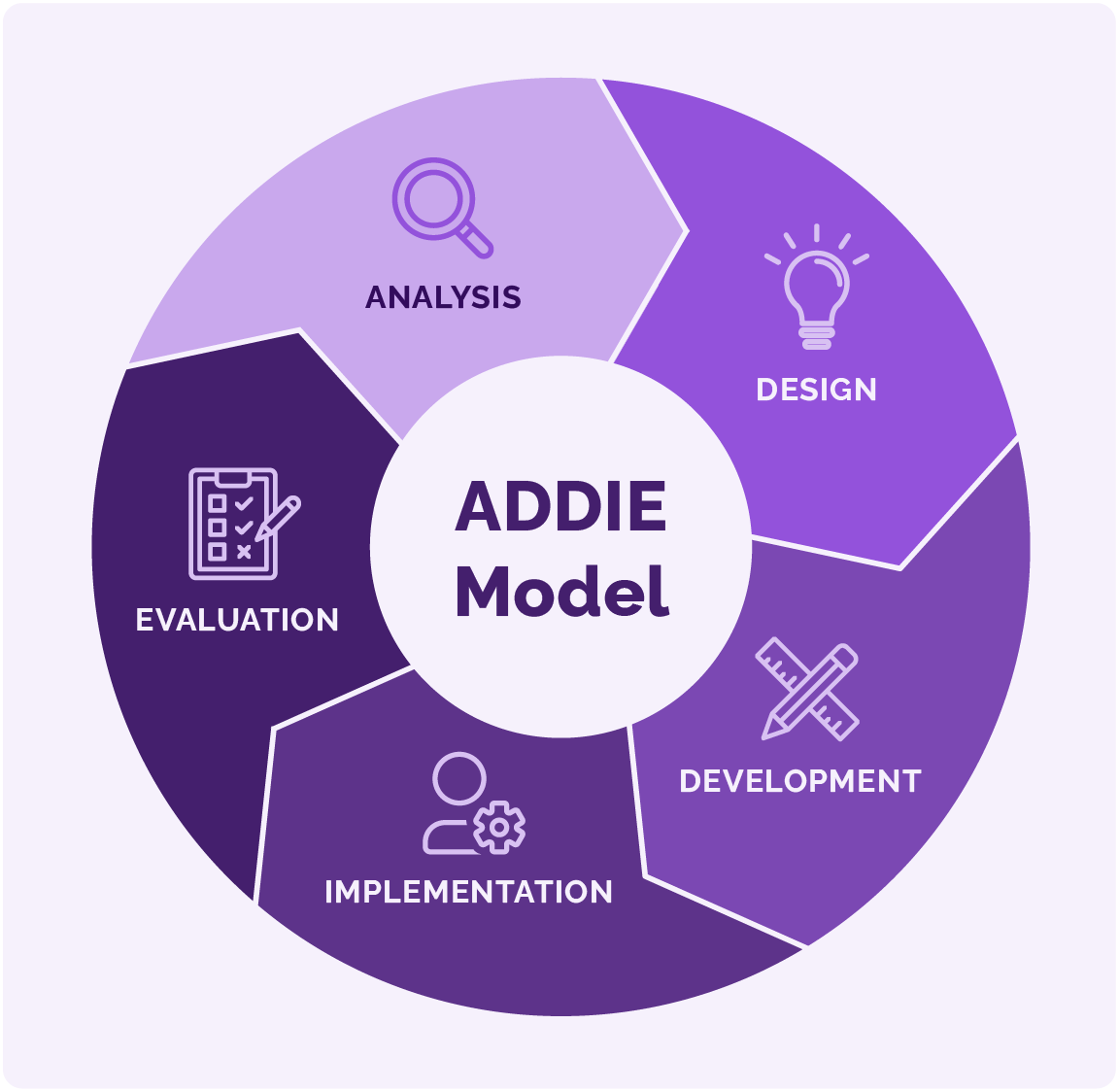
The ADDIE model consists of five phases: analysis, design, development, implementation, and evaluation. In the analysis phase, teachers and instructional designers identify the needs of learners, define educational objectives, and analyse the context in which learning will take place. The design phase involves detailed planning of teaching activities, content structure, and selection of appropriate teaching methods. The development phase involves the creation of specific teaching materials and resources, including texts, presentations, videos, or interactive elements. Implementation involves delivering the teaching and providing technical and methodological support. Evaluation is conducted continuously during the delivery and after the end of the teaching to assess success and identify opportunities for improvement.
The strength of the ADDIE model lies in its clear and systematic structure, which provides teachers and designers with reliable guidance at all stages of lesson development. This approach allows for thorough planning, which reduces the risk of omissions or inconsistencies. In addition, ADDIE has proven to be extremely adaptable to a variety of subject areas and levels of education, including higher education, corporate training, and military programs.
The disadvantage of the ADDIE model is its relative slowness and rigidity, which can be problematic in situations that require rapid response and adaptation. Because it is based on a linear sequence of steps, changes in later stages are often complex and require additional resources. Also, preparation in the early stages requires significant time and effort, which can be challenging in institutions with limited staff or financial resources.
Additional sources:
Background Colour
Font Face
Font Size
Text Colour
Font Kerning
Image Visibility
Letter Spacing
Line Height
Link Highlight
Paragraph Width
Text Alignment