3. Model SAM (en. Successive Approximation Model)
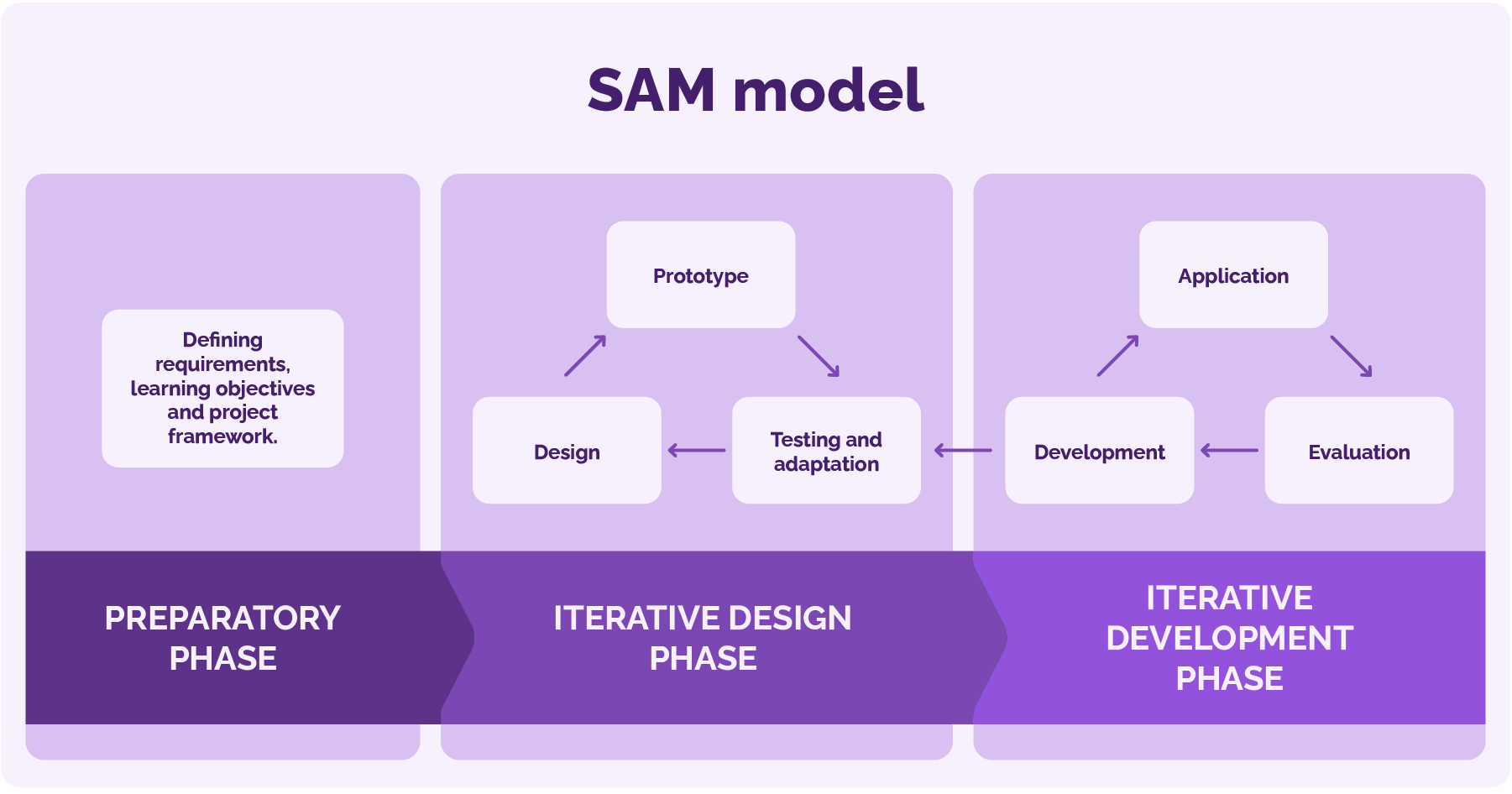
The SAM model introduces an agile approach to instructional design through a series of short, iterative development cycles. The process begins with a preparatory phase, in which learning objectives, basic requirements, and a project framework are defined. This is followed by the so-called "Savvy Start" — a workshop where team members collaboratively create early prototypes of teaching materials through a brainstorming-like activity. These prototypes are then tested and adapted through multiple iterations until a satisfactory version is achieved. The iterative nature of the model allows for continuous feedback collection and rapid adaptation of content to changing requirements or new insights.
The advantage of SAM is its flexibility and ability to react quickly to changes. Early prototypes allow ideas to be tested before significant investment is made in final development, thereby reducing the risk of creating inadequate content. The model also encourages collaboration and creativity among team members, which can lead to innovative teaching solutions.
The disadvantage of SAM stems from the fact that the less structured nature of the process can lead to disorganisation if the team is not experienced in agile methods. Multiple iterations can increase costs and extend development time if there is no clear project management plan. Also, the lack of formal documentation compared to linear models can make it difficult to monitor the process and evaluate long-term results.
Additional sources:
Background Colour
Font Face
Font Size
Text Colour
Font Kerning
Image Visibility
Letter Spacing
Line Height
Link Highlight
Paragraph Width
Text Alignment