4. Gagné's model
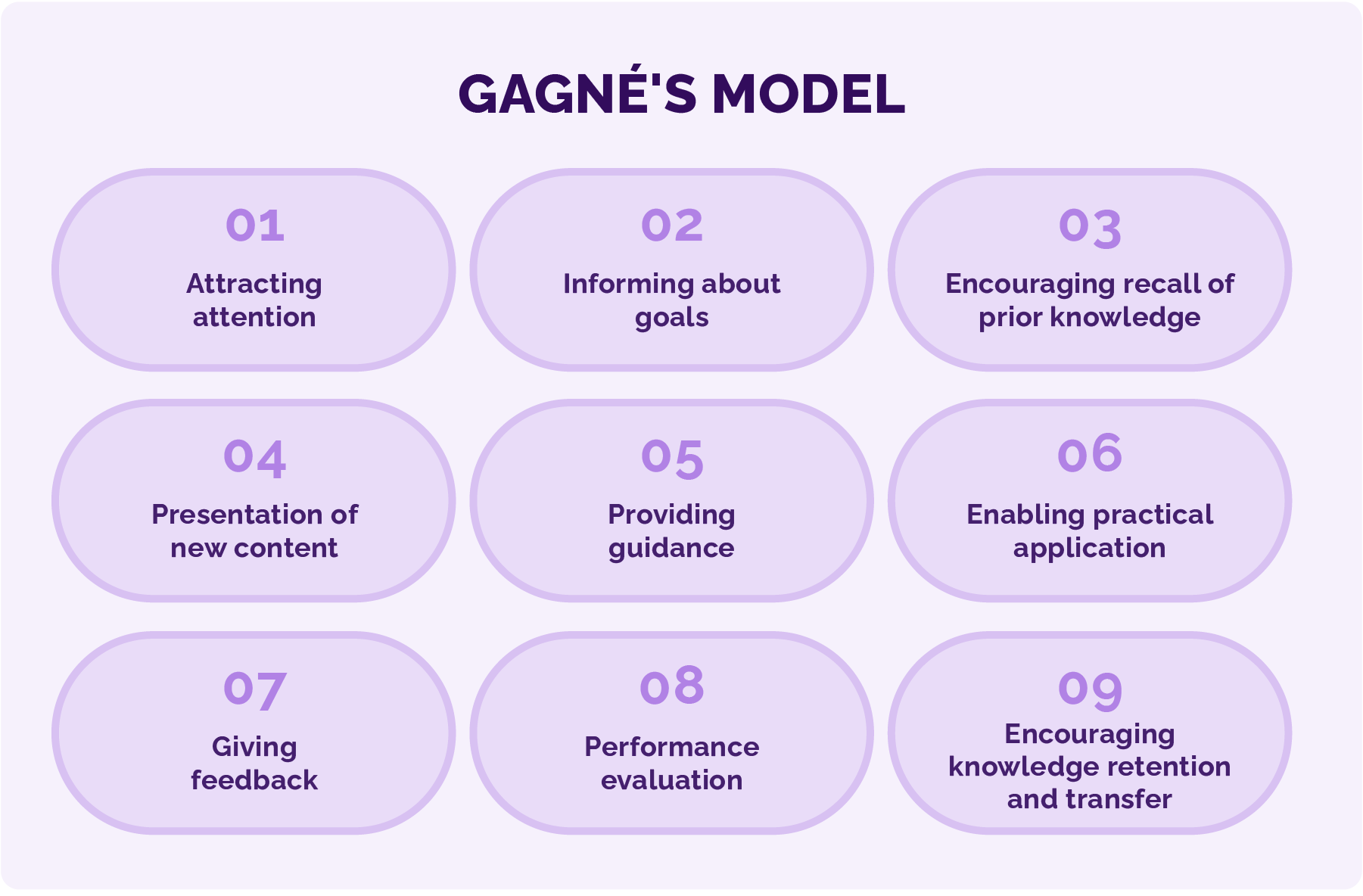
Gagné's model structures the teaching process through nine instructional events: attracting attention, informing about objectives, encouraging recall of prior knowledge, presenting new content, providing guidance, facilitating practical application, giving feedback, assessing performance, and encouraging retention and transfer of knowledge. This model is based on cognitive learning theories and is designed to systematically guide the student through the process of acquiring and applying new knowledge and skills.
The advantage of Gagné’s model lies in its clarity and logical structure, which provides teachers with a detailed guide for lesson planning. The model allows for the systematic connection of new knowledge with students’ prior experiences, thereby increasing the relevance and understanding of the material. It is applicable in a variety of educational contexts, including online and hybrid formats, and is particularly useful when it is necessary to clearly define and track the achievement of learning outcomes.
The disadvantage of this model is its potential rigidity, especially in teaching situations that require greater freedom and creativity. Detailed planning of each phase can be time-consuming, and the strict structure can limit spontaneous adjustments during teaching. In the context of informal learning or research-based projects, the model can seem too guided and restrictive.
Additional sources:
Background Colour
Font Face
Font Size
Text Colour
Font Kerning
Image Visibility
Letter Spacing
Line Height
Link Highlight
Paragraph Width
Text Alignment