5. ABC method of instructional design
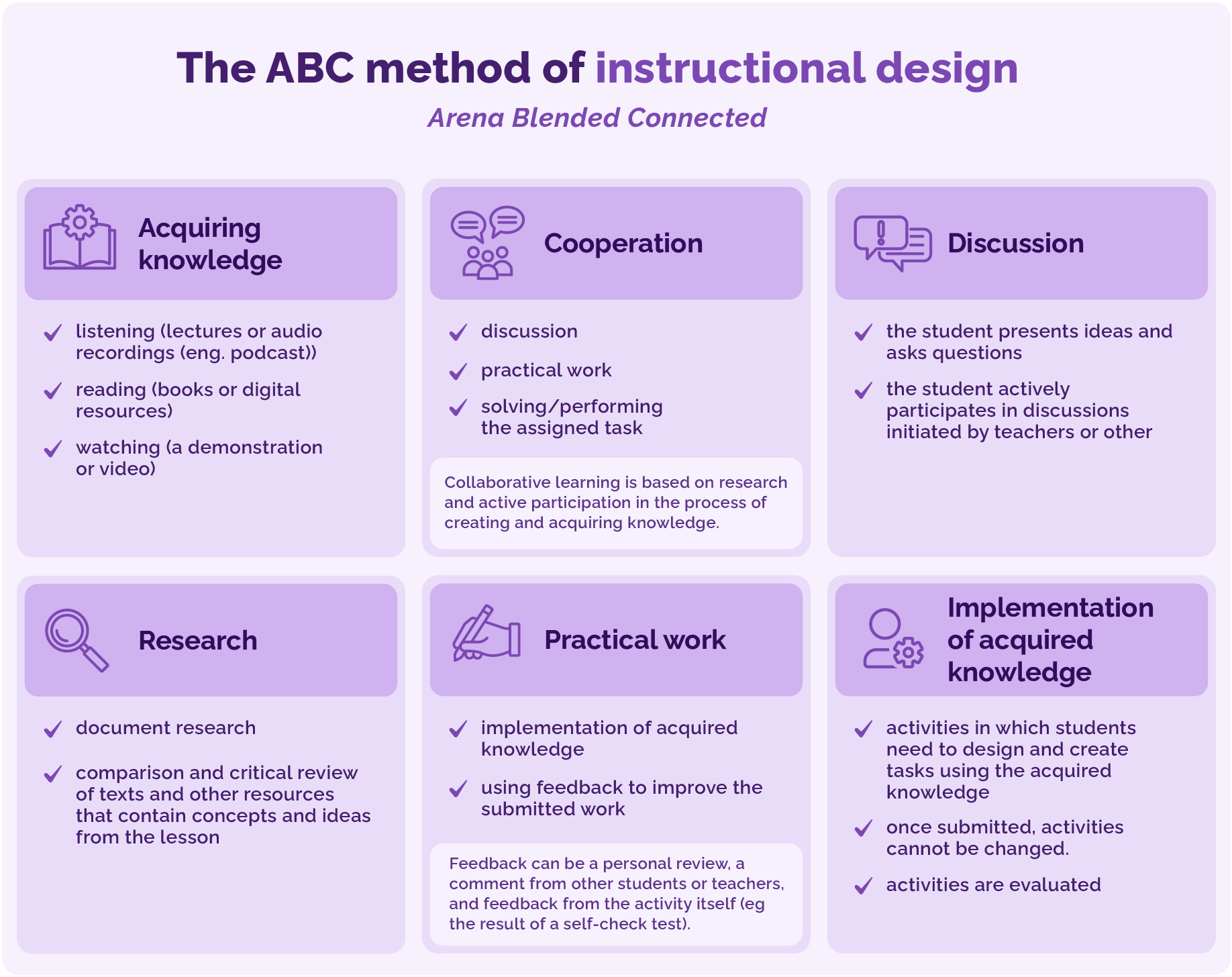
The ABC method, developed at University College London, is a rapid, collaborative approach to curriculum design and individual course design. It is based on visual cards that represent different types of learning activities, such as acquisition, discussion, collaboration, exploration, application, and production. During a workshop that usually lasts about 90 minutes, teachers jointly design the course structure, aligning the activities with the intended learning outcomes.
The advantage of the ABC method is its speed and the ability to bring together interdisciplinary teams to develop a comprehensive curriculum in a short time. The visual approach makes it easier to see the relationships between different types of activities and allows teachers to balance passive and active learning methods. This method encourages collaboration, creativity, and an open exchange of ideas among participants.
The disadvantage of the ABC method is that its effectiveness largely depends on the active participation of all team members (applicable in the case where several teachers teach a subject together). In the digital form of the workshop, it requires quality tools and well-designed online facilitation; otherwise, the dynamics and creative potential of the process may be lost. Also, the method provides a general framework but does not go into the detailed elaboration of teaching materials, so additional planning and development are required after the workshop.
Additional sources:
Background Colour
Font Face
Font Size
Text Colour
Font Kerning
Image Visibility
Letter Spacing
Line Height
Link Highlight
Paragraph Width
Text Alignment