1. European Standards and Guidelines (ESG)
The ESG is a set of standards and guidelines intended for external and internal quality assurance in higher education. It does not constitute quality standards or prescribe how quality assurance processes should be implemented, but it provides guidance, covering areas that are crucial to the quality of work and learning environments in higher education.
ESG is primarily concerned with ensuring quality in higher education: how it is taught, how students learn, and what kind of learning environment we provide. It also encompasses the connection to science, innovation, and the processes by which higher education institutions continuously improve their work, research, and management.
It applies to all types of studies within the European Higher Education Area, regardless of the form and location of delivery, including international programs.
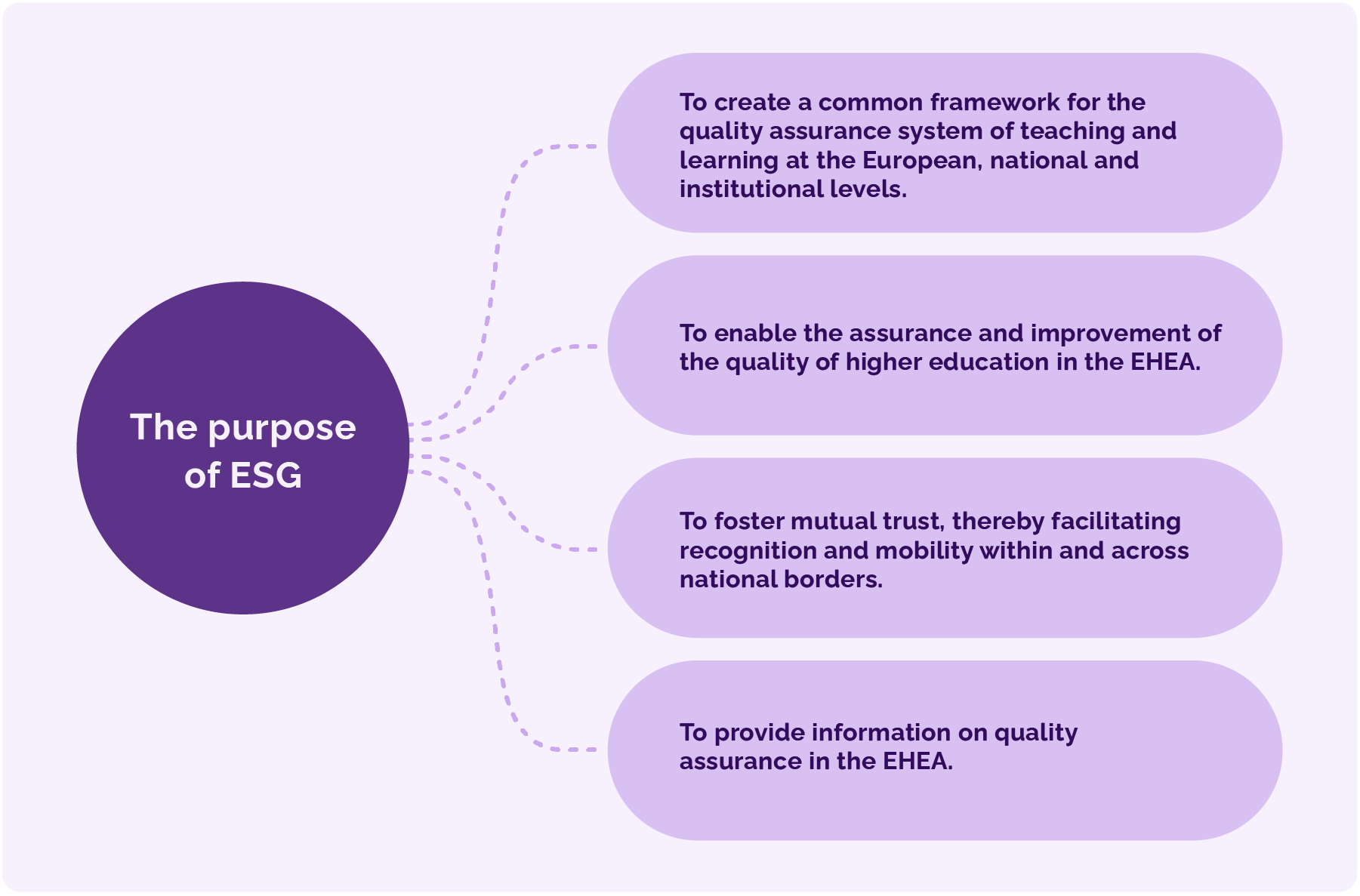
ESG has the following purposes:
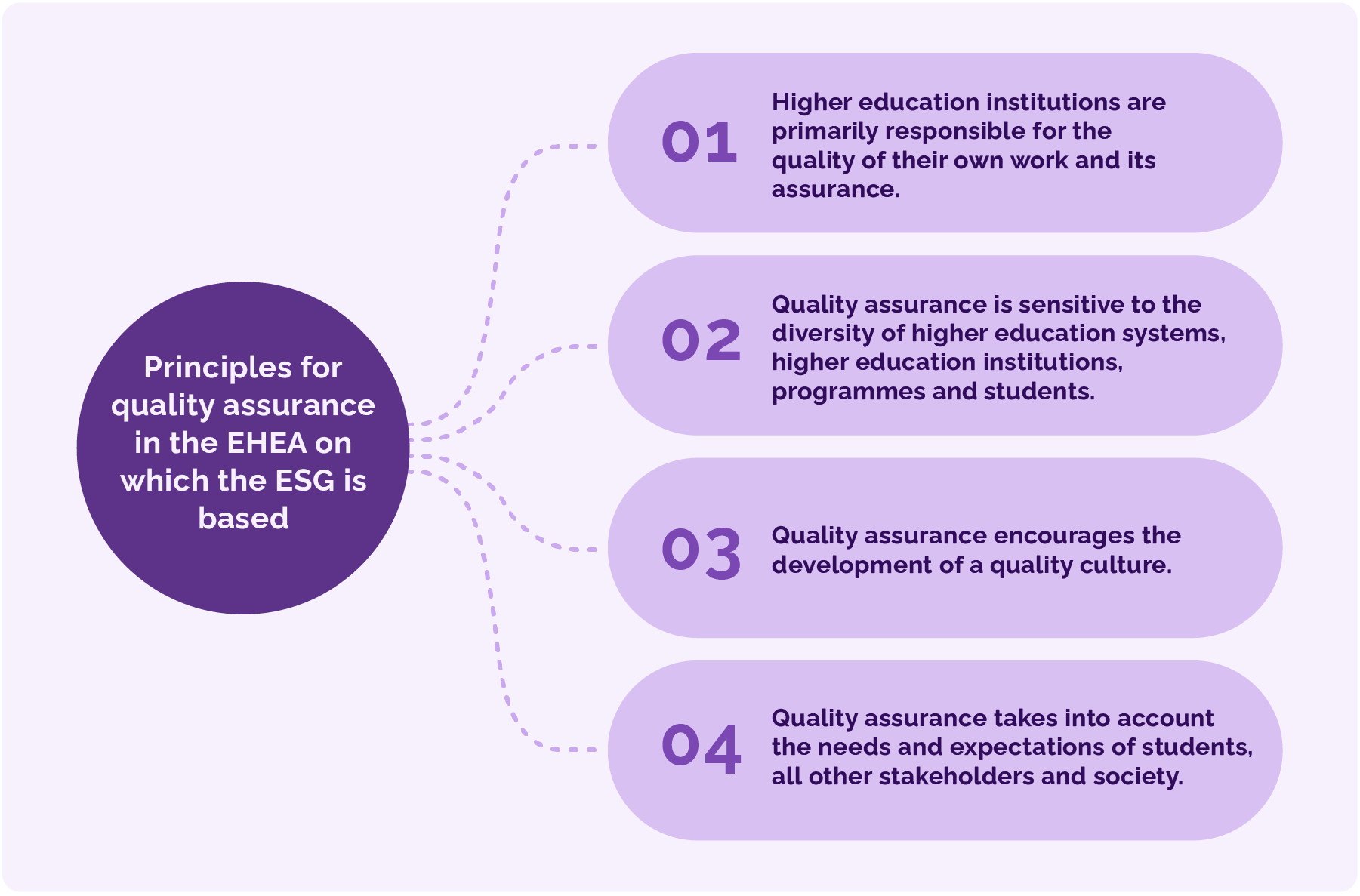
The ESG is based on the following four principles for quality assurance in the EHEA:
European standards and guidelines for quality assurance in higher education
The quality assurance standards are divided into three parts:
- internal quality assurance
- external quality assurance
- quality assurance agencies.
All three parts complement each other for the needs of both higher education institutions and agencies, if other stakeholders also contribute to the common framework. Therefore, all three parts should be taken as a whole.
The following link is available in Croatian only. Participants may use free AI-powered translation tools to access the provided materials.
You can read more about ESG at the link, where you will apply this knowledge as part of a later activity called „Discussion on the fundamental weaknesses at your institution".
Background Colour
Font Face
Font Size
Text Colour
Font Kerning
Image Visibility
Letter Spacing
Line Height
Link Highlight
Paragraph Width
Text Alignment