1. Introduction
Analysis of the current state of a higher education institution (HEI) or other educational institution is a fundamental and indispensable step in the process of planning, establishing and maintaining a quality e-learning system. Without thorough analysis, it is difficult to ensure that digital technologies will be implemented in a way that corresponds to the specific needs, goals and context of that HEI.
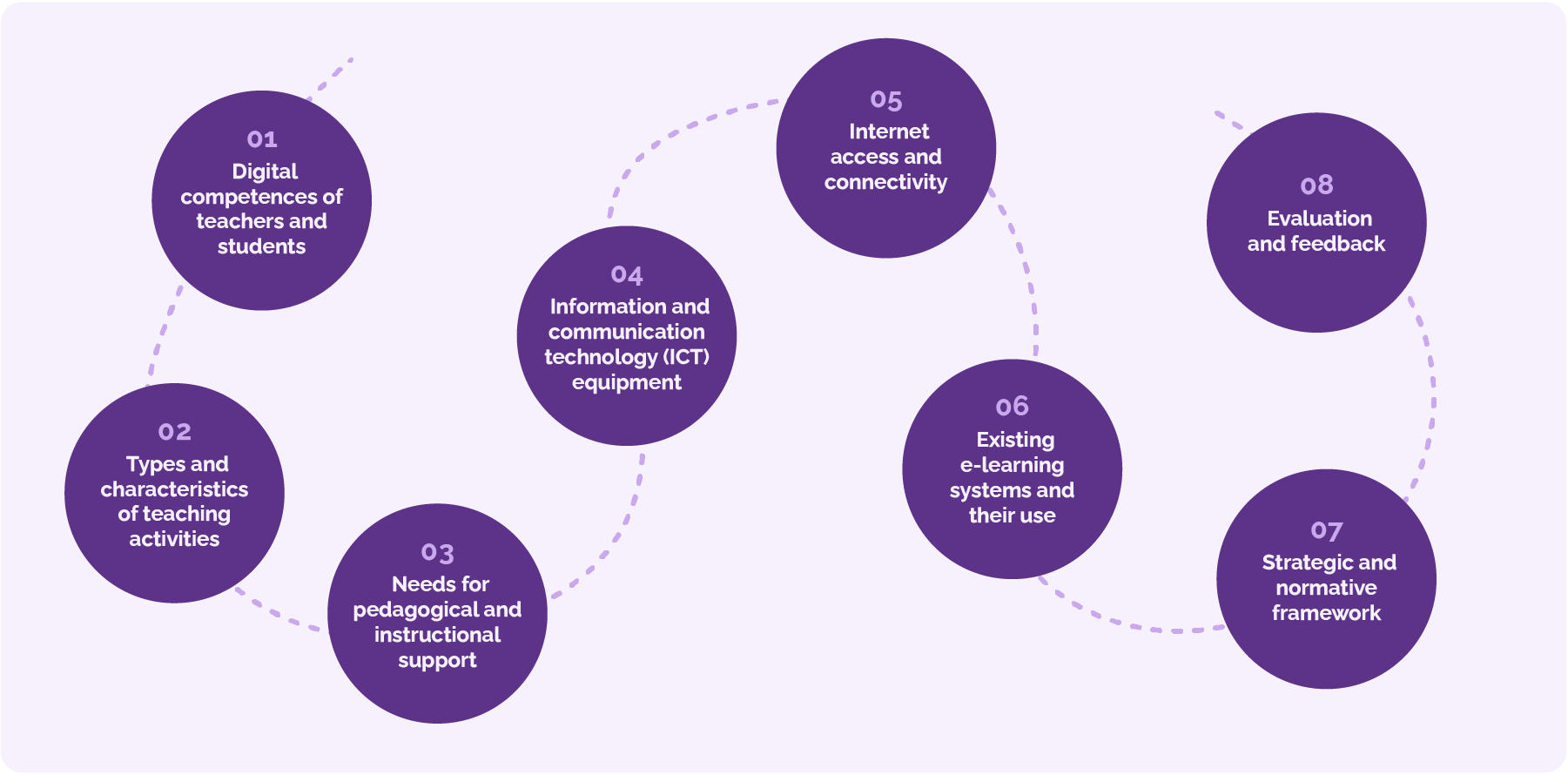
Such an analysis should be comprehensive and encompass a few interrelated aspects that together shape the conditions for the successful introduction and further development of digitally supported education. Key elements to consider include technical infrastructure (computer and network equipment, internet availability, software support), digital competences of teaching and non-teaching staff, students' readiness to learn in a digital environment, organisational structure, and institutional support for e-learning, existing pedagogical practices, and the alignment of the e-learning strategy with the mission and vision of the institution.
In addition, it is important to analyse the legal and regulatory framework that affects the implementation of e-learning, as well as potential sources of financing, sustainability and system development. It is also necessary to consider the existing platforms and tools used, their effectiveness, integration and acceptance among end users.
Analysis of the situation should include qualitative and quantitative methods of data collection, such as surveys, interviews, focus groups, reviews of existing documentation, and technical reviews, to obtain the most complete picture of the real situation.
Based on the results obtained, it is possible to identify strengths that can be built on, as well as weaknesses and obstacles that need to be addressed. Only based on a clearly defined starting point can a sustainable strategy for the digital transformation of education be developed within the institution, leading to a higher quality, more accessible, and more modern educational experience for all participants in the educational process.
The following topics will be covered in this activity:
- level of digital competence of teachers
- what types of teaching are there (lectures, seminars, exercises, laboratory work, field work, practical work)
- teachers' needs for instructional designer/pedagogical support services
- IT equipment and internet access speed.
Background Colour
Font Face
Font Size
Text Colour
Font Kerning
Image Visibility
Letter Spacing
Line Height
Link Highlight
Paragraph Width
Text Alignment